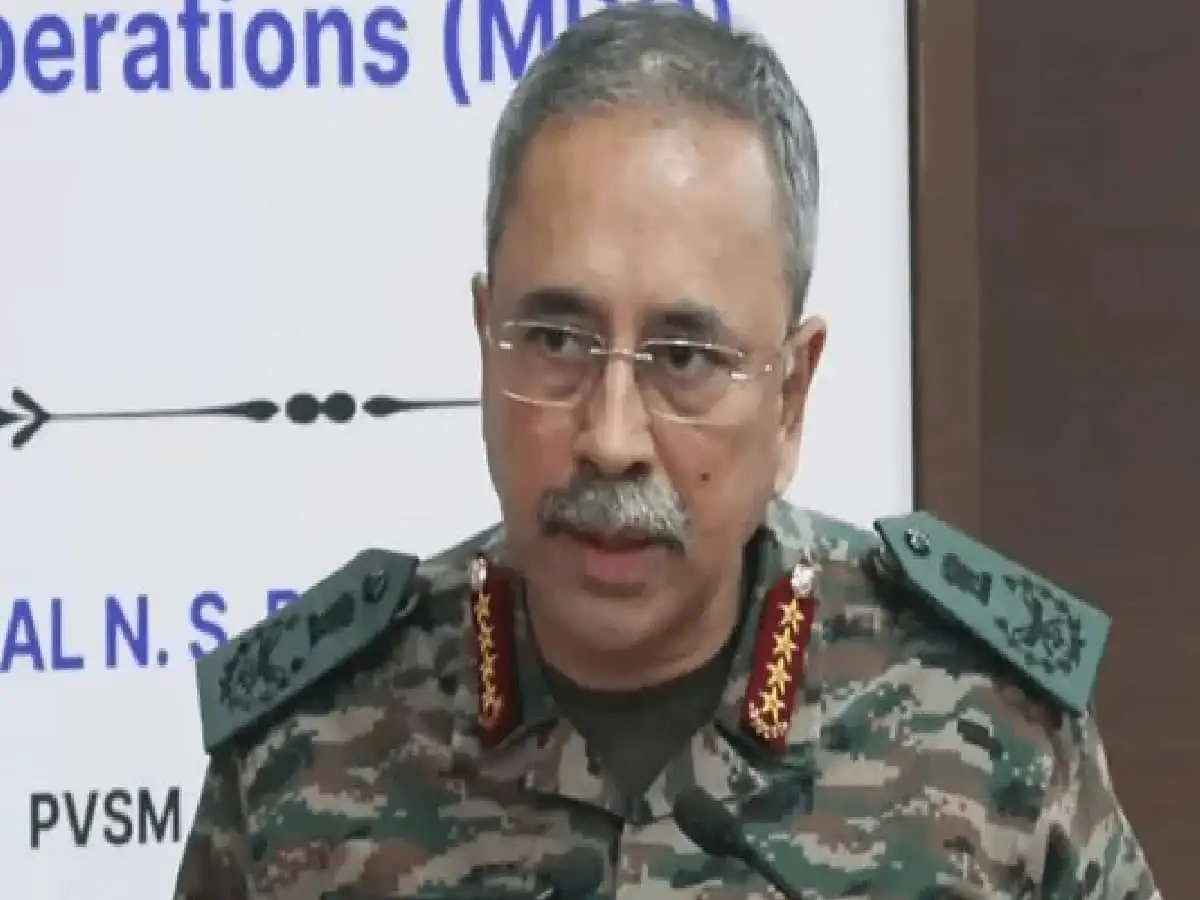
Chief of Defence Staff (CDS) General N.S. Raja Subramani has cautioned that Pakistan’s space and orbital surveillance capabilities are advancing with backing from China—and likely Turkey as well—making it essential for India to accelerate its own space-based military infrastructure and domestic satellite ecosystem. Addressing a seminar on “Future of Warfare and India’s Preparedness to Conduct Multi-Domain Operations (MDO)” at the Vivekananda International Foundation (VIF) in New Delhi on Friday, November 27, 2026, General Subramani noted that Islamabad is building indigenous capacity through its national space agency, the Pakistan Space and Upper Atmosphere Research Commission (SUPARCO), while simultaneously gaining access to Chinese-backed capabilities in intelligence, surveillance, and reconnaissance (ISR) as well as positioning, navigation, and timing (PNT). Responding to questions following the launch of China’s Shenzhou-24 crewed mission carrying Pakistani astronaut Muhammad Zeeshan Ali, the CDS emphasized that India must factor improved Pakistani ISR and potential Turkish assistance directly into its defense planning. Pointing to India’s ₹26,968 crore Space-Based Surveillance Phase-III (SBS-3) program—which will deploy 52 dedicated reconnaissance and surveillance satellites—alongside private-sector satellite partnerships and an upcoming overhaul of the Defence Acquisition Process, he outlined how India intends to sharpen border monitoring and reduce satellite revisit times without attempting to mirror China’s entire global military inventory. For defense analysts, technology professionals, and readers across Uttar Pradesh—especially in state capital Lucknow (a key hub for defense manufacturing and aerospace corridors) and neighboring centers such as Unnao, Kanpur, Prayagraj, and Varanasi, where national security modernization and indigenous defense production draw strong interest—the CDS’s remarks underscore how orbital superiority has become central to modern multi-domain deterrence.
During the interactive session at VIF, General N.S. Raja Subramani stressed that modern conflict already operates as a state of continuous contestation across space, cyber, electronic warfare, and cognitive domains. Addressing the strategic convergence between Beijing, Islamabad, and Ankara, he laid out the specific threat assumptions India’s armed forces are building into their operational calculus:
| Strategic Dimension | Assessment Shared by CDS General N.S. Raja Subramani | Operational Implication for India |
| China-Pakistan Space & ISR Sharing | Capabilities available to China in ISR (intelligence, surveillance, reconnaissance) and PNT (positioning, navigation, timing) will also be accessible to Pakistan, improving Pakistani ISR. | India must assume sharper adversary battlefield visibility and factor Chinese-backed space support into contingency planning. |
| Indigenous SUPARCO & Turkish Support | Pakistan’s SUPARCO is expanding its own capabilities, and India must take it for granted that Islamabad will also receive assistance from Turkey. | Requires faster capability generation and streamlined defense acquisition to outmatch Pakistan and narrow the gap with China. |
| Space-Based Surveillance Phase-III (SBS-3) | Approved by the Cabinet Committee on Security (CCS) in October 2024 at ₹26,968 crore to deploy 52 reconnaissance and surveillance satellites. | Enhances land, air, and maritime domain awareness along India’s borders and across the Indian Ocean Region. |
| Private Sector & Acquisition Reform | Partnering with private-sector space entrepreneurs to build and launch satellites faster; revamped Defence Acquisition Process draft is with the PMO for early 2027 rollout. | Accelerates deployment speed rather than being constrained by funding bottlenecks. |
To stay ahead of evolving orbital threats, General Subramani highlighted the operational impact of Space-Based Surveillance Phase-III (SBS-3), cleared by the Cabinet Committee on Security in October 2024 at an estimated cost of ₹26,968 crore and implemented under the Defence Space Agency and Headquarters Integrated Defence Staff. Once operational, the constellation of 52 dedicated surveillance and reconnaissance satellites will substantially strengthen continuous land, air, and maritime domain awareness along India’s northern and western borders as well as across the Indian Ocean Region. Alongside SBS-3, the CDS noted that the armed forces are actively working with private-sector space startups and entrepreneurs to expand domestic satellite manufacturing and launch cadence. Emphasizing that funding is not the primary bottleneck, he added that a revamped Defence Acquisition Process—whose draft is currently with the Prime Minister’s Office (PMO) and is expected to be rolled out at the start of 2027—will speed up procurement so India can decisively outmatch Pakistan while steadily closing capability gaps with China.
Clarifying India’s strategic posture on the northern front and in outer space, General Subramani drew a clear distinction between targeted operational necessity and unfocused arms racing. Rather than attempting to match or replicate China’s worldwide military and orbital inventory asset-for-asset, India’s priority is to build sufficient, responsive space capabilities to maintain continuous visibility over its own borders and drastically reduce satellite revisit times—ensuring commanders can detect, track, and respond to developments rapidly in any multi-domain scenario.