Lt Gen Bhopinder Singh (Retd)
The political earthquake confronting Donald Trump following the November 2026 midterm elections should send an unmistakably uncomfortable message to Islamabad. For Pakistan’s military establishment and its civilian partners, the weakening of Trump’s political authority represents considerably more than an American electoral setback. It threatens to expose the extraordinary gamble they made on one man, cultivating him with an enthusiasm that frequently bordered on political sycophancy. Field Marshal Asim Munir, Prime Minister Shehbaz Sharif and the Bhutto political establishment invested heavily in Trump personally. They may now discover that their investment has become a liability.
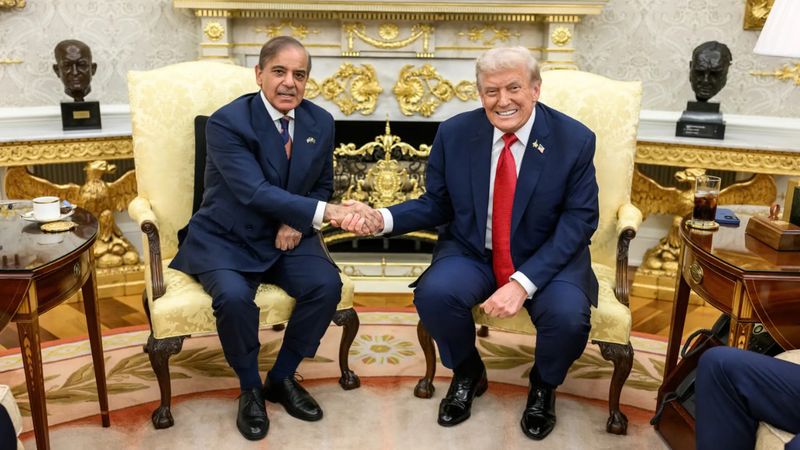
Consider the spectacle of Pakistan’s courtship. In September 2025, Sharif and Munir visited the White House. Pakistan’s official communiqué praised Trump’s “bold, courageous and decisive leadership” and described him as a “man of peace”. Islamabad nominated him for the Nobel Peace Prize, while Trump reciprocated by calling Munir his “favourite Field Marshal”. The Pakistani leadership appeared positively intoxicated by presidential attention. Diplomatic access was transformed into a political performance, complete with extravagant compliments and conspicuous demonstrations of personal loyalty.
There is nothing inherently objectionable about cultivating Washington. Pakistan, like every state, must pursue its national interests through engagement with American administrations. The problem arises when a country mistakes personal access for institutional influence, and presidential affection for enduring strategic partnership. Islamabad seemed to believe that proximity to Trump could substitute for a coherent, bipartisan American policy. It was a spectacularly short-sighted proposition.
The midterm elections have fundamentally altered Washington’s political arithmetic. Democrats have captured both chambers of Congress, creating formidable obstacles for Trump’s domestic legislative agenda and exposing his administration to greater congressional scrutiny. Trump dismissed the implications, insisting, “I don’t view it as a hit on me.” The White House responded defiantly, “PSA: TRUMP IS STILL YOUR PRESIDENT.” Both statements are technically true. Trump remains president, and the American executive retains substantial foreign-policy authority. But remaining in office is not the same as retaining unchallenged political power.
That distinction should concern Islamabad enormously. Congressional investigations, hearings, budgetary scrutiny and legislative resistance can complicate presidential initiatives and expose controversial foreign-policy relationships. Pakistan’s establishment must understand that Trump’s continuing occupancy of the Oval Office does not guarantee the continuation of his political dominance. Nor does it guarantee that those who enthusiastically cultivated his favour will enjoy the same reception from emerging centres of American political power.
Indeed, the potential consequences extend beyond Republican-Democratic rivalry. Democratic legislators and influential American constituencies have repeatedly raised concerns about democratic accountability, political imprisonment, military interference and human rights. Pakistan’s ruling arrangement could increasingly find itself answering uncomfortable questions. How does Islamabad reconcile its professed commitment to democracy with the marginalisation of Imran Khan and his political movement? How does it explain the extraordinary influence of an unelected military command? And how does it celebrate American democratic leadership while appearing deeply uncomfortable with democratic competition at home?
These questions are particularly awkward for Munir, Sharif and Bilawal Bhutto Zardari. Their administration has benefited from international legitimacy and diplomatic engagement while facing persistent domestic criticism over political freedoms and institutional accountability. Trump’s personal patronage may have provided temporary diplomatic cover. A less accommodating American political environment could remove that comfort.
The regional consequences are equally consequential. Afghanistan, India and Iran have watched Islamabad’s Washington manoeuvring with considerable suspicion. India, in particular, rejected Trump’s claims of personally facilitating the May 2025 ceasefire, maintaining that the understanding emerged through direct bilateral engagement. Pakistan’s enthusiastic endorsement of Trump’s account risked reinforcing a narrative New Delhi considered inaccurate. Islamabad may have won presidential affection, but it did little to improve its credibility with its largest neighbour.
Afghanistan has its own reasons for questioning Pakistan’s calculations. American policy towards the region cannot be reduced to Trump’s personal relationship with Munir. Similarly, Iran must view Islamabad’s conspicuous proximity to Trump with apprehension, particularly amid continuing tensions over American policy towards Tehran. Pakistan’s attempt to secure favour in Washington without adequately considering its neighbourhood risks leaving it diplomatically exposed on several fronts.
There is, moreover, a domestic political dimension that Islamabad cannot dismiss. Imran Khan’s supporters have consistently challenged the legitimacy of Pakistan’s governing arrangement. Religious parties, despite their ideological differences, have their own complicated relationship with American power and its policies towards the Muslim world. The spectacle of Pakistan’s rulers celebrating Trump while domestic opposition remains constrained has furnished their critics with considerable political ammunition. Should Trump’s influence diminish further, the establishment could find its American courtship transformed into an instrument of domestic political embarrassment.
The fundamental contradiction is difficult to overlook. Pakistan’s leadership celebrated Trump’s supposed commitment to peace while aligning itself enthusiastically with an administration whose regional policies remain deeply controversial. It invoked democratic partnership while cultivating a personalised relationship seemingly indifferent to the institutional foundations of American democracy. Was Islamabad pursuing Pakistan’s long-term national interest, or merely the immediate political interests of those controlling the Pakistani state?
None of this means that Democrats will automatically adopt an anti-Pakistan position. American foreign policy is driven by strategic interests, intelligence cooperation, regional calculations and institutional continuity, not simply partisan sentiment. Nor should Islamabad assume that every Republican will remain permanently aligned with Trump’s personal preferences. But relationships built around individual personalities are inherently vulnerable to political change.
Pakistan urgently needs a diplomatic recalibration. It must rebuild bipartisan relationships, engage Congress seriously, strengthen institutional diplomacy and address the democratic deficit at home. Most importantly, its establishment must recognise that flattering an American president is not a substitute for building a credible relationship with the United States.
The most sobering lesson is that political power is transient, but the consequences of choosing political patrons can be enduring. Islamabad bet heavily on Trump’s personality, longevity and capacity to deliver. American voters have demonstrated that even formidable political personalities are vulnerable to electoral repudiation.
Munir, Sharif and Bhutto should therefore contemplate a question that their carefully choreographed White House encounters apparently never considered i.e., what happens when the man whose favour you so assiduously cultivated becomes a political liability? In international politics, excessive flattery is rarely a substitute for strategic foresight. And when the political winds change, yesterday’s enthusiastic courtship can become tomorrow’s uncomfortable evidence of miscalculation.