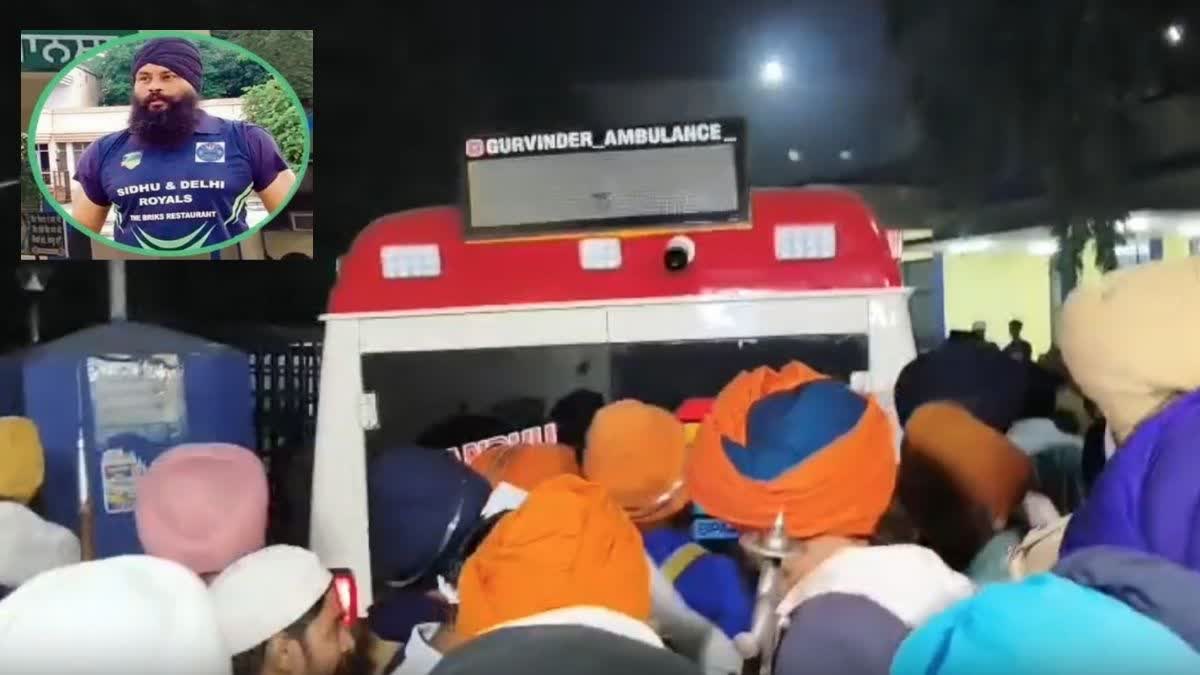
Parvinder Singh Jhota, who raised his voice against drug abuse, was cremated on Sunday after 26 days in his native village in Mansa, Punjab. The family bid him farewell as per Sikh rituals at their farm. Jhota died after being shot at a medical store in Mansa on October 13.
Tezzbuzz Desk – The mortal remains of Parvinder Singh Jhota were brought to his native village on Sunday. After this, the last rites were performed at his farm on Chakerian Road. Earlier, the mortal remains were taken home, where wife Manpreet Kaur, mother Amarjeet Kaur and other family members paid their last respects.
A large number of people arrived to pay their last respects to Jhota. The mortal remains were also kept outside the Central Park for last darshan. During this, Ragi Singhs performed Kirtan and Ardaas were performed as per Sikh tradition. After this his children lit the funeral pyre of their father. During the last journey, people bid him farewell by showering flowers on the way.
There was a bullet in the medical store on 13 October
Parvinder Singh Jhota died on October 13 after being shot at a medical store located in a busy market in Mansa city. According to the report, Jhota had protested against medical store operator Ashwini Kumar for selling drugs to an elderly person. After this there was a firing incident and Jhota died. The medical store operator was arrested in the case.
Jhota's body was kept in the mortuary of Mansa Civil Hospital for about three weeks. The post mortem process was completed after the movement of the family and Joint Action Committee. The body was handed over to the family after post-mortem at PGIMER Chandigarh on Saturday, after which the last rites were performed on Sunday.
After Jhota's death, his family and the Joint Action Committee protested in Mansa. Following the demands of the family, the Punjab government had said to hand over the investigation of the case to CBI. The government had also suspended a police station in-charge, a DSP and a drug inspector related to the case. Other demands of the family included a trauma center in Jhota's name and the installation of his statue.