6
Renewed scrutiny highlights enduring human costs of controversial crowd-control weapon in Kashmir today.
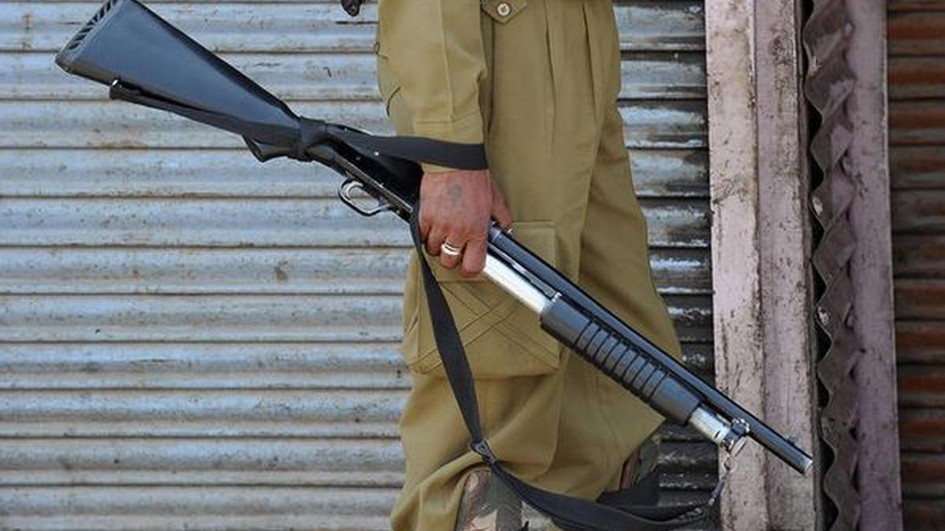
The recent use of pelletfiring shotguns during protests in Delhi has once again brought one of India’s most controversial crowdcontrol measures into the national spotlight. While the debate has intensified following their reported use against demonstrators demanding the resignation of the Education Minister, for many in Kashmir, pellet guns are not a new subject—they are a painful reminder of lives permanently altered. For thousands of Kashmiris, the memories of 2016 remain vivid. That year, widespread unrest following the killing of Hizbul Mujahideen commander Burhan Wani saw security forces deploy pellet-firing shotguns on a large scale to disperse crowds.
The violence left thousands injured, with many suffering life-changing eye injuries. Among the most recognised faces of that period is Insha Mushtaq of Shopian. At just 14 years of age, she was preparing for her Class 8 examinations near a window in her home when pellets struck both her eyes during clashes outside. Despite undergoing multiple surgeries in Srinagar and later in Delhi, her eyesight could not be restored. Nearly ten years later, Insha’s story is no longer defined only by tragedy. It has become a story of resilience, determination and hope. Living with permanent blindness, she continued her education using Braille and screen-reading technology. Today, she is pursuing the final year of her Bachelor of Arts while preparing for a new chapter in life through an LPG distributorship that has finally become a reality after years of delay. The dealership was originally sanctioned in 2018 as part of a rehabilitation initiative. However, administrative hurdles delayed its implementation for several years. Recently, the Jammu and Kashmir Government approved the release of the remaining funds required to complete the project, allowing the rehabilitation measure to finally move forward. For Insha, the assistance represents recognition of a long-pending promise, but it does not erase the larger issue. She believes the renewed national discussion on pellet guns should extend beyond individual incidents. According to her, the suffering experienced by hundreds of civilians in Kashmir deserves equal attention whenever the legality and morality of pellet guns are debated. Her appeal is straightforward: if pellet guns raise concerns when used anywhere in the country, the same concern should apply to every citizen, regardless of where they live. The recent developments in Delhi have once again prompted legal scrutiny of pellet guns, with the issue reportedly coming before the Supreme Court. Human rights groups and medical experts have long questioned the use of pelletfiring shotguns because of their potential to cause irreversible eye injuries and permanent disability, even when intended as a “non-lethal” crowd-control option. Security agencies, however, have maintained that pellet guns were introduced as an alternative to live ammunition in situations involving violent protests. They argue that the weapon was adopted to reduce fatalities while managing law-and-order challenges. Critics counter that the widespread and unpredictable spread of pellets makes serious injuries difficult to avoid.
The debate has therefore remained unresolved for more than a decade. According to official figures from the 2016 unrest, more than 6,000 civilians sustained pellet-related injuries, with hundreds suffering severe eye trauma. Hospitals across Kashmir treated large numbers of patients with facial and ocular injuries, making pellet guns one of the most contentious symbols of that period. Today, as the issue resurfaces in the national discourse following recent protests in the capital, Kashmir’s experience serves as a reminder of the long-term human cost associated with crowd-control measures. For survivors like Insha Mushtaq, the conversation is not merely about policy or policing—it is about ensuring that future generations do not endure similar suffering. Her journey from a schoolgirl who lost her vision to a university student determined to build an independent life reflects extraordinary courage. Yet her story also underscores an enduring question that continues to confront policymakers, security agencies and courts alike: can public order be maintained without leaving behind irreversible scars? As India revisits the debate over pellet guns, voices from Kashmir are once again asking that the lessons of the past not be forgotten.