
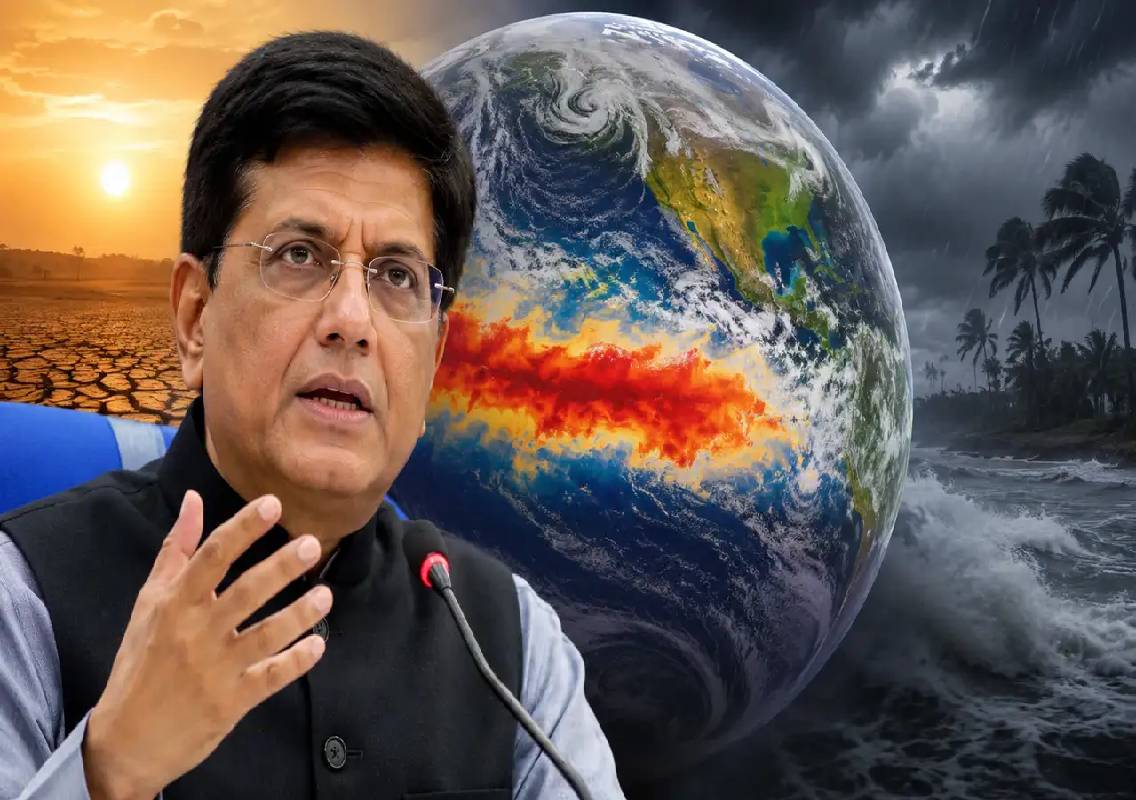

Mumbai: Union Commerce and Industry Minister Piyush Goyal has said that the Centre and state governments are closely monitoring the evolving El Nino situation and are prepared to take all necessary measures to address any challenges arising from its impact on agriculture and water resources.
Speaking amid growing concerns over weather disruptions and their potential effect on India’s agricultural sector, Goyal described El Nino as a global challenge and assured farmers that their welfare remains a top priority for the government.
The minister’s remarks come as weather experts and economists continue to assess the impact of strengthening El Nino conditions and uneven monsoon rainfall across several parts of the country.
Government prepared for any crisis
Addressing concerns over a possible water shortage and its effect on farming activities, Goyal said both the Central Government and state administrations are maintaining a close watch on the situation.
“El Nino is a global crisis, and we are keeping a close watch on the situation. The Central and Maharashtra governments are prepared to take all necessary measures. Farmers are our priority, and our government is committed to their welfare and holistic development,” he said.
The minister added that if water-related challenges emerge due to deficient rainfall, authorities will implement all required measures to minimise the impact on farmers and rural communities.
His comments are particularly significant as several states have reported below-normal rainfall during the ongoing monsoon season.
Focus on farmer welfare
Goyal reiterated the government’s commitment to protecting farmers from economic hardships caused by adverse global and domestic developments.
He highlighted the Centre’s efforts to shield farmers from rising fertiliser costs during periods of international market volatility.
Referring to the surge in global fertiliser prices during geopolitical disruptions, the minister said the government absorbed a substantial financial burden to ensure farmers continued receiving fertilisers at affordable rates.
According to Goyal, fertiliser prices had risen sharply in international markets, but the Centre prevented those increases from being passed on to farmers.
Fertiliser subsidy support highlighted
The minister stated that despite a sharp rise in global fertiliser prices, farmers have continued to receive fertilisers at nearly the same price levels as in previous years.
He said the Central Government provided significant subsidies to offset the increase in costs, ensuring that the financial burden did not fall on either farmers or state governments.
Goyal credited Prime Minister Narendra Modi’s administration with maintaining affordability and protecting agricultural productivity during periods of global economic uncertainty.
The government views fertiliser support as a critical component of ensuring food security and sustaining agricultural growth.
El Nino and monsoon concerns grow
The minister’s remarks come against the backdrop of concerns raised by economic analysts and meteorological experts regarding the impact of strengthening El Nino conditions.
According to a recent research report by ICICI Bank, El Nino indicators have strengthened significantly, while the southwest monsoon has experienced delays and uneven distribution in several regions.
The report noted that the India Meteorological Department (IMD) had revised its rainfall forecast downward, increasing concerns about agricultural output during the kharif season.
Experts warn that prolonged rainfall deficiencies could affect crop production, particularly in rain-fed agricultural regions.
Several states record rainfall deficit
The report highlighted that major agricultural states including Gujarat, Maharashtra, Chhattisgarh, Madhya Pradesh, Telangana and Bihar have recorded deficient rainfall so far during the season.
Uneven rainfall distribution has created challenges for farmers dependent on timely monsoon precipitation for sowing and crop growth.
However, analysts also pointed out that the impact has varied across different crop categories, with some segments showing resilience despite weather-related challenges.
The situation continues to be monitored closely by both government agencies and agricultural experts.
Mixed trends in kharif sowing
While concerns persist regarding certain crops, the report indicated that not all agricultural segments have been affected equally.
Rice cultivation has shown strong growth, with acreage reportedly increasing by 28.4 per cent compared to the corresponding period last year.
Similarly, coarse cereal cultivation has risen by 10.4 per cent, helping offset weaker performance in categories such as pulses, oilseeds and cotton.
Agricultural economists believe that continued rainfall during the remainder of the monsoon season will be crucial in determining the overall performance of the kharif crop cycle.
Conclusion
As El Nino conditions strengthen and concerns over monsoon performance continue, the government has assured farmers that it is closely monitoring developments and remains prepared to respond to any emerging challenges. While rainfall deficits have affected several regions, support measures such as fertiliser subsidies and contingency planning are expected to play a key role in protecting agricultural production and farmer livelihoods in the months ahead.

Comments are closed.