
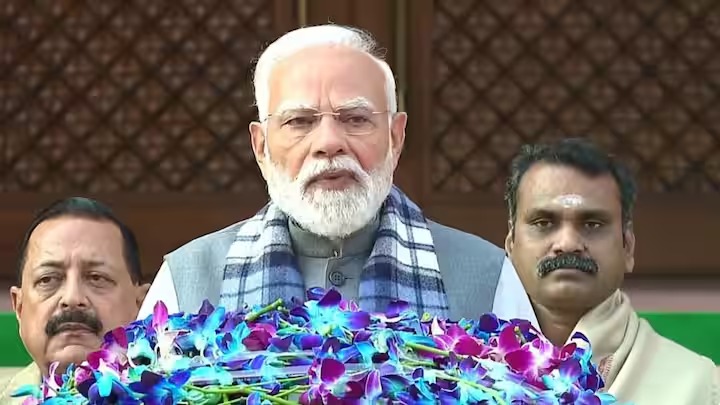

Prime Minister Narendra Modi is set to enter the record books on June 10 by becoming the longest continuously serving democratically elected prime minister in India’s history. On that day, PM Modi will complete 4,399 uninterrupted days in office, moving past the record held for more than six decades by India’s first prime minister, Jawaharlal Nehru. The milestone reflects not only the longevity of PM Modi’s tenure but also the scale of political change India has witnessed since Independence. PM Modi first took oath on May 26, 2014. By June 10, 2026, he will have served continuously for 4,399 days as prime minister. Nehru’s record stood at 4,398 consecutive days, counted from May 13, 1952, when he assumed office after India’s first general election, until his death on May 27, 1964. The achievement adds another chapter to PM Modi’s political journey, which has already produced several records over the past decade.
A milestone that comes after surpassing Indira Gandhi’s long-standing mark
As per reports, this isn’t PM Modi’s first big record related to tenure. He went past Indira Gandhi’s longest uninterrupted term on July 25, 2025. Gandhi held office continuously for 4,077 days, from January 24, 1966, to March 24, 1977.
The comparison with Nehru’s tenure also shows how much India has changed since then. When Nehru governed the newly independent nation, India’s population was around 34 crore. By the time PM Modi took charge in 2014, the population had crossed 131 crore. It has since expanded to more than 146 crore, making governance significantly more complex than in the country’s early years.
Governing a larger electorate in a far more competitive political era
The scale of Indian democracy has grown enormously during this period. In the first general election of 1951-52, only 53 political parties contested. That number rose to 464 parties in the 2014 Lok Sabha election and further increased to 744 parties in the 2024 parliamentary polls.
The voter base in India has changed since the first elections. Back then, around 17 crore people voted, whereas by 2014, over 83 crore cast their ballots. Political conditions have changed a lot too. Back in the day, Nehru led with the Congress party winning 364 out of 489 Lok Sabha seats. Nowadays, PM Modi is leading in a much more divided scene, with lots of regional parties and shifting alliances.
Modi makes history amidst a giant leap in education and healthcare infrastructure
PM Modi, moreover, marks a historic first. He’s the first non-Congress prime minister to wrap up two full-majority terms consecutively, and he’s also the first after Nehru to snag three consecutive Lok Sabha election wins. Big boosts came to education and healthcare. Over the past twelve years, the number of IITs jumped from 16 to 23, IIMs went from 13 to 21, and AIIMS grew from 7 to 23.
Another major difference between the two eras is the information environment. Nehru governed in a period without private television networks, social media platforms or instant digital communication. PM Modi’s tenure has unfolded under constant scrutiny from television channels, online media and social media users. Earlier this year, he also became India’s longest-serving elected head of government when his combined tenure as Gujarat chief minister and prime minister crossed 8,930 days. With the 4,399-day mark on June 10, PM Modi will officially eclipse a record that had stood unchallenged since the early decades of independent India.
Also Read: ‘Sonia Gandhi Was Backing Him’: Lalit Modi Alleges High-Level Congress Coverup For Shashi Tharoor in 2010 IPL Kochi Scandal
Khalid Qasid is a media enthusiast with a strong interest in documentary filmmaking. He holds a Master’s degree in Convergent Journalism from AJK MCRC. He has also written extensively on esports at Sportsdunia. Currently, he covers world and general news at NewsX Digital.
The post PM Modi Set To Become Longest-Serving PM On June 10 appeared first on NewsX.

Comments are closed.