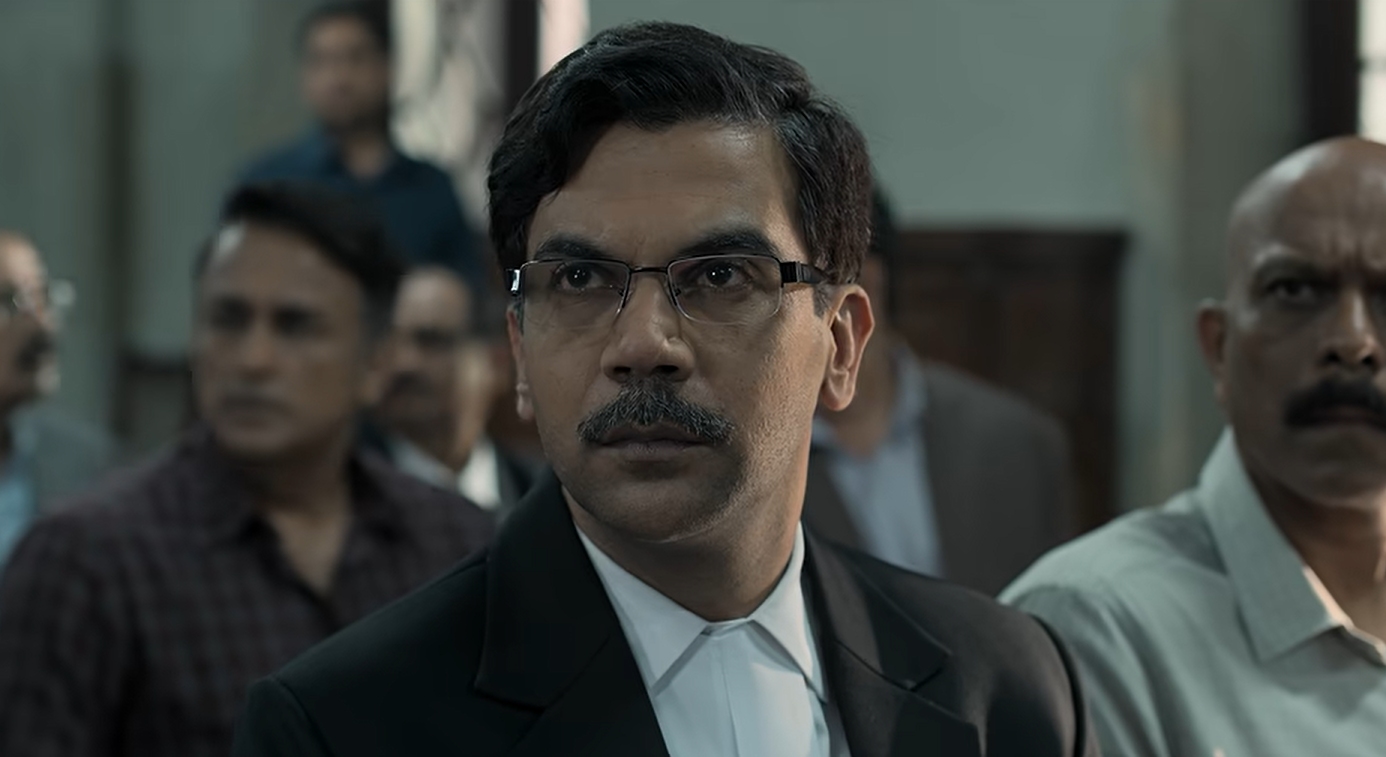
The trial of Ajmal Kasab, the lone gunman captured alive after the 26/11 Mumbai attacks, presents a contradiction that Hindi cinema has rarely explored with patience. How does a democracy administer justice when the public has already decided what justice should look like? What does the law mean when the accused has become a symbol of national trauma? Avinash Arun’s Prahaar: The Untold Story of Ujjwal Nikam has an opportunity to explore these questions through the prosecution of a man whose guilt was extensively documented. Instead, the film treats the trial largely as a test of its protagonist’s resolve, following a familiar biographical template that leaves its more troubling implications unexplored.
Trial with more to say than the film allows
Written by Sumit Roy and produced by Dinesh Vijan, Prahaar is a film of considerable dramatic potential that seems unusually anxious about what to do with it. Over the last few years, Maddock Films has developed a commercial identity around making stories accessible through recognisable emotional beats and carefully calibrated payoffs. Here, that instinct becomes a limitation. A film about the judicial process following one of the most devastating terrorist attacks in Indian history ought to be able to entertain competing ideas without rushing to settle them. The film repeatedly steers its conflicts towards the same conclusion: Nikam’s persistence is rewarded, the law delivers its verdict, and the nation gets the reassurance it has been waiting for. Whenever the story threatens to complicate its view of Nikam or the justice system, it quickly returns to the familiar assurance that the right people are on the right side.
Rajkummar Rao keeps Nikam grounded
In the film, Rajkummar Rao plays public prosecutor Ujjwal Nikam with a restraint that occasionally feels at odds with the film surrounding him. In his hands, Nikam is a man of habit and paperwork, someone who understands the value of building a case through evidence rather than relying on the force of public sentiment. The actor avoids turning the prosecutor into an invincible courtroom showman, giving him a somewhat dry temperament that makes his professional conviction believable.
Also Read: Jailer 2 review | Rajini’s deadpan swagger keeps Nelson’s masala machine humming
Yet the screenplay has little interest in examining what such conviction might cost beyond the familiar sacrifices of domestic life. Nikam’s wife, Jyoti (Wamiqa Gabbi), and son, Aniket (Ritvik Sahore), are left to negotiate his prolonged absence, with the resulting family tensions eventually resolved in a manner that feels more obligatory than illuminating. Which is to say, the private life exists largely to certify the seriousness of his public one.
A courtroom without friction
The courtroom scenes suffer from a similar lack of friction. Abbas Kazmi (Sikandar Kher), the defence lawyer tasked with representing Kasab, occupies a precarious position in a trial where the evidence against his client is overwhelming and public hostility is almost a given. There is a potentially rich story here about the professional and ethical responsibilities of a lawyer defending someone the country considers beyond sympathy. Prahaar acknowledges this difficulty, but rarely allows it to shape the trial in a substantial way. Kazmi’s presence often serves to furnish Nikam with another obstacle to overcome, and the legal proceedings acquire the rhythm of a contest whose outcome is never seriously in doubt.
As Kasab, Lalit Prabhakar brings a more unsettling quality to the film. His performance captures the young man’s evasiveness and flashes of cruelty alongside the vulnerability of someone whose worldview has been deliberately manufactured by others. Prabhakar makes Kasab difficult to watch by showing how casually he can evade responsibility, even as the film offers glimpses of the indoctrination behind his actions. These moments complicate the portrayal, although the screenplay does little to examine how such radicalisation takes hold.
Also Read: How team behind Kannada film Premada Ooralli scripted its success story
The most revealing moments arrive when the film briefly looks beyond the familiar opposition between prosecutor and terrorist. Jaideep Ahlawat’s Zulfikar, a Pakistani lawyer who crosses paths with Nikam, introduces the possibility of professional solidarity across a charged national divide. Their exchanges suggest that the practice of law can retain a degree of shared purpose even when the countries they represent are caught in antagonism.
Both these performances hint at a more complex drama, one in which institutions and individuals are permitted contradictions that cannot be resolved through a rousing speech.
Familiar craft, borrowed vocabulary
Arun’s experience as a cinematographer is evident in the film’s considered staging, although its formal choices seldom develop into a compelling perspective of their own. The reconstruction of the attacks and the courtroom’s climactic moments rely on familiar techniques of suspense and emotional emphasis. The background score frequently announces the importance of a moment before the scene has earned it, leaving the audience with little room to arrive at its own response. Given how extensively 26/11 has been represented on screen, the challenge was always to discover a new way of approaching its aftermath. But Prahaar seems content to largely reproduce familiar emotional vocabulary.
Justice affirmed, but rarely questioned
Its treatment of justice is ultimately where the film feels most constrained. The conviction of Kasab was a significant legal achievement, and the importance of due process in such a case deserves to be underscored. But a film can affirm the value of the judicial system while also asking what happens when that system operates under extraordinary public pressure. What separates a considered legal judgement from the collective desire for punishment? How does a courtroom preserve its integrity when its proceedings carry the burden of representing an entire nation’s grief? For much of its 141 minute runtime. Prahaar seems aware of these questions but prefers the reassurance of a resolved narrative to the discomfort of a film that leaves it open-ended.