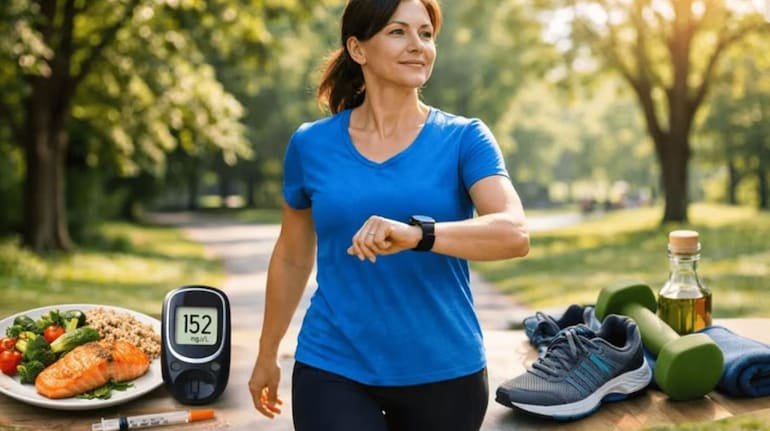
Due to today’s hectic life, sedentary lifestyle and consumption of highly processed food, millions of people across the country are falling prey to ‘Prediabetes’. Pre-diabetes is a medical condition in which your blood sugar levels are higher than normal, but not high enough to be directly declared as type 2 diabetes. Fasting plasma glucose between 100 to 125 mg/dL or HbA1c between 5.7% to 6.4% is a clear indication that insulin resistance has started in the body. The saving grace is that pre-diabetes is not a permanent disease—it is an early alarm of the body, which can be completely reversed at the right time with just a few simple habits without any medication.
According to endocrinologists and diabetes experts, exercising immediately after meals is better than going to the gym for 1 hour at any time of the day. Light Walk (Postprandial Walking) It is much more effective in controlling blood sugar.
You do not have to do any heavy exercise or sweaty running throughout the day. The only rule to make is that after 15 to 20 minutes of the three main meals of the day—breakfast, lunch and dinner—you should only eat at a slow or moderate pace. walking for 10 to 15 minutes Is.
When we eat food, after digestion, carbohydrates get broken down into glucose and enter the bloodstream, due to which blood sugar suddenly increases rapidly (Glucose Spike) 30 to 60 minutes after eating. Under normal circumstances, the pancreas has to release large amounts of insulin to transport this sugar to the cells.
When you take a walk after eating, two amazing processes work in the body:
-
Activation of GLUT-4 receptors: The large muscles of the legs and thighs (skeletal muscles) contract. These muscles need immediate energy to function, so they absorb excess glucose directly from the blood without the help of insulin.
-
Drastic reduction in insulin spike: Due to the immediate use of glucose by the muscles, there is no additional pressure on the pancreas. This immediately reduces the sugar spike after meals by 30% to 40% and with time the insulin sensitivity of the body starts getting restored.
To get the full health benefits of this simple habit, it is important to take some precautions:
-
Avoid fast running or brisk walk: Running fast or doing heavy exercise right after eating can cause stomach pain, indigestion and acidity. Always keep the pace normal and easy, which can be done while talking comfortably.
-
Don’t make the mistake of lying down or sitting on the couch: Often people sit down to watch TV or sleep after having dinner. This habit increases the sugar spike manifold. After meals, instead of sitting on a chair or bed, take a walk around the veranda, terrace or room of the house.
-
Drop the ‘100 Steps’ illusion: There is an age-old saying “Walk 100 steps after eating”, but according to science, 100 steps are completed in just 1 to 2 minutes, which is not enough to activate insulin receptors. It is essential to walk continuously for at least 10 to 15 minutes (about 1,000 to 1,500 steps).
If you make a few changes to your diet including a post-meal walk, pre-diabetes can return to normal levels in weeks:
-
Food Sequencing: While eating food, first eat fiber (salad, cucumber, green vegetables), then protein and fat (lentils, cheese, curd, egg), and lastly eat carbs (roti or rice). This sequence slows down glucose absorption.
-
7 to 8 hours of deep sleep: Lack of sleep increases cortisol (stress hormone) in the body, which increases insulin resistance. Set a regular bedtime.