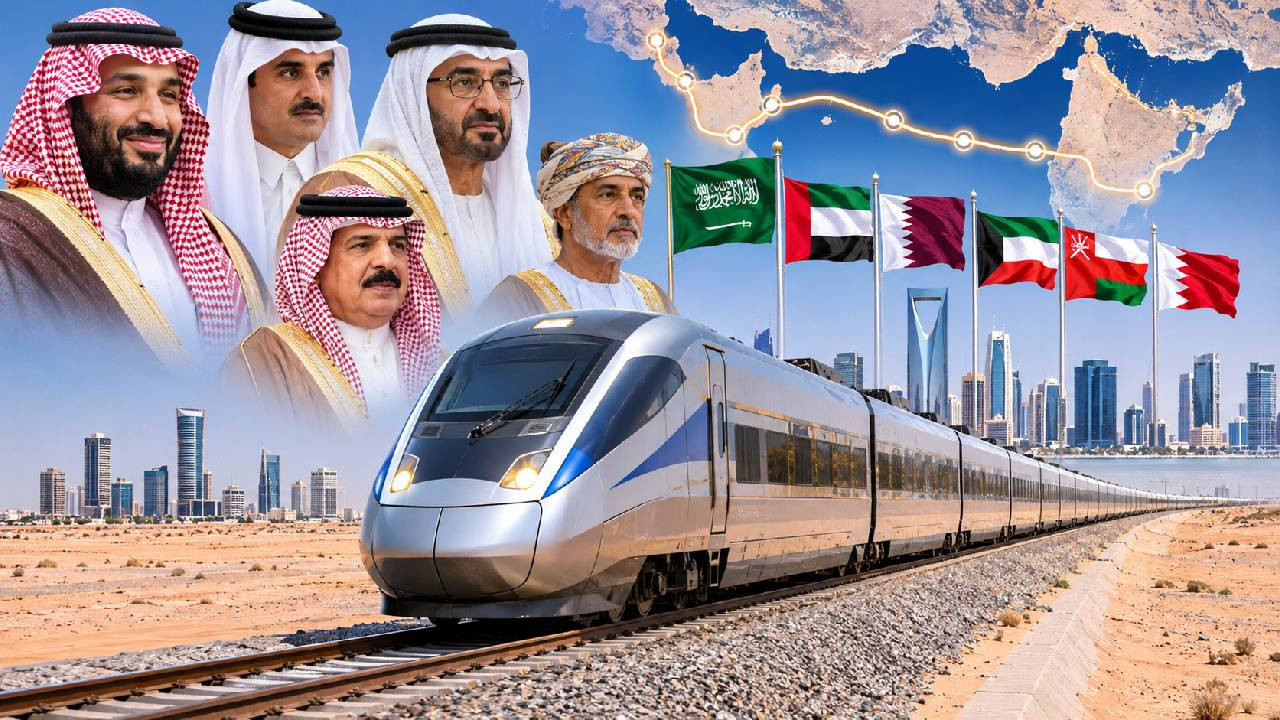
Ongoing tensions in the Gulf region and concerns over the security of the Strait of Hormuz have prompted many countries to rethink their transportation infrastructure. After the attacks on Iran by America and Israel, there were reports of activities being affected in this important sea corridor. This led to increased pressure on maritime trade, including the supply of oil and gas. In this background, a plan to develop about 1,768 km long railway line between the six member countries of the Gulf Cooperation Council i.e. GCC is being taken forward. This project has been named Gulf Railway.
Its objective is not only to connect cities by rail service, but also to create strong connectivity between industrial areas, ports and freight transportation hubs. According to the plan, a target has been set to start rail services by December 2030. It is estimated that around the time of initial operation, this system will be able to carry about 60 lakh passengers every year and will have the capacity to transport about 200 million tonnes of goods from one place to another. Therefore, it is being considered a big initiative in terms of the economy and strategic preparedness of the region.
Plan to connect six countries from Kuwait to Oman
The proposed corridor covers Kuwait, Saudi Arabia, Bahrain, Qatar, United Arab Emirates and Oman. The planned route will start from Kuwait, pass through different parts of Saudi Arabia, reach Qatar and UAE and further connect with Oman. The arrangement to connect Bahrain with Saudi Arabia by rail is also part of the project. In this way, a common framework will be developed for the movement of passengers and merchandise between the six countries.
The plan also emphasizes on connecting industrial centres, ports and logistics facilities with major populated areas. This could provide traders with an additional option to ship goods and is expected to improve connectivity between regional markets.
Proposal to keep the speed of passenger trains at 200 kilometers per hour
Under this huge network, separate operational arrangements will be prepared for the transportation of passengers and goods. There is a plan to keep the maximum speed of trains in passenger services up to 200 kilometers per hour. The speed limit for goods trains is proposed to be set between 80 to 120 kilometers per hour. The project is estimated to handle 60 lakh passengers and 200 million tonnes of freight annually when commissioned. There are plans to increase this capacity in future.
The number of passengers is expected to reach more than 80 lakh by the year 2045. During the same period, the annual freight traffic figure may increase to 271 million tonnes. Better rail connectivity is expected to boost tourism, industry, trade and supply chain.
Not a complete alternative to Hormuz, but definitely an additional route
This project is being considered an important part of the long-term transportation strategy of the Gulf countries. In case of regional conflict, maritime blockade or international tension, relying only on sea routes can be risky. The development of rail connectivity will provide a different option for movement of goods within the member countries. However, this network cannot completely replace the Strait of Hormuz, because the role of international maritime trade is different.
Despite this, a strong rail system between Saudi Arabia, the UAE and Oman could help connect ports and other trade routes. This may reduce the compulsion to keep the supply system dependent on any one route to some extent.
Gulf Railway Authority is monitoring the project
The supervision of this scheme is the responsibility of Gulf Railway Authority. The GCC Supreme Council approved the network in December 2009, while the relevant authority was established in December 2021. The estimated infrastructure cost of the project is said to be between $15.4 billion and $16 billion. According to available information, 55.92 percent of the total work has been completed so far.
The proposed length of the rail line in different member countries has also been decided. 672 km in Saudi Arabia, 461 km in UAE, 330 km in Oman, 141 km in Qatar, 111 km in Kuwait and 53 km in Bahrain are to be developed.
Regional project moving forward with 2030 deadline
The target of starting services by December 2030 is considered an important milestone for this project. With the creation of a common rail infrastructure between six countries, people's travel will become easier and business activities will also benefit. In future, better coordination is likely to be established between ports, industrial units and transportation hubs. For the Gulf countries, this initiative can also become a medium to increase economic cooperation and diversify supply routes. However, the final outcome will depend on the scheduled completion of the project and operational coordination between all the countries.