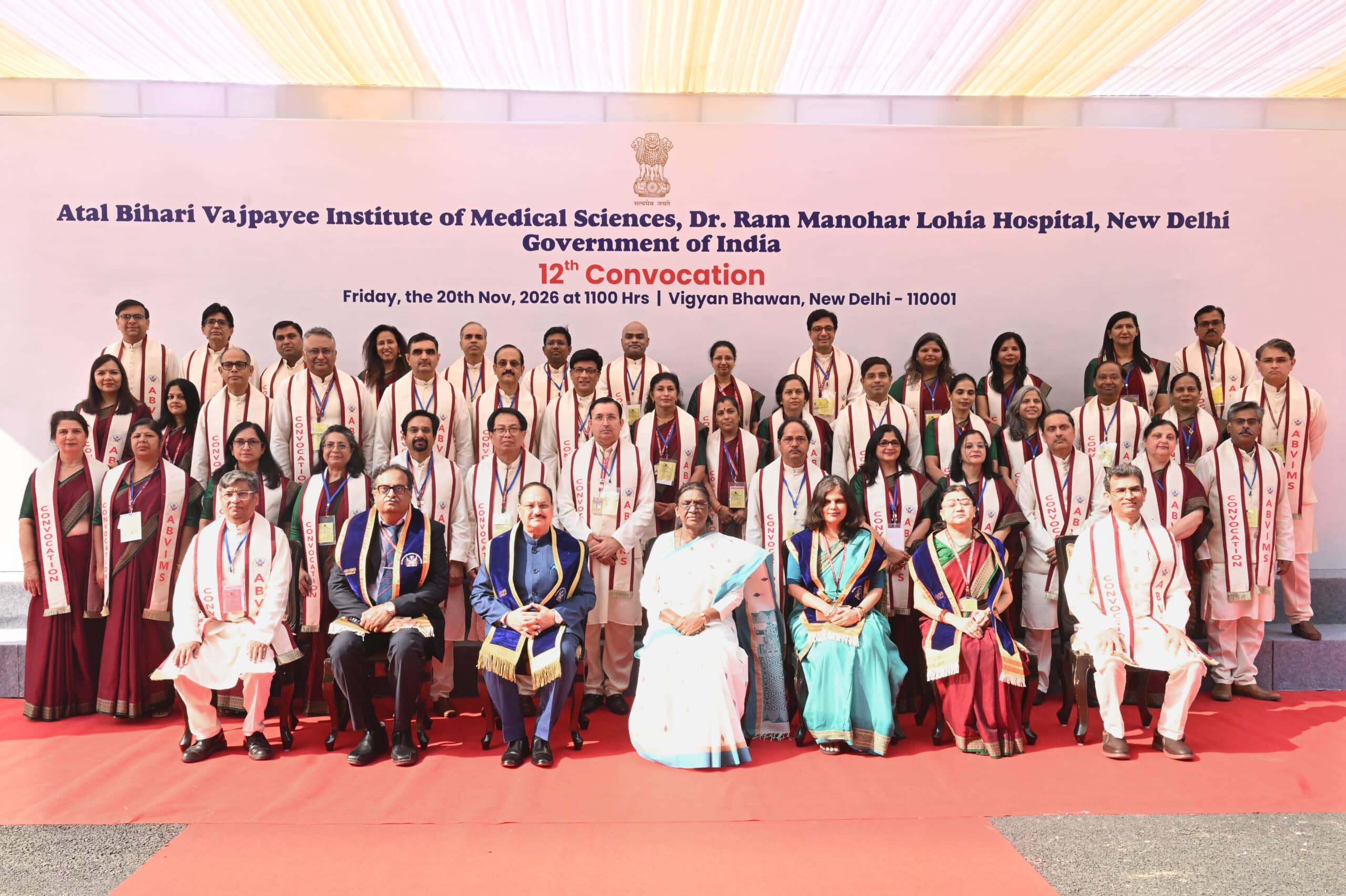
President Droupadi Murmu on Friday emphasised the importance of the “One Health” approach while addressing the 12th Convocation of Atal Bihari Vajpayee Institute of Medical Sciences (ABVIMS) and Dr Ram Manohar Lohia (RML) Hospital in New Delhi.
Highlighting the growing interconnectedness between human, animal, and environmental health, the President said that a health problem emerging in one domain can have far-reaching consequences across others. She noted that infectious diseases transmitted from animals to humans, coupled with challenges such as pollution, climate change, and environmental degradation, underscore the need for integrated healthcare strategies.
President Murmu stressed that collaboration among experts in human medicine, veterinary medicine, and environmental sciences is essential for achieving the goal of “One Health.” According to her, such cooperation would enhance disease prevention, facilitate early detection, and improve preparedness for future health emergencies.
The President also underscored the importance of understanding social, economic, nutritional, and environmental determinants of health. She encouraged research focused on local healthcare challenges, saying tailored treatment and preventive strategies are crucial for improving public health outcomes.
Referring to India’s evolving healthcare landscape, President Murmu noted that the National Health Policy revised in 2017 placed greater emphasis on preventive and promotive healthcare, alongside curative services. She said the policy also strengthened rehabilitative and palliative care while addressing the growing burden of non-communicable diseases such as diabetes, cancer, and mental stress.
Commending the Government of India’s efforts in the health sector over the last decade, she said these initiatives have significantly expanded healthcare services from the primary level to advanced tertiary care.
Addressing the graduating doctors, the President urged them to leverage their knowledge and research to make healthcare more effective, affordable, accessible, and people-centric. She called upon young medical professionals to extend their expertise to underserved and remote communities, ensuring that the benefits of modern healthcare reach every section of society.
She emphasised that the true value of medical education lies in serving the nation and uplifting vulnerable populations through compassionate and inclusive healthcare delivery.