
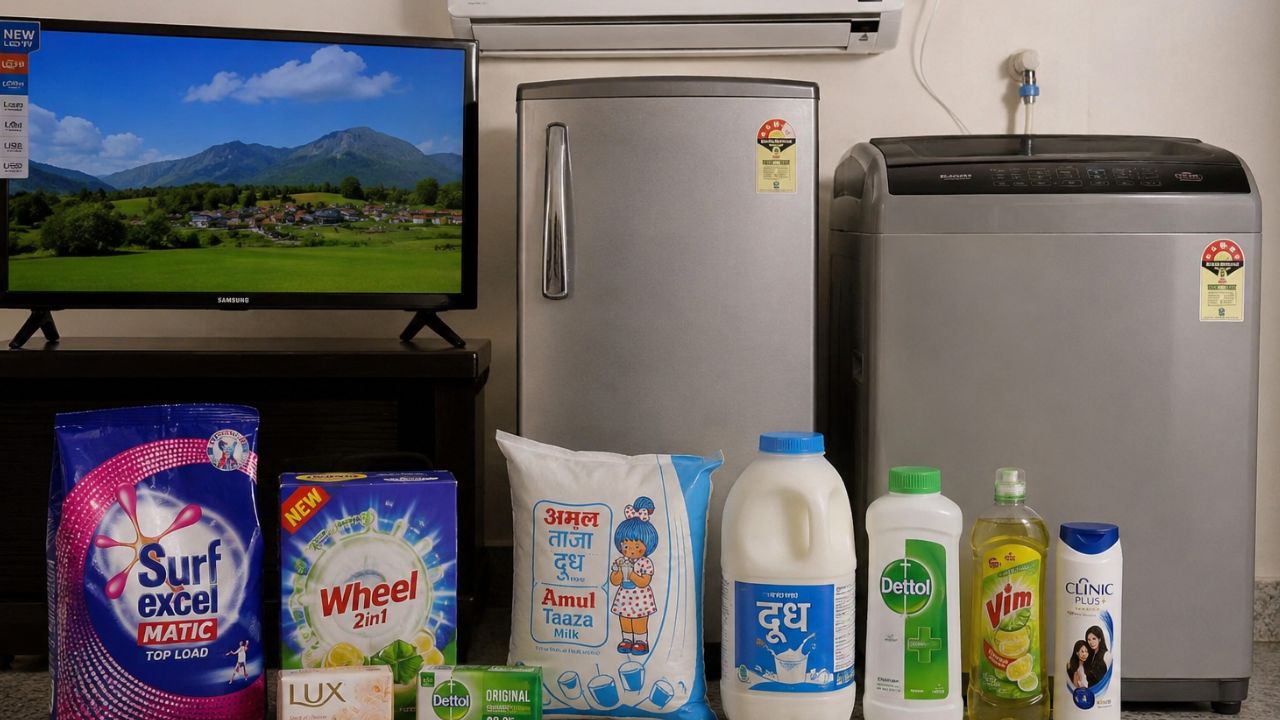

The Central Government had cut the Goods and Services Tax i.e. GST on September 22 last year. The government had removed the slabs of 12% and 28%. In its place, two main slabs of 5% and 18% were kept. Luxury and tobacco containing products were kept in 40 percent slab. The result was that the prices of food and drinks from the car fell. But this did not last long.
On February 28, the war between America, Israel and Iran started. This had an impact on oil exports. The closure of the Strait of Hormuz also affected the supply of gas and oil. The result came in the form of inflation.
Also read: ‘Don’t marry a rich man’, why did the CEO of a dating app give such advice to women?
Dainik Bhaskar said in one of its reports that in 90 days, the prices of 80 percent of the items included in the government’s monitoring list have increased more than on September 21, 2025. Meaning, the cheap days that came from the GST slab turned into expensive days due to the war.
Prices of which things increased?
- The newspaper said in its report that before the change in GST, condensed milk (Amul Mithai, 100 grams) was priced at Rs 40. Now its price has become Rs 42. After GST deduction, the price became Rs 37.6. The price of Cheese (Craft Original, 1 kg) is currently Rs 650. Before GST amendment the price was Rs 630. After deducting GST its price became Rs 604.8.
- On February 28, the day the war started, the price of one kg Amul Ghee was Rs 645. Now it has become Rs 665. On September 21, 2025, this price was Rs 650. After GST reduction, the price became Rs 611.
- 800 grams of Parle biscuit has become costlier by Rs 6 since the war. On February 28, the price was Rs 89 and now it has increased to Rs 95. Before the change in GST its price was Rs 100. After revision it became Rs 94.
- The price of a 50 kg cement bag has gone up to Rs 410. Its price on February 28 was Rs 365. Before the GST cut, one bag was available for Rs 380. After the revision, the price had come down to Rs 349.6.
- Talcum powder (Dewar, 300 grams), which was available for Rs 190 on February 28, is now available for Rs 210. Earlier, 100 ml hair oil was available for Rs 68. Now it is available for Rs 73. After GST amendment its price became Rs 60.52.
- On February 28, the price of one kg almonds was Rs 800. In just 90 days the price increased to Rs 900. After the GST amendment, the price of one liter water bottle increased to Rs 14. On February 28, the price was Rs 15 and this bottle is available for Rs 20. 175 ml shampoo is now available for Rs 124. Its price was Rs 115 on the day the war started.
- Gillette’s saving cream of 70 grams becomes Rs 88. Before the war started, it was available for Rs 80. Daikin’s one and a half ton AC was priced at Rs 34,490 on February 28. Now its price has become 39765.
Why is inflation increasing?
The newspaper said that inflation has also increased due to increase in naphtha prices by 70 percent. Naphtha is prepared from petroleum products only. It is used in washing machines and other electronic products, plastic products and packaging. Apart from this, inflation has also increased due to increase in prices of metal packaging, paper board, packaging film, cardboard and resin.
It was also told in the report that naphtha is the reason behind the increase in prices of 26 out of 54 items. On February 28, the price of naphtha was $620 per ton. Now it is being sold at $1300 per ton. At the same time, the rising price of copper is affecting AC, motor and wiring. The control board, chips and other sensors used in electronic products are imported from outside. Their cost has increased due to increasing transportation costs and falling rupee.

Comments are closed.