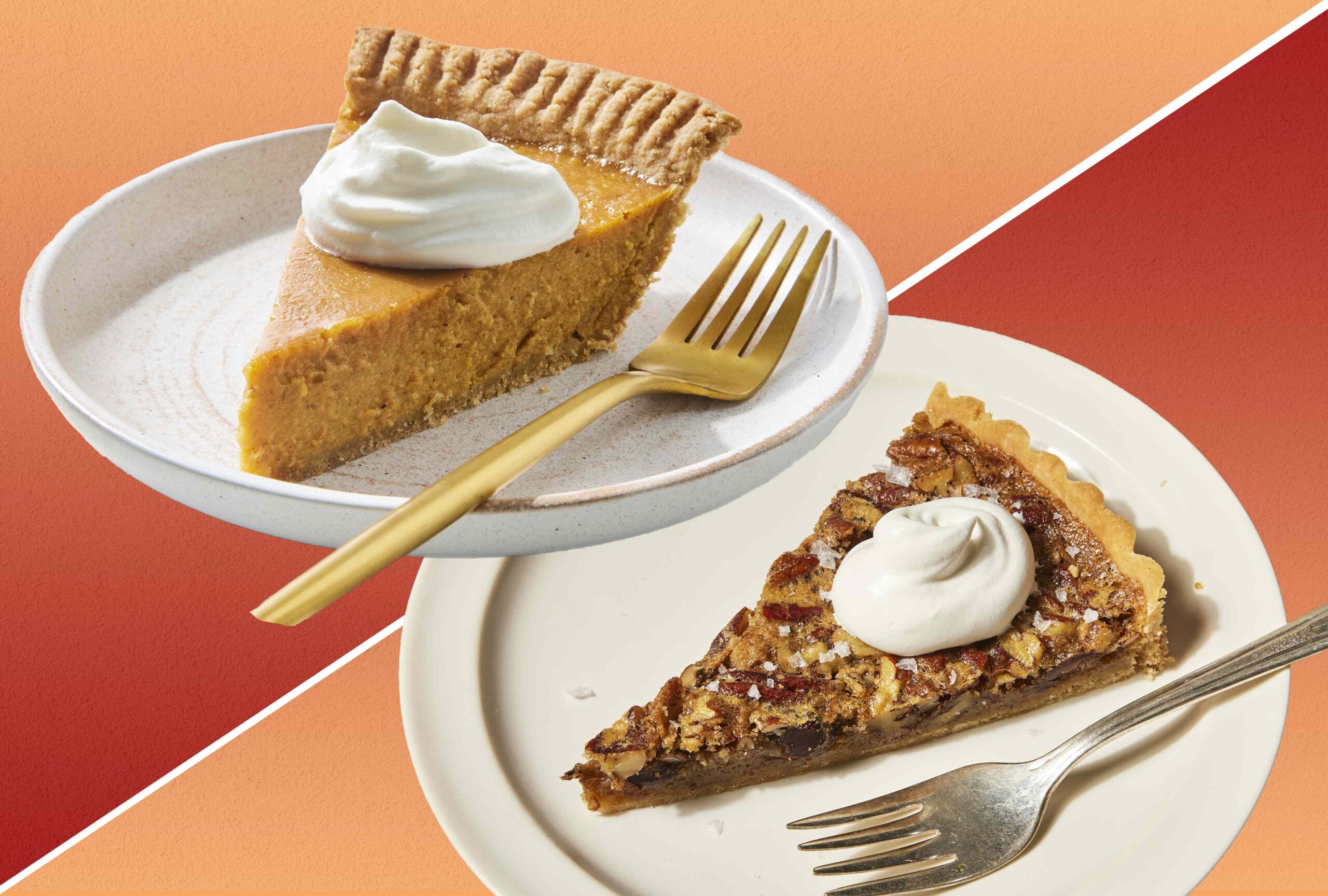
Experts say both holiday classics can fit into a blood sugar–friendly diet.
Reviewed by Dietitian Jane Leverich, M.S., RDN
Key Points
- Pumpkin pie typically contains less added sugar and fewer carbohydrates than pecan pie.
- Pecan pie’s higher fat content may delay the blood sugar response after eating.
- Portion size and the rest of your meal can influence how either pie affects blood sugar.
As the fall holidays get closer, you may be wondering which pie to make this year. Pumpkin and pecan are two classic choices, but if you’re managing diabetes or prediabetes, deciding between them may involve more than just flavor. Both can fit into a healthy eating plan, but differences in their ingredients as well as the size of your slice may affect your blood sugar differently.
To find out whether one has an advantage, we asked nutrition and diabetes experts how each pie’s ingredients influence blood sugar and what they recommend. Here’s how pumpkin pie and pecan pie compare, plus practical ways to enjoy either at your holiday table.
How Pumpkin Pie Affects Blood Sugar
Pumpkin pie contains carbohydrates from both its filling and crust. The added sugar in the filling and the starch in the crust are broken down during digestion into glucose, which enters your bloodstream. Insulin helps move that glucose into your cells for energy. If you have prediabetes or diabetes, your body may not use insulin as effectively, which can cause blood sugar to rise higher or stay elevated longer after eating.
“The added sugar and refined-flour crust do raise blood sugar,” says Toni Isabella, RN, B.S.N., CDCES. Even a slice that doesn’t taste overly sweet can affect blood sugar, because your body breaks down the flour in the crust into glucose.
Pumpkin pie also contains ingredients that provide nutrients beyond carbohydrates. Pumpkin contributes fiber, while eggs and milk provide protein and, depending on the type of milk used, fat. Eating carbohydrates alongside protein, fat and fiber can influence how quickly blood sugar rises, although the effect depends on the amounts in your slice and the rest of your meal.
Rather than relying on the pumpkin filling to prevent a blood sugar spike, consider the pie as part of your meal’s overall carbohydrate content, Isabella recommends. Having dessert after a meal that includes vegetables and protein may lead to a more gradual rise in blood sugar than eating it on its own. Still, the pie contributes carbohydrates that your body will need to process.
How Pecan Pie Affects Blood Sugar
Pecan pie combines a sugar-rich filling with fat from the nuts and butter, which can make its effect on blood sugar less straightforward than you might expect. The sugar and flour raise blood glucose, while the fat can slow how quickly food leaves your stomach. As a result, you may see a more gradual rise at first, followed by elevated blood sugar later as digestion continues.,
“The fat content in either pie may slow the initial rise in blood sugar, but for people with diabetes the high-fat dessert may cause a delayed, longer-lasting rise,” says Jess Baker, M.S. Research on mixed meals, particularly in people with type 1 diabetes, supports this pattern.
American Diabetes Association guidance notes that high-fat, high-protein meals can cause blood sugar to rise three or more hours after eating. This means that a blood sugar reading taken soon after dessert may not capture the full response.
The pecans themselves are also an interesting part of the pie. Research suggests that eating pecans may lead to a smaller rise in blood sugar and insulin compared with some higher-carbohydrate foods. While this research looks at pecans on their own rather than as part of a pie, it highlights how the balance of carbohydrates, fat and other nutrients in a food can influence the body’s blood sugar response.
Pumpkin Pie vs. Pecan Pie: Which Is Better for Your Blood Sugar?
Our experts agree that pumpkin pie is generally the better choice for blood sugar when you’re comparing similar-size slices. Its filling typically contains less added sugar, giving your body less carbohydrates to process. The fat in pecan pie may slow the initial blood sugar rise, but it doesn’t erase the effects of its sugar and starch. That makes pumpkin pie the winner if your goal is to limit dessert’s effect on your blood sugar.
How to Include Both in a Blood Sugar–Friendly Diet
You can plan for either pie without giving up the parts of dessert you enjoy most. These strategies can help you decide which pie is best for you.
- Include dessert in your meal plan. Baker recommends filling half your dinner plate with nonstarchy vegetables and one-quarter with protein. Account for pie along with other carbohydrate foods, such as potatoes and rolls, when planning the meal.
- Keep your usual meals. Baker advises against skipping meals earlier in the day to “save” calories for dessert. Eating near your usual times can help you manage blood sugar and avoid arriving at dinner excessively hungry.
- Try a crustless pumpkin pie. Isabella suggests omitting the crust if the filling is your favorite part and trying a crustless pie instead.
- Take a short walk afterward. Isabella recommends a short walk following mealtime to support the body’s uptake and usage of glucose.
Our Expert Take
Pumpkin pie is our experts’ pick for blood sugar because a similar-size slice typically has less added sugar than pecan pie. The nuts in pecan pie can slow digestion, but a slower rise in blood sugar doesn’t necessarily mean a smaller one. The good news is that you can make room for either at your holiday table. If you love pumpkin filling, a crustless recipe lets you keep that flavor while reducing carbohydrates. If pecan is your favorite, enjoy a smaller slice as your dessert. Keep your usual meals earlier in the day and consider a short walk after dinner to help manage the blood sugar rise.