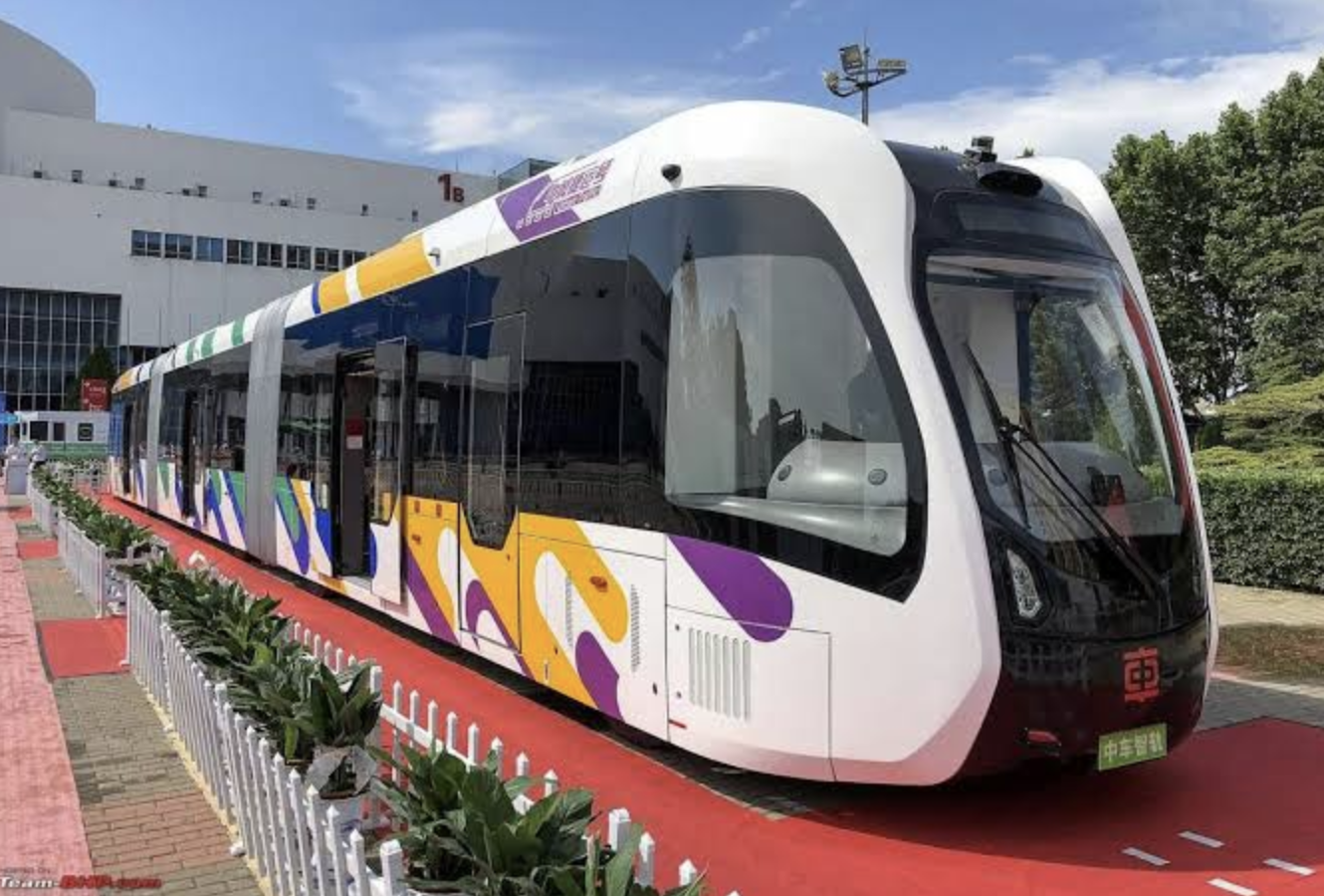
The Pimpri-Chinchwad Municipal Corporation (PCMC) has approved a pilot trial of an Electric Rapid Transit System (ERTS) on the 17-km Moshi-Wakad BRT corridor. The project could make Pimpri-Chinchwad the first Indian city to operate an ERTS, offering a high-capacity electric alternative to conventional buses.
17-Km Corridor to Host Pilot
The approved pilot will run from Godown Chowk in Moshi to Wakadusing the city’s existing BRT corridor rather than requiring a completely new transport corridor.
The proposed route will pass through key locations including Spine Road, Telco Company, PSB Chowk, Auto Cluster and Kalewadi Phata before reaching Wakad.
The use of existing BRT infrastructure is expected to reduce the need for major additional civil construction and could allow the system to be introduced relatively quickly.
Maha Metro to Implement the System
The project follows directions from Maharashtra Chief Minister Devendra Fadnaviswho asked authorities to examine the feasibility of ERTS in Pimpri-Chinchwad and potentially other cities in the state.
Maha Metro has been tasked with implementing the system rather than the Pune Mahanagar Parivahan Mahamandal Limited (PMPML).
PCMC had earlier approved ₹85 lakh for preparing the Detailed Project Report (DPR)which will examine the technical, environmental and financial aspects of the proposed system.
240-Passenger Capacity
One of the biggest differences between ERTS vehicles and conventional city buses is passenger capacity.
The proposed electric vehicles can carry around 240 passengerscompared with approximately 60–70 passengers in a regular PMPML bus. This higher capacity is intended to help move large numbers of commuters along heavily used corridors.
The vehicles are expected to be fully electric and will be charged at depots. The system is designed to provide a more metro-like public transport experience while operating on roads.
Potential Alternative to Metro Expansion
The ERTS pilot could offer PCMC another way to increase public transport capacity without waiting for the construction of a conventional metro system.
If the trial is successful, officials are considering extending the system across PCMC’s 60-km BRT network. The technology could also be evaluated for use in Pune and other Maharashtra cities.
Officials have indicated that the pilot could become operational within around one to one-and-a-half yearsalthough the final timeline will depend on approvals, the DPR and procurement.
First Operational ERTS in India?
PCMC could become the first Indian city to have an operational ERTS if the pilot is successfully implemented.
Similar electric rapid-transit concepts are already being used or explored internationally, including systems in parts of Europe and Brisbane, Australia. Visakhapatnam and Hubballi-Dharwad have also explored similar technology, but do not yet have an operational ERTS system.
For Pimpri-Chinchwad, the project could provide a way to increase public transport capacity while making use of infrastructure already built for BRT.
Summary: PCMC has approved a 17-km ERTS pilot between Moshi and Wakadusing the existing BRT corridor. The electric vehicles could carry around 240 passengerssignificantly more than conventional buses, and Maha Metro will implement the project. If successful, the system could eventually be expanded across PCMC’s 60-km BRT network and potentially to other Maharashtra cities.
Image Source