
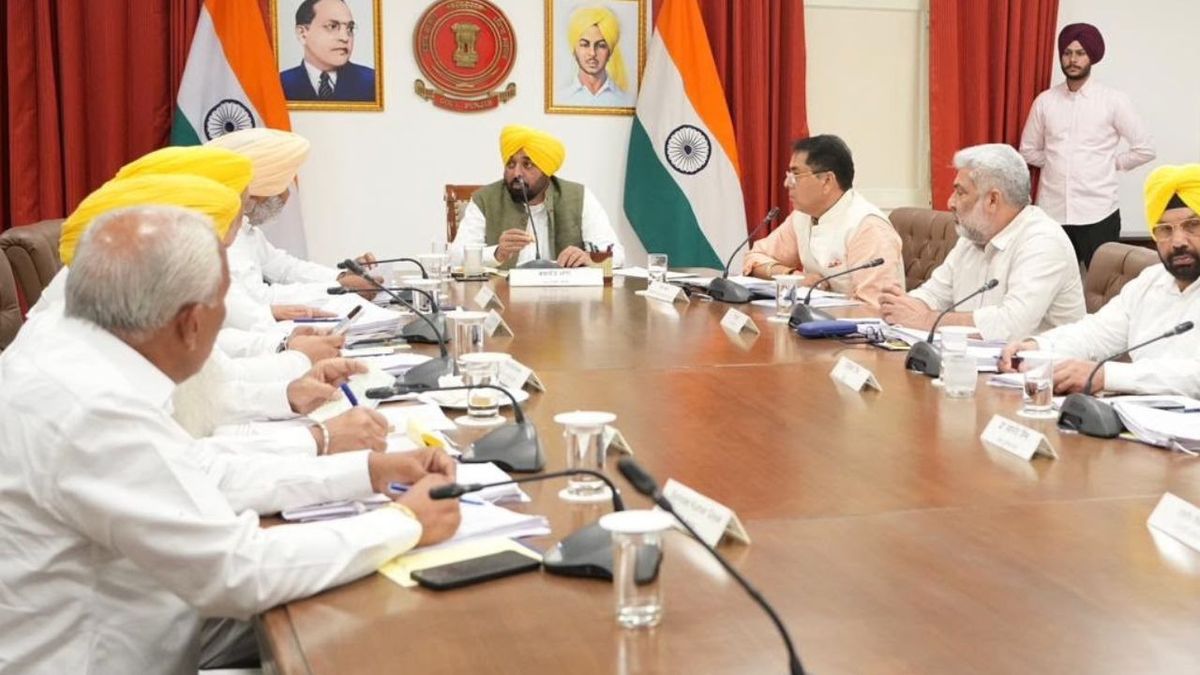
Big decision of Punjab Cabinet: Fee increase of private schools will be controlled, limit of annual increase fixed at 5%

Bhagwant Mann government of Punjab has taken a big step to stop the arbitrary fee increase of private schools. In the cabinet meeting chaired by Chief Minister Bhagwant Singh Mann, many important decisions were approved, which will have a direct impact on the areas related to education, industry, administration and digital governance. The most talked about decision among these is related to controlling the fee increase of private unaided schools.
The government has approved the ‘Punjab Regulation of Fees of Un-Aided Educational Institutions (Amendment) Ordinance, 2026’. Under this, now private schools will be able to increase fees only by a maximum of 5 percent every year. If any school wants to increase the fees more than this, it will have to take prior permission from the concerned regulatory authority.
There will be transparency in fee structure
The government says that the purpose of this amendment is to save parents and students from unnecessary financial burden. In the new provisions, the definitions of fees, fee increase and total fee increase have been further clarified so that the school management cannot take advantage of any kind of ambiguity.
This step will increase transparency in the fee determination process and accountability of schools will also be fixed. For a long time, there was resentment among parents regarding the rising fees of private schools, in view of which the government has taken this decision.
Changes in rules to promote industries
The Cabinet has also approved amendments in the guidelines related to capital subsidies and investment incentives to encourage investment and industrial development in the state. The government believes that this will make the process of financial assistance to industries more simple and transparent.
Under the new system, capital subsidy will be provided expeditiously to eligible industrial units after verification of necessary documents and fulfillment of prescribed conditions. This will increase the confidence of investors and give impetus to industrial activities in the state.
Digital governance will get a new dimension
The Punjab government has also approved the implementation of State Data Integration Platform (SDIP) to make administrative functions more effective and technology based. Through this platform, the data bases of various government departments will be linked, which will eliminate duplication of information and improve the quality of services.
A three-tier steering committee will be formed under the chairmanship of the Chief Secretary to monitor this project.
Administrative strengthening of Dasuha sub-division
The Cabinet has also approved creation of a total of five new posts of Additional Deputy Commissioner (General) and support staff in Dasuha sub-division of Hoshiarpur district. With this, people of the area will not have to travel long distances for administrative services and public complaints, revenue matters and other government works will be resolved faster than before.
Through these decisions, the Punjab government has given the message of giving priority to public interest in the fields of education, industry, administration and digital reforms.
Also read – Partnership between Andhra Pradesh and Google, joint task force will be formed for AI-cloud and digital governance.

Comments are closed.