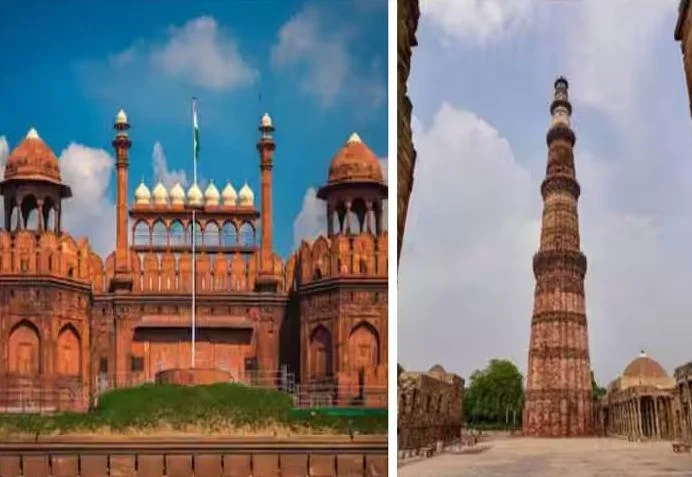
Qutub Minar Red Fort Without Cement: Delhi’s majestic Qutab Minar (foundation laid in 1199) and the Red Fort (1638-1648) built by Mughal emperor Shah Jahan — both historical monuments were built in a time when cement was not a name. Portland cement was patented by Joseph Aspdin in 1824 and the first commercial plant in India opened in 1914 in Porbandar, Gujarat. So the question is, how could such huge and strong buildings have been built hundreds of years before the invention of cement that are still standing even centuries later?
The secret of lime slurry and natural mixtures
Ancient kadiyas did not have modern cement, but they had advanced traditional technology of construction. Lime mortar was used to join the stones and bricks together.
According to the Government of India’s Department of Publication and Heritage Conservation documents, the following indigenous and natural materials were added to this special mortar:
- Lime: It was prepared by dissolving it in water for a long time.
- Surkhi (finely ground baked brick): To increase the strength of mortar and reduce the effect of moisture.
- Jaggery and Batasha: (Binding Agent) to keep the mixture firmly attached.
- Urad dal, gum and bel-giri: As a natural additive, which made the mortar as hard as stone.
UNESCO’s Qutab Minar Conservation Records (1944-49) also clearly mention that the same lime mortar was used to rejoin the damaged parts.
Special construction of Qutab Minar and Red Fort
- Qutab Minar: In 1199, Qutbuddin Aibak started its construction. It mainly uses red and slaty balua (sandstone) stone, while marble has been incorporated in the upper floors. In addition to lime mortar to bind the stones Interlocking technology (method of interlocking stones) was used, which gave the minar extra strength.
- Red Fort: Built between 1638 to 1648, the walls of the Red Fort are mainly made of red sandstone. Here also the traditional method of lime mortar was used for joining.
Why is this ancient technology so durable?
According to engineers, the natural material in lime mortar undergoes a slow chemical reaction over time. This creates a very strong bond between the stones which helps in controlling the humidity of the air. This is the reason why these buildings have withstood harsh environmental influences like heat, cold, rain and earthquakes for centuries. Even today, the same traditional technique is adopted instead of cement in heritage conservation projects.