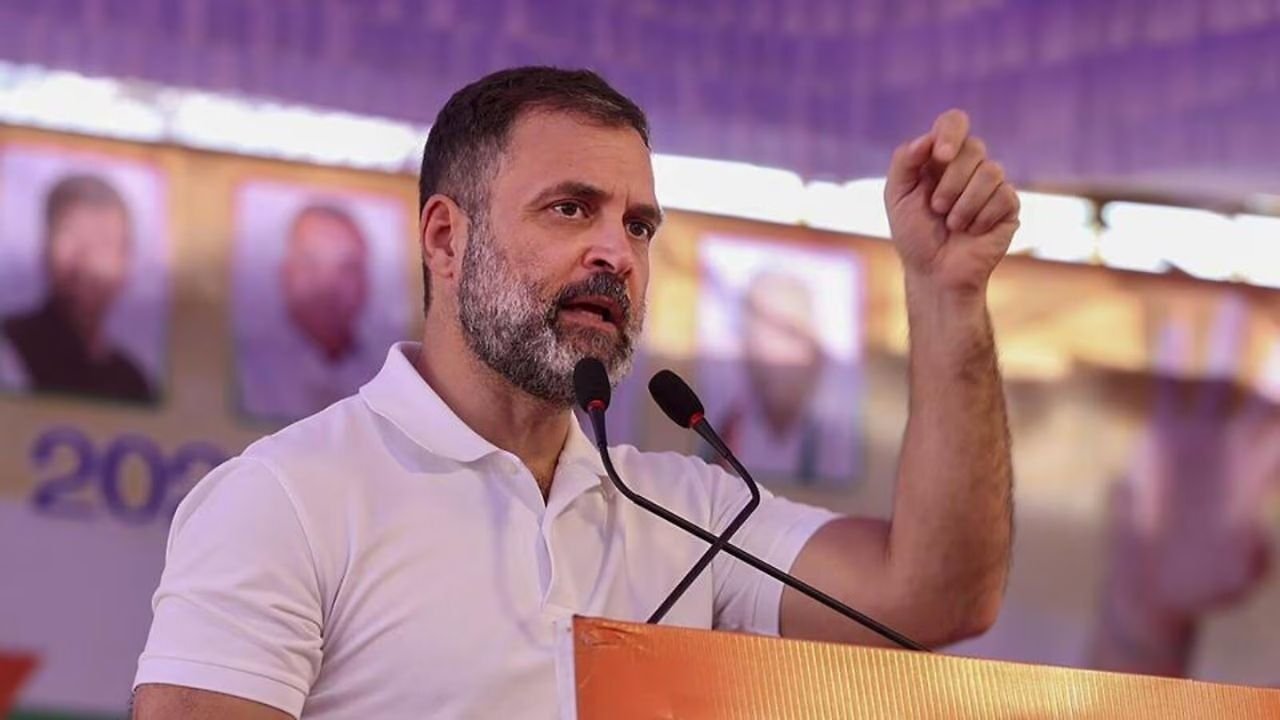
Leader of Opposition in Lok Sabha and Congress MP Rahul Gandhi, during his US tour, is continuously expressing his views on Indian politics, democracy and international diplomacy from global forums. In this series, during a special dialogue program organized at America's famous University of Chicago, Rahul Gandhi, while addressing the students, researchers and NRI community, made a big statement on the strength of Indian democracy. Targeting the policies of the central government and the ruling party, Rahul Gandhi bluntly said that the foundation of India is based on democratic values and the Constitution and the opposition will not allow India to become a non-democratic nation at any cost. He stressed that a large and diverse country like India can be taken forward only through dialogue, institutional independence and participation of all sections. What did Rahul Gandhi say on Indian democracy, constitutional institutions and the role of opposition? Answering the questions of students in the auditorium of the University of Chicago, Rahul Gandhi said that today there is an ideological conflict going on in India between two different ideologies. On the one hand, there is the ideology that promotes centralization of power and the interests of select people, while on the other hand, there is the ideology of the Congress and the India Alliance that is fighting for the protection of the Constitution, federal structure and the rights of common citizens. Rahul Gandhi said that even though there is huge pressure on many constitutional and investigative agencies of the country today, the democratic consciousness of the people of India is very alive. Giving an example, he said that the voters of India have always shown their strength when the time comes and that is why any attempt to completely destroy the democratic institutions in the country will never succeed. Rahul Gandhi gave a clear view on Israel-India relations and the West Asia crisis. On questions related to international diplomacy and foreign policy, Rahul Gandhi also openly expressed his opinion on India-Israel relations and the current geopolitical situation in the Middle East (West Asia). He said that India's bilateral relations with any country should be based on national interests, historical partnership and balanced diplomacy. Referring to India's defence, agricultural and technological cooperation with Israel, Rahul Gandhi said that India should maintain its traditional diplomatic balance, where on one hand there is friendly relations with Israel, on the other hand India's sensitivity towards the human rights of Palestinian citizens and lasting peace in the region is also clearly visible. He said that in the era of global conflicts, India's role should be that of a responsible and peace-loving nation which advocates finding solutions through dialogue and diplomacy. Analysis of the changing global order and US-China competition Talking about the changing global order, Rahul Gandhi said that the world is rapidly moving towards a multipolar era, where the balance of old powers is changing. Referring to the ongoing economic and technological competition between America and China, he said that today China's dominance over manufacturing and supply chains at the global level has become a big challenge for the democratic countries of the world. Rahul Gandhi suggested that democratic countries like India and America should together build an alternative global production hub and clean energy model that is transparent and creates employment opportunities for millions of youth. He also said that India's biggest strength is its young population and democratic structure, by giving the right direction, India can give decisive leadership in the global system of the 21st century. Also expressed concern over the future of Artificial Intelligence (AI) and employment. In the last phase of the dialogue, Rahul Gandhi also seriously discussed the challenges arising from Artificial Intelligence (AI) and new technologies. He said that AI and automation will completely change the way work is done around the world in the coming years, which could pose a major threat to traditional jobs. He warned that if the benefits of technological advances remain limited to only a few big tech companies, the economic inequality gap in society will deepen. Therefore, governments and policy makers will have to focus on improving the education system, skill development and data security from now on, so that technology becomes a medium to empower common citizens instead of displacing human labour.