
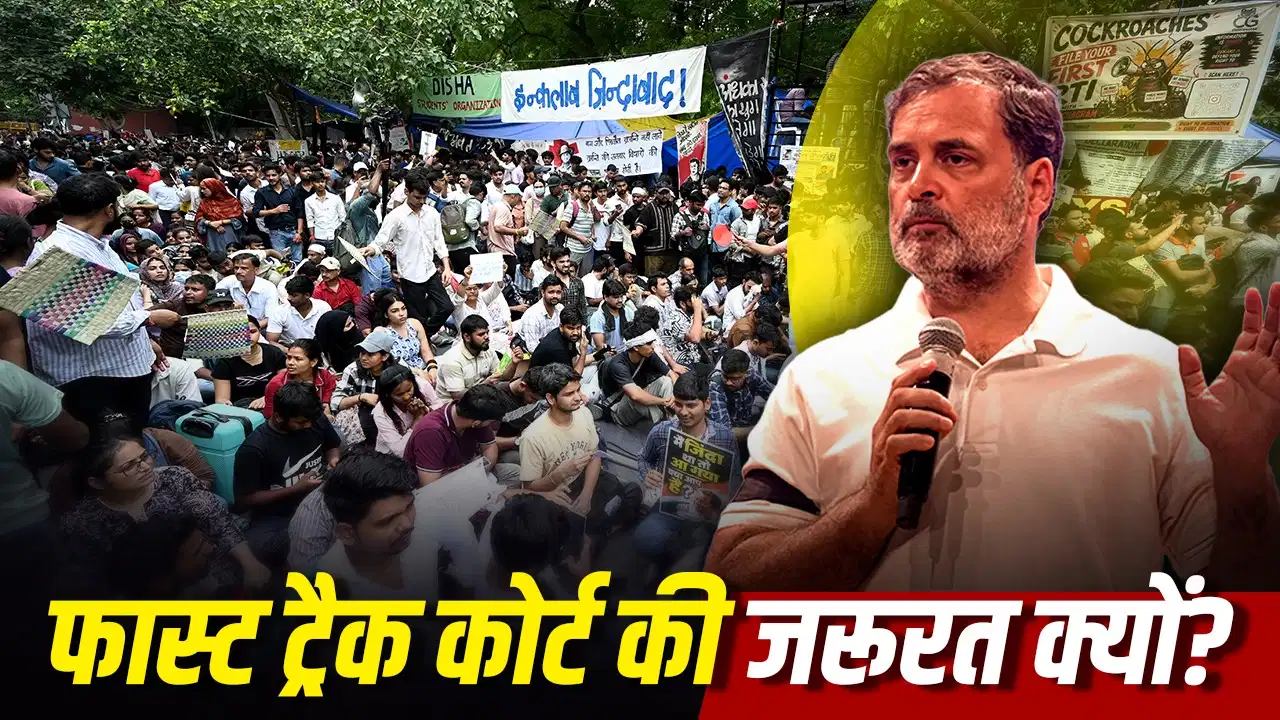
Rahul Gandhi’s allegation: 152 papers leaked in 10 years, but no culprit has been punished; After all, where is the law getting stuck?

Knews DeskAmidst the ongoing controversy over paper leak cases across the country, Congress MP Rahul Gandhi has raised serious questions on the central government. He claimed that in the last decade, there were 152 incidents of paper leaks in the country, which affected about 7.5 crore students and their families, but till now the culprits have not been given final punishment in any case. On the other hand, Prime Minister Narendra Modi has announced that fast track courts will be established for speedy disposal of such cases.
Now the biggest question is that when there are strict laws to stop paper leaks, then why are the culprits not being punished?
What are the laws to stop paper leaks?
the central government Public Examinations (Prevention of Unfair Means) Act, 2024 Has been applied. This law applies to national level examinations like UPSC, SSC, NTA, RRB and IBPS.
Under this law, leaking question paper, buying or selling examination paper, running a solver gang and breaking into the computer system related to the examination are considered crimes.
If found guilty, a jail term of 3 to 5 years and a fine of up to Rs 10 lakh can be imposed in normal cases. If it is proved to be an organized crime, there is a provision of imprisonment of 5 to 10 years and a fine of up to Rs 1 crore.
Apart from this, many states including Uttar Pradesh, Rajasthan, Gujarat, Uttarakhand have also made different laws to stop paper leaks. Bihar government has also recently taken steps towards including paper leak in the category of organized crime.
Arrests were made, but why no punishment?
In recent years, investigating agencies have taken major action in many big cases.
In the NEET-UG 2024 paper leak case, CBI had arrested dozens of accused and filed a charge sheet. Many people have also been arrested in the NEET-UG 2026 case and the investigation is still going on.
Despite this, till now no final punishment has been given in any major paper leak case. Rahul Gandhi raised this issue in his press conference.
What is the biggest challenge of the law?
According to legal experts, the biggest problem is the long time taken to complete the investigation.
According to Indian law, if the investigating agency is not able to file a charge sheet within the prescribed time limit in a serious crime, then the accused Default Bail (Statutory Bail) One gets the right to receive.
In cases like paper leak, investigation takes a lot of time due to digital evidence, investigation spread across several states, forensic reports and large number of witnesses. In such a situation, many times the charge sheet is not filed within the stipulated period and the accused does not get legal relief.
However, getting bail does not mean acquittal of the accused. The trial continues and the court later pronounces its verdict based on the available evidence.
What will change with fast track court?
Amidst the increasing protests and students’ agitation in paper leak cases, Prime Minister Narendra Modi has announced that fast track courts will be created to hear these cases.
The government says that the objective of these courts will be to speed up the hearing of cases and get the culprits punished quickly. Normal judicial procedure will also apply in fast track courts, but hearing will be given priority so that cases can be disposed of in relatively less time.
Is there a need to change the law?
Experts believe that mere provision of strict punishment is not enough. If the investigation is not completed on time and disposal of cases remains pending for years, then the effect of the law gets weakened.
For this reason, the debate has now intensified that such a system should be made to investigate and hear organized crimes like paper leaks, so that the culprits can be punished in a timely manner and the credibility of competitive examinations is maintained.

Comments are closed.