

6
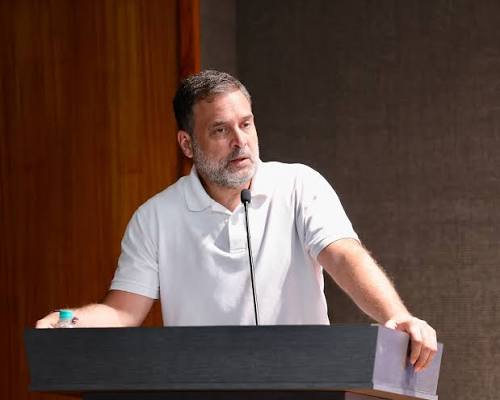
Like Prime Minister Narendra Modi, Rahul Gandhi—the Leader of the Opposition in the Lok Sabha—has been making a series of surprising decisions. However, there is a significant difference between the two. Prime Minister Modi is experimenting at a time when his party is in power and occupies a position of strength, whereas Rahul is experimenting while his party is fighting for its very survival and its organisation has become extremely weak.
Rahul is sidelining experienced leaders who are committed to the party’s ideology and is instead acting on the advice of weaker leaders. Following decisions regarding Tamil Nadu and the allocation of Rajya Sabha tickets, the appointment of in-charges for three states, including Uttar Pradesh, on Friday came as a surprise. In Uttar Pradesh, where the Congress has been completely marginalised, he appointed Rajendra Pal Gautam, who hails from a party with a non-Congress ideology, as the in-charge. This signals Rahul’s intent to directly pursue “Mandal politics” or caste-based politics in Uttar Pradesh.
Meanwhile, by entrusting the responsibility of a crucial state like Haryana to a junior leader like Sanjay Dutt, he has effectively signalled to veteran and experienced leaders that new experiments are in the offing. This is being viewed as a warning sign for former Chief Minister Bhupinder Singh Hooda and has also heightened concerns for MP Kumari Selja and Randeep Surjewala.
While the in-charge for Odisha has also been changed, with Lalji Desai stepping in and Priyanka Gandhi’s close aide Ajay Kumar Lallu being shown the door, this move is unlikely to significantly impact Congress’s political fortunes there. The real impact will be felt in the Hindi-belt states of Uttar Pradesh and Haryana. Since there are no immediate elections in Haryana, the primary political focus will be on Uttar Pradesh. Rahul Gandhi also has to make a decision regarding Punjab, a state where elections are due. Given Rahul’s current mindset and his inclination towards Mandal politics, it appears he might further promote Dalit politics in Punjab by giving an opportunity to former Chief Minister Charanjit Singh Channi. However, the decision regarding Punjab is no longer straightforward. Much like in Rajasthan and Madhya Pradesh, the Congress party in Punjab faces the risk of a split.
The Congress party in Punjab, which appeared somewhat strong just six months ago, is now reportedly facing the prospect of being knocked out of the contest entirely, with the BJP and the Aam Aadmi Party emerging as the key contenders. If the Congress loses in Punjab this time, the party could face an existential crisis. Rahul often fails to make timely decisions regarding state-level affairs, a tendency that is weakening the party. Currently, Rahul Gandhi places greater trust in leaders like Anil Jai Hind, Kanhaiya Kumar, K. Raju and Krishna Allavaru—individuals who have joined from other parties and do not share the traditional Congress ideology—rather than relying on long-time party loyalists.
By appointing Dalit leader Rajendra Pal Gautam as the party’s in-charge in Uttar Pradesh just before the elections, Rahul has signalled that the party intends to pursue a “go-it-alone” strategy in the state, similar to the approach taken in West Bengal.
Gautam is the same leader who openly criticised regional parties during a Congress conference held in Uttar Pradesh. Furthermore, he had attempted to meet BSP leader Mayawati but was unsuccessful. His strategy advocates that Congress should align with Mayawati to champion the cause of Dalits and Other Backward Classes nationwide.

Comments are closed.