
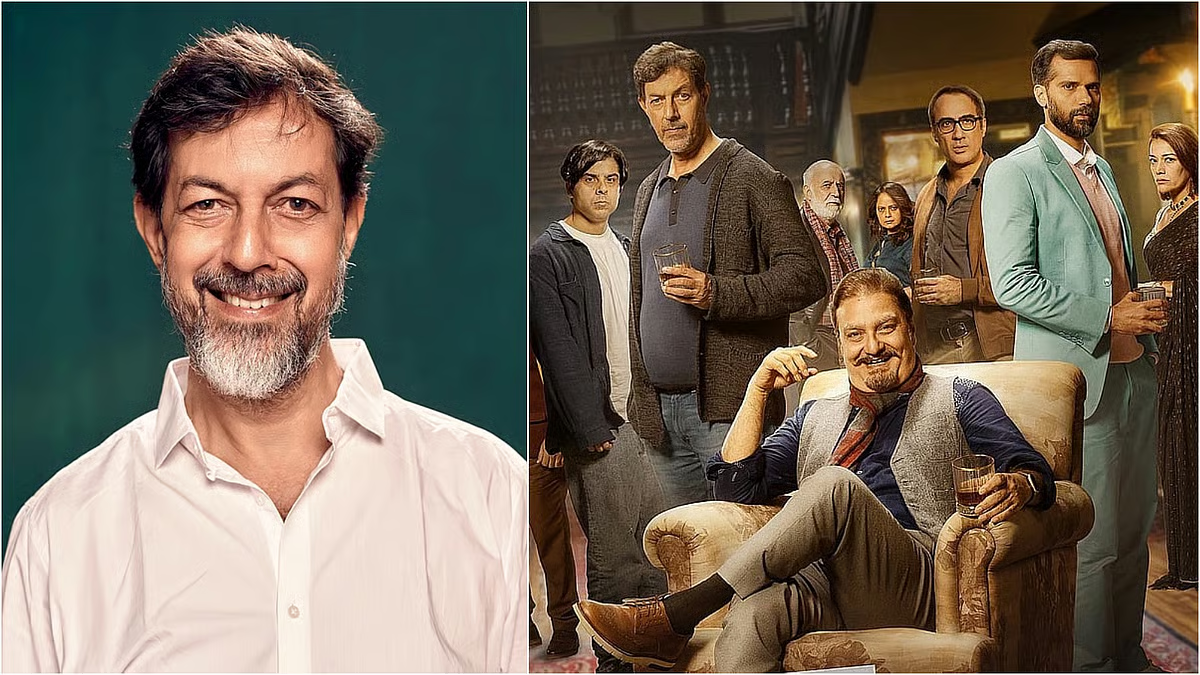

Another thing Rajat remains firm about is his social media escape: the filmmaker is not active on social media, nor does he carry a mobile phone. How does he keep in touch with the audience’s taste or the film discourse? He explains, “It’s not like the world didn’t exist before social media. When I go out, so many people meet me and say, ‘Thank you for making Look openly,’ or ‘I enjoyed Kadakh a lot.’ If the new has to reach you, it will.” Instead, Rajat talks about what he finds more essential to his working process. “I don’t watch many films, unless someone is doing a great job — then you want to watch it as work as art. But as filmmakers, it’s important to be in touch with oneself rather than seeing what other films are being made. You just have to dig deeper within yourself. I don’t want to make what’s trendy, but rather what excites me.”
false (2008), which remains Rajat Kapoor’s biggest theatrical success, came at a time when the ‘multiplex cinema’ was on a rise. The filmmaker takes cognizance of how things have changed since his last big theatrical film Look openly (2014), adding, “There has been a slow downturn since 2009. In the last 5-6 years, it has become worse. It’s quite bleak, frankly.” With the growing diktats around definitions of a “theatrical film” and diminishing space for experiment, there is smaller space for filmmakers like him in the present times. Rajat, however, veers my attention towards Iranian cinema as a defying example. He says, “Do you know how much censorship there is in Iran? And yet, they’ve been doing it, making great cinema for the last 40 years. I don’t think it is fair to say that we have restrictions, as an explanation for not making good films. We are not making good films because we are not pushing ourselves enough.” On home ground, the filmmaker mentions the likes of Rima Das (Village Rockstars, Bulbul Can Sing) and Gurvinder Singh (Anhe Ghore Da Daan) as shining examples of indie cinema. “Our film industry understands the logic and mechanics of the market, works like a factory around that, and this marketplace has been there forever. If an independent filmmaker wants to discover their voice, they have to find means within the alternate landscape. They manage because they must, because they have no choice. They will steal, sell their house, but somehow make their film.”
Rajat says he too remains optimistic on a personal level. “When multiplex era came, we weren’t prepared for it. When OTT platforms arrived, they carried a lot of hope in the beginning. Now they have also chosen a side. So, some new disruption will come and this too will change after 2-3 years — It has to,” he concludes.
Comments are closed.