
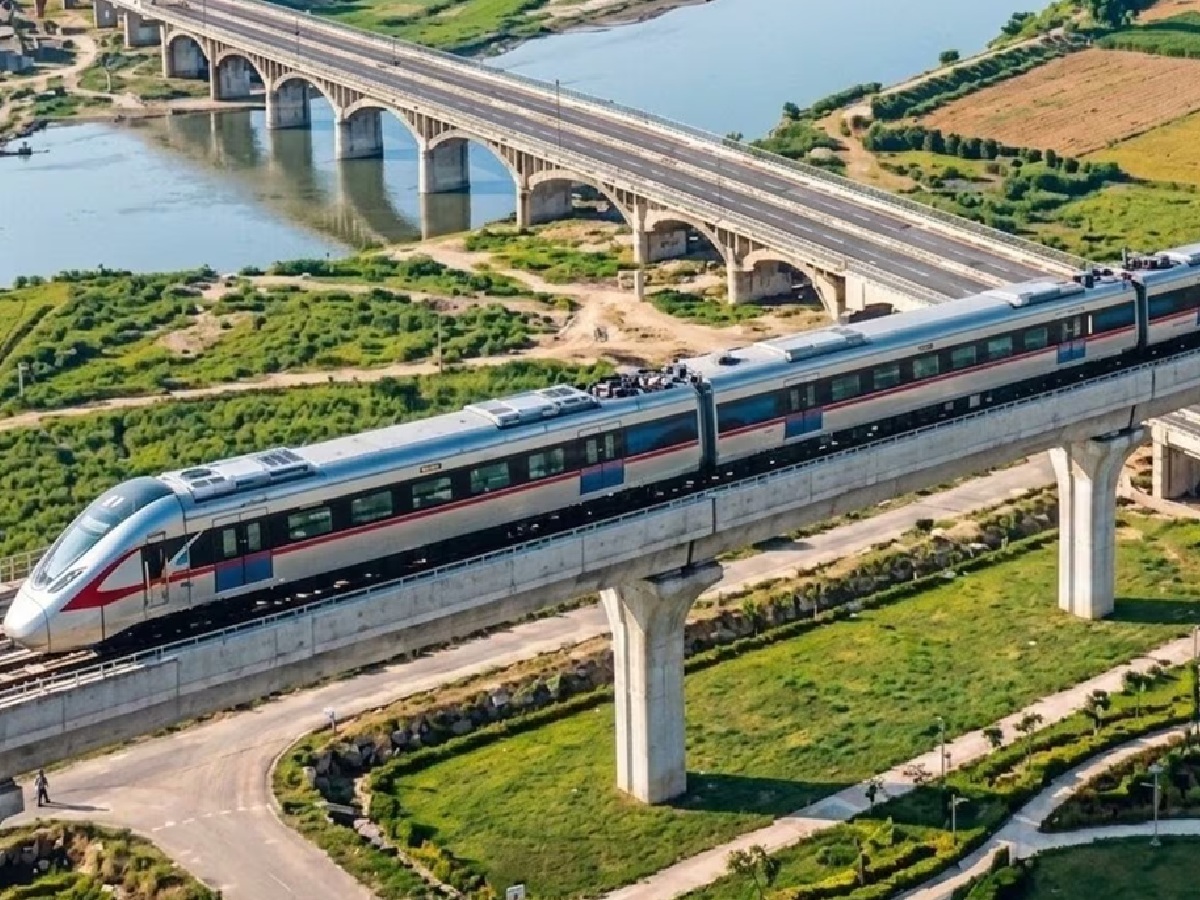
Rapid Rail will run directly from Delhi to Rishikesh, the tiring journey of 5 hours will now be completed in just 150 minutes!

A wonderful and epoch-making news has come to the fore for crores of devotees and tourists visiting the mountains and holy religious places of Devbhoomi Uttarakhand from Delhi-NCR. The country’s fastest regional rail ‘Namo Bharat’, which provides high-speed connectivity to the National Capital Region, is now going to travel directly to the foothills of the Himalayas. The Central Government has given its in-principle approval to the historic proposal to extend the Delhi-Ghaziabad-Meerut Regional Rapid Transit System (RRTS) corridor from Modipuram station in Meerut to the world famous spiritual centers of Haridwar and Rishikesh. This approximately 150 km long new extension corridor will halve the travel time by connecting the country’s largest tourism hub with Delhi. Uttarakhand’s efforts get green signal: Ground work and DPR preparation for ‘Ganga Growth Corridor’ started. This mega project is the result of continuous strong lobbying by Uttarakhand Chief Minister Pushkar Singh Dhami to Prime Minister Narendra Modi and Union Urban Development Minister Manohar Lal Khattar. After getting the formal green signal from the Central Government, now the Government of Uttarakhand, Government of Uttar Pradesh and National Capital Region Transport Corporation (NCRTC) have jointly started implementing this dream project. Extensive aerial and ground survey of the entire route along with preparation of a Detailed Project Report (DPR) has been started on war footing, wherein the number of stations, required land acquisition and complex engineering route map is being finalised. Uttarakhand government has appointed Additional Secretary Reena Joshi as special nodal officer for the speedy implementation of this mega project. Route map from Meerut to Laxman Jhula: Know through which big cities Namo India will pass. This state-of-the-art semi-high speed rail track will extend beyond the last end of the currently operating Delhi-Meerut corridor i.e. Modipuram (Meerut). In the Uttar Pradesh part, this corridor will start from Modipuram and pass through Daurala, Khatauli, Muzaffarnagar Industrial Area and Purkaji town located on the geographical border of Uttar Pradesh-Uttarakhand. After this, crossing the border, this train will pass through the big center of education Roorkee (IIT Roorkee) and the sacred Har Ki Pauri in Haridwar and will directly end at the newly constructed terminal station near the iconic Laxman Jhula in Rishikesh. The most unique benefit of this vast network will be that passengers from Haridwar and Rishikesh will be able to reach Ghaziabad, Anand Vihar and Sarai Kale Khan without any interruption, which in future will also be connected to Delhi-Panipat and Jewar Airport Rapid Rail routes through interchanges. There will be huge relief from heavy traffic jams: Weekend tourism will get a huge boost with the speed of 160 km. At present, the travelers going from Delhi to Rishikesh or Haridwar have to face the severe traffic jams and complex turns on the National Highway-58 (NH-58), due to which an average of 5 to 6 hours of time is wasted in traveling by road. Since Namo Bharat trains have the capability to run on the tracks at a design speed of 160 kilometers per hour, after the commissioning of this dedicated track, the total distance from Delhi to Rishikesh can be easily covered in just two and a half to three hours (150 minutes). With the development of this revolutionary transport system, working people and youth of Delhi-NCR will be able to easily come to Rishikesh on weekends for adventure sports and spiritual peace and return to their homes by morning and evening. Grand plan of investment and funding: This project worth several thousand crores will take shape with the help of global banks. Although the government has not disclosed the exact official cost of this big project before the completion of the detailed survey and DPR, but infrastructure experts estimate that it will be a huge capital investment project. For context, the existing 82.15 km long Delhi-Meerut corridor cost a whopping ₹30,274 crore to build, and since this new Rishikesh extension corridor is almost twice that long, it will require huge budgetary allocations. To meet this financial requirement, large loan agreements can be made from reputed international financial institutions like Asian Development Bank (ADB) and Asian Infrastructure Investment Bank (AIIB) along with contributions from the Central and both the state governments, while the Uttarakhand government has sought additional central assistance of ₹750 crore to strengthen the power infrastructure of the Kumbh region. Not just pilgrimage but business revolution: Real estate, warehousing and a game changer for Mahakumbh 2027 Economic analysts and Piyush Lohia, Managing Director, Lohia Worldspace, clearly believe that the coming of this corridor will change the entire business picture of Western Uttar Pradesh and Uttarakhand. With the operationalization of this corridor, there will be tremendous growth in the warehousing sector of Muzaffarnagar and the student accommodation (hostels) and real estate market of Roorkee. Besides, the exporters of brass industry of Moradabad will also get huge logistics relief in sending the goods to Delhi due to reduction in jam on the highway. Big investors from Delhi-NCR are expected to invest heavily in holiday homes, luxury villas and serviced apartments in Haridwar and Rishikesh. Most importantly, this high-speed rapid rail system will prove to be an infallible security shield for the entire traffic management and tourism economy of the state when the roads of Uttarakhand start gasping due to excessive pressure of vehicles during the grand Maha Kumbh to be held in the year 2027 and the annual Chardham Yatra.

Comments are closed.