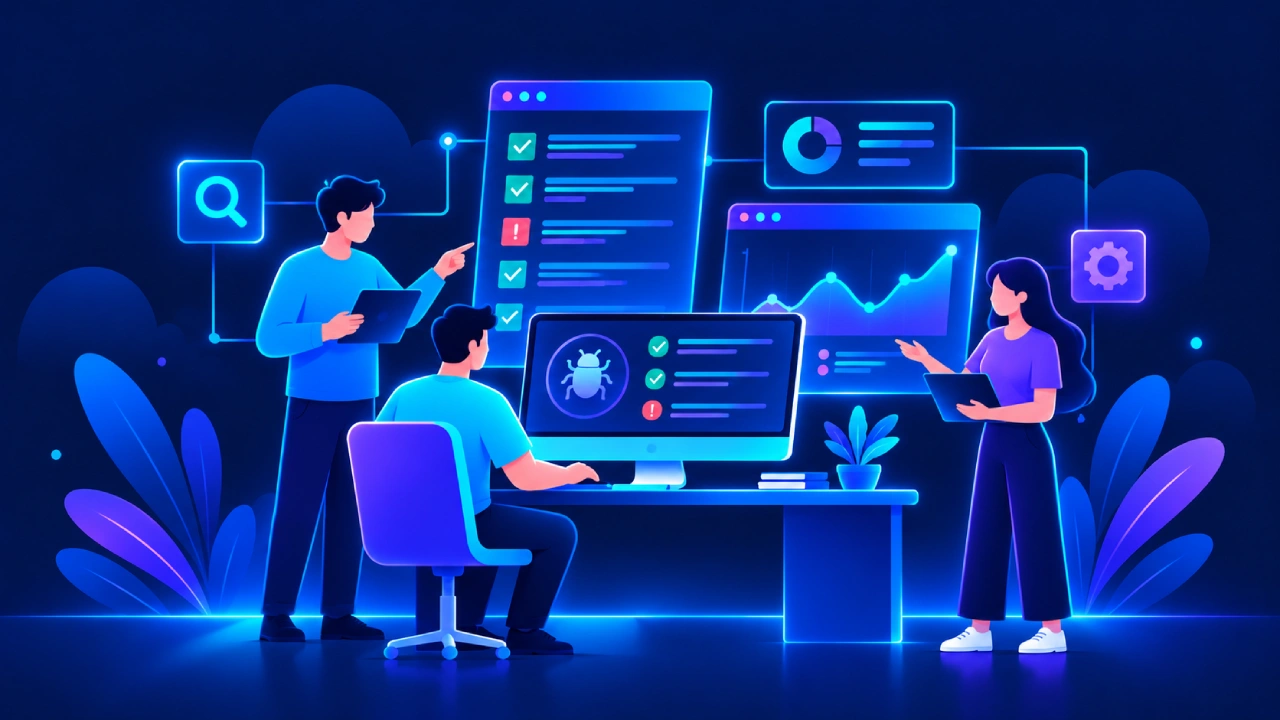
Product planning has a translation problem. A product manager sketches an idea and an engineer interprets it and finally, a designer reshapes it. By the time anything ships, the original intent has passed through enough hands that nobody quite remembers what problem was being solved.
Real-time collaboration features promise to collapse that distance. Live editing, presence indicators, conflict resolution, and sync change how decisions get made, who gets to participate, and how quickly a team can move from vague concept to shared understanding.
But does the reality match the promise? And more importantly, when does real-time collaboration actually matter versus when is it just a feature checkbox on a vendor comparison sheet?
The Invisible Cost of Delayed Feedback
Traditional product planning happens in loops. Someone drafts a document and shares it. When someone else opens it hours later, reads it, types a comment, and then the first person to respond to it is the next morning. Three days later, the team has agreed on a paragraph.
Anyone could have noticed teams spend entire sprint cycles just aligning on requirements because feedback moved at the speed of email. Real-time editing changes that rhythm.
When multiple people can modify the same roadmap or specification simultaneously, the gap between question and answer shrinks.
Atlassian’s product team describes the shift this way: with live documents, “Teammates can write, edit, and comment at the same time — no conflicting versions, no delays.” And that’s the operational reality teams are chasing.
The benefit is continuity of context. When feedback arrives immediately, the original author still remembers their reasoning. When a comment appears three days later, they’ve moved on mentally and have to reconstruct their own thinking to respond.
Presence Changes Who Shows Up
Presence indicators — those small avatar icons showing who’s viewing or editing a document — sound trivial when they actually aren’t. Presence solves a coordination problem that distributed teams face constantly.
Atlassian’s product manager Aya Tange Beaumont framed it precisely: “Live docs let you feel like you’re working together, even if you’re not in the same room,” making coordination easier even across time zones.
The practical effect is subtle but significant. One can stop scheduling meetings just to confirm that everyone has seen the latest version. One can just check whether they’ve been in the document.
The deeper value is accountability. When the avatar is visible on a planning document, users aren’t passively receiving information; they are participating, too.
Presence shifts the psychological default from “I’ll review this later” to “I’m already here, so I might as well weigh in now.”
Conflict Handling: Where Collaboration Tools Prove Themselves
Most real-time collaboration features look good in demos. Two cursors moving around a document, comments appearing in real time, changes syncing instantly.
The real test comes when two people try to edit the same paragraph at the same moment, or when a third contributor adds a conflicting requirement while two others are still debating the original wording. This is where collaboration tools either earn their keep or reveal themselves as fragile. Conflict handling isn’t glamorous, but it separates a system that works from one that frustrates.
RoadmapOne’s Version 3 release notes mention addressing “sync conflicts in multi-user scenarios” as part of their bug fixes — a small line item that represents real engineering effort. Teams that have used early collaborative tools remember what happens without it: duplicated text, lost edits, and the creeping suspicion that it’s safer to just work alone.
The honest truth is that conflict handling remains imperfect across the industry. Details remain unclear about how most tools resolve simultaneous edits at scale, but the direction is clear. Products that handle conflicts gracefully keep teams collaborating. Products that don’t drive users back to serial workflows — one person edits, saves, passes the file along, and that’s technically collaboration, but only in the most bureaucratic sense.
Sync: The Difference Between One Plan and Two
If you have two tools, you have two plans, and they are out of sync by definition. Real-time sync addresses this by making the question of “which version is current” moot. When changes propagate automatically across connected systems, the answer is always “the one you’re looking at.”
The lesson is that sync is a maintenance commitment, not a one-time setup. Teams that treat it as the latter end up worse off than before, with the illusion of alignment masking real misalignment.
When Real-Time Collaboration Matters Most
Not every planning activity benefits equally from real-time features. Early-stage discovery — brainstorming, customer journey mapping, problem framing — benefits enormously.
Miro’s platform is built around this insight, and its collaborative canvases let product teams “run a discovery workshop, group customer feedback, vote on opportunities, and turn the results into a simple prioritization framework” without switching between tools.
The immediacy matters because discovery is inherently iterative. One person’s idea sparks another’s, which sparks a third. Delaying that exchange dilutes the creative process.
Specification writing also benefits, though differently. Real-time editing here serves a verification function. Real-time editing of a roadmap sounds useful, but who should actually be editing it?
RoadmapOne’s approach, which states that focusing on collaborative editing as a way for “product trio” members to work together, suggests that the value lies in small-group alignment rather than company-wide open editing.
The Tool Landscape: What Teams Actually Use
The real-time collaboration market has fragmented into distinct approaches. Miro treats collaboration as the product and its infinite canvas is designed for simultaneous participation. Multiple cursors, live comments, voting tools — they are the reason people open the tool.
RoadmapOne positions collaborative editing as a response to customer demand. Their release notes state plainly: “You told us collaborative editing was essential because roadmaps are team activities, not solo exercises”. The feature set reflects that framing — built for product managers, designers, and engineers working through roadmap decisions together.
Figma demonstrated how powerful real-time collaboration can be when it’s core to the workflow. The lesson is that Figma’s collaboration features, when done well, change the fundamental rhythm of how teams make decisions.
Meanwhile, teams that rely on asynchronous tools — documents passed back and forth, comments that arrive hours after the context has shifted — are operating with a structural disadvantage, but they’re slower in the moments that matter, when a quick clarification could prevent a week of rework.
Where This Leaves Product Teams
Real-time collaboration features matter because product planning is fundamentally a coordination problem. The tools can’t solve the problem on their own, but they can remove enough friction that teams actually do the coordination work instead of avoiding it.
The teams that plan well are the teams that plan together, and not because togetherness is inherently virtuous, but because shared understanding is the scarcest resource in product development. Real-time collaboration features are one way to manufacture it, but when they work, they make the alternative — serial handoffs, delayed feedback, version confusion — look like what it is. Effective software documentation can also help teams preserve decisions and context beyond live discussions.
(Source)