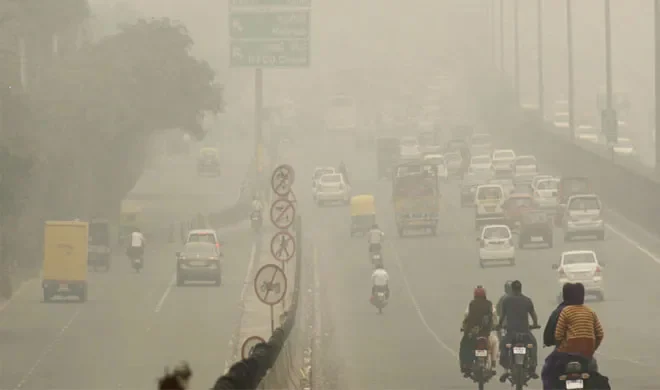
The pollution level in the country's capital Delhi remains in the very poor category. The Air Quality Index (AQI) has been recorded beyond 300 in many areas of the city. Due to continuously deteriorating air quality, people are at increased risk of health problems like difficulty in breathing, irritation in eyes and sore throat. According to the standards of Central Pollution Control Board (CPCB), air quality is considered to be in very poor category when AQI is between 301 to 400. In such a situation, exposure to polluted air for a long time can cause respiratory problems even to healthy people. At the same time, the problems of already sick people may increase further.
Air quality is very bad in many areas
The Air Quality Index (AQI) has been recorded beyond 300 in many areas of the capital. The highest AQI of 377 was recorded in Chandni Chowk. At the same time, the air quality in many areas including IIT Delhi, North Campus and DTU remains in very poor category. According to Central Pollution Control Board (CPCB) standards, air quality is considered very poor when AQI is between 301 and 400. Due to increasing levels of pollution, people may face problems like breathing problems, eye irritation and sore throat.
Highest pollution in these areas
The highest AQI of 377 was recorded in Chandni Chowk, Delhi. Apart from this, 376 AQI was recorded in IIT Delhi, 371 in North Campus, 368 in DTU and 359 in Burari Crossing. The situation in other areas was also worrying. Pusa (IITM) recorded 358, NSIT Dwarka 353 and Jawaharlal Nehru University (JNU) 339.
AQI crossed 300 in these areas also
Pollution levels remained very high in many other areas of the capital also. Commonwealth Sports Complex and Aya Nagar recorded 337, Talkeetora Garden 331, Vivek Vihar 324 and Sarifort recorded 322 AQI. Apart from this, 317 AQI was recorded in Jahangirpuri, 314 in Nehru Nagar, 312 in Badarpur and 312 in Burari.
Bad air from Anand Vihar to Mundka
AQI was recorded at 303 in Delhi's Anand Vihar, 306 in Mundka, 301 in RK Puram and 301 in Bawana. At the same time, in some areas the AQI remained below 300, but even there the air quality remains in the poor category. 296 AQI was recorded in Dwarka Sector-8, 295 in Ashok Vihar, 295 in Rohini and 288 at Terminal-3 of IGI Airport.
Lowest pollution in Delhi Cantt.
The lowest AQI of 119 was recorded in Delhi Cantt area of the capital. Apart from this, 208 AQI was recorded in Sri Aurobindo Marg, 210 in Lodhi Road (IMD), 216 in Karala and 229 in Vasundhara Enclave. It is clear from these figures that the level of pollution remains different in different areas of Delhi. While in some areas the air has reached very poor category, in some areas relatively better conditions have been recorded.
What is the standard of AQI?
Through Air Quality Index i.e. AQI, the level of pollutants present in the air and their possible health effects are assessed. AQI in India is divided into six categories.
0-50: good
51-100: satisfactory
101-200: moderate
201-300: bad
301-400: very bad
401-500: severe
The higher the AQI, the worse the air quality is considered. If AQI is between 301 to 400, breathing polluted air for a long time can have adverse effects even on healthy people. At the same time, if AQI is between 401 to 500, there is a possibility of serious health effects even on healthy people.
Children and elderly need special caution
Children, the elderly and people suffering from respiratory or heart related diseases are most at risk from pollution. In such a situation, people should avoid going out unnecessarily. When pollution is high, one should avoid exercising in the open and use a suitable mask while going out.
Follow the LALLURAM.COM MP channel on WhatsApp