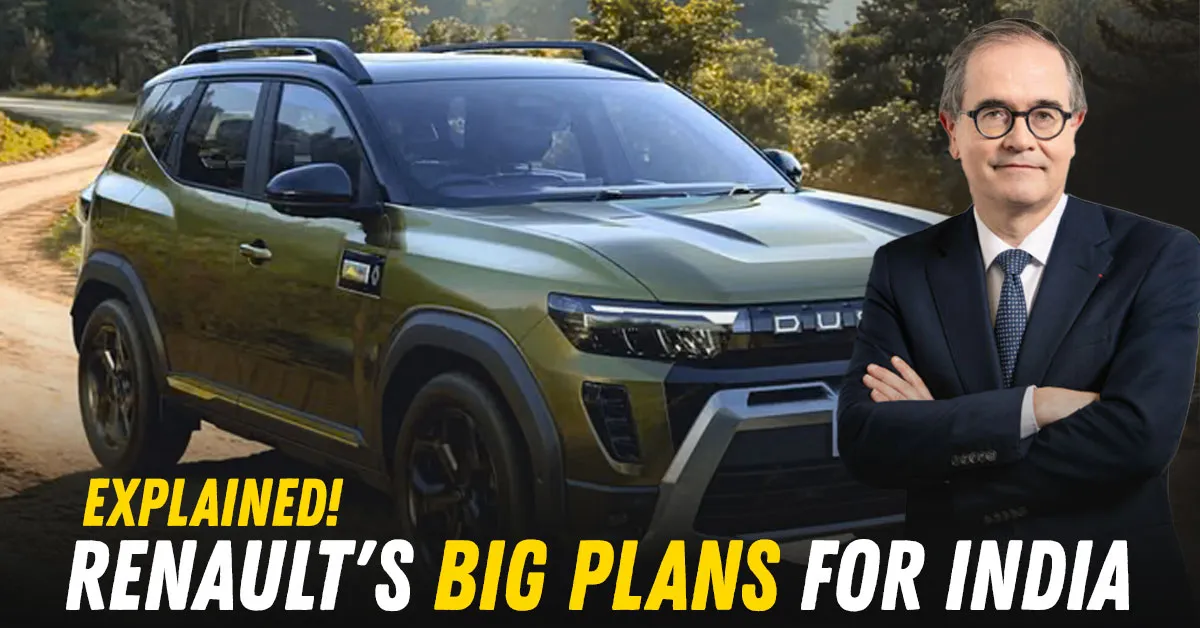
Renault Group CEO Francois Provost has put India at the top of the company’s priority list outside Europe, and the clearest part of the plan is electrification. Renault wants strong hybrids to become the first major step, followed gradually by more electric vehicles, with localisation used to keep prices within reach.
That is a much bigger commitment than Renault’s recent market share might suggest. FADA retail data for September 2026 put Renault at 3,410 registrations and just 0.8 percent share. The company was still tenth among passenger-vehicle manufacturers.
But the direction has improved. September retail sales were up 33.1 percent year on year, helped by the new Duster, and Renault now controls its Chennai manufacturing plant outright after taking full ownership of the facility previously shared with Nissan.
Renault’s next move arrives almost immediately.
The Duster strong hybrid E-Tech 160 launches on October 17. It combines a 1.8-litre petrol engine with two electric motors and a 1.4kWh battery, producing a combined 160hp.
Renault has announced an ARAI-certified mileage figure of 29kpl and says the system can operate in electric mode for up to 80 percent of urban driving under suitable conditions.
That gives Renault a direct answer to the strong-hybrid versions of the Grand Vitara, Hyryder and Victoris.
It also shows what Provost means when he says Renault wants to move buyers away from diesel over time. The company is not replacing petrol and diesel overnight, but it wants strong hybrids to become the practical bridge before wider EV adoption.
The difficult part is cost.
Hybrid systems add an electric motor, battery, power electronics and a more complicated transmission. If most of that equipment is imported, the final car quickly becomes expensive.
Provost’s answer is localisation.
Renault now fully owns the Chennai plant, which already builds the Kwid, Triber, Kiger and new Duster. The wider Chennai operation also includes one of Renault Group’s largest engineering centres, with around 6,000 engineers and IT specialists.
The group says India has more than 15,000 employees across its industrial, engineering and business operations.
That gives Renault the ability to localise components, use local suppliers and develop technologies for both domestic products and export programmes rather than treating the country only as a sales market.
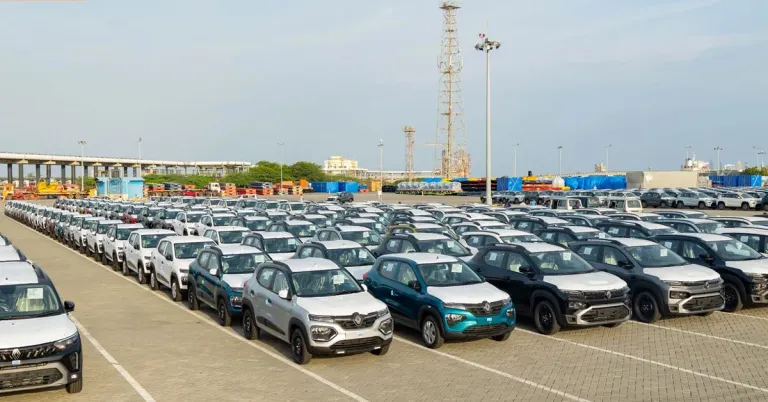
Renault has already restarted Duster exports from Chennai and resumed shipments to Sri Lanka.
The company wants the plant to become a broader export hub for vehicles, components and engineering work, particularly for markets such as South America.
That matters because higher production volume can improve the economics of local manufacturing. A hybrid component produced for one small domestic model is expensive. The same component becomes easier to price competitively if it is shared across several products and export markets.
The ambition is large, but the current business remains small compared with Renault’s earlier peak here.
Its September wholesale figure was 3,399 units, and the company still depends heavily on the Kwid, Triber, Kiger and Duster.
The new Duster has helped rebuild showroom traffic, but one successful SUV does not automatically restore scale.
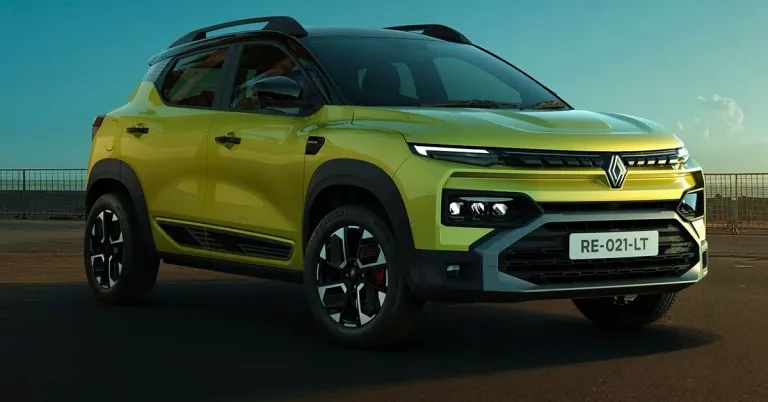
Renault therefore needs the hybrid to add meaningful volume rather than simply become an expensive top variant. It also needs future EVs to arrive at prices that make sense against increasingly strong Tata, Mahindra, MG and Hyundai electric products.
Provost’s statement makes the strategy unusually clear: India is Renault’s top priority outside Europe, strong hybrids are the immediate electrification tool, EVs follow, and local engineering plus manufacturing are supposed to make both affordable.
The Duster hybrid will be the first real test of whether that plan works in the showroom.