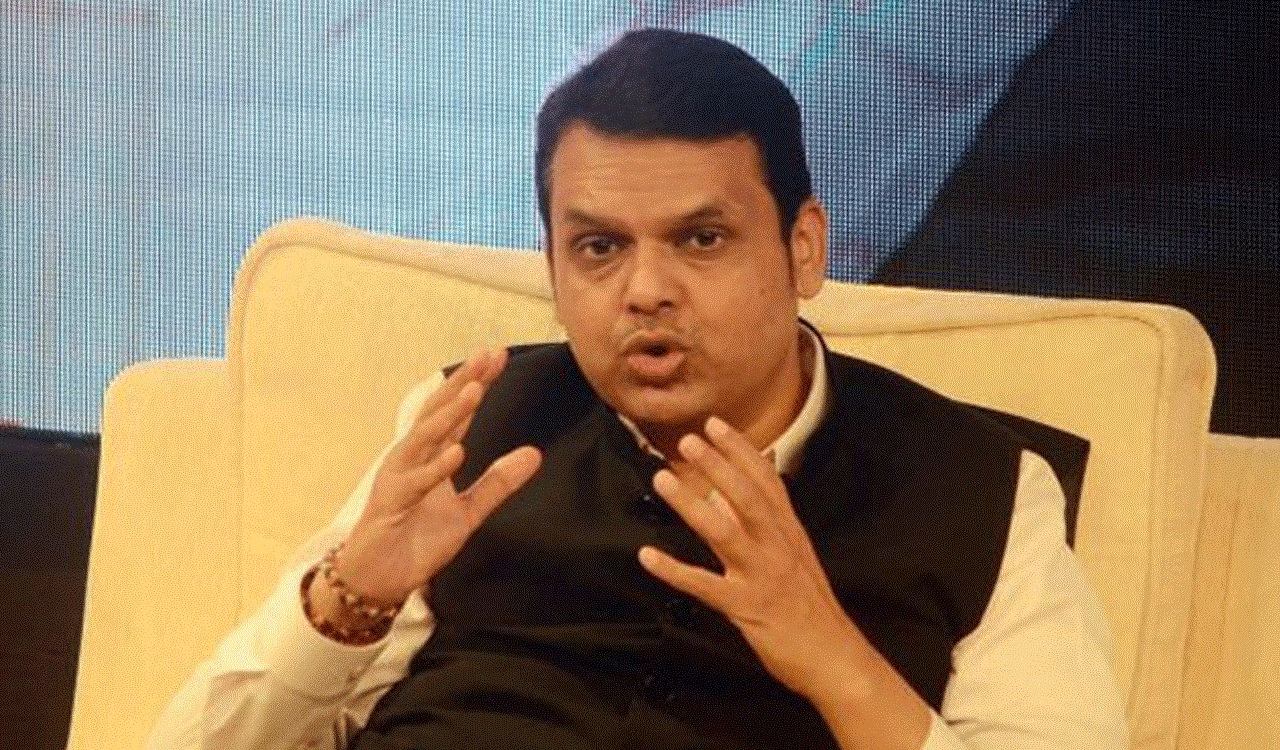
Maharashtra Chief Minister Devendra Fadnavis said reservation demands from different communities would be considered only if they comply with the Constitution and existing rules. He stressed equitable treatment for Marathas, OBCs, SCs, STs and other communities amid renewed quota debate
Updated On – 12 August 2026, 01:01 AM
Pune: Maharashtra Chief Minister Devendra Fadnavis on Tuesday said his government would listen to demands raised by different communities on reservation but would take decisions only within the framework of the Constitution and rules.
Speaking to reporters here, Fadnavis said, “The government runs according to the Constitution and will continue to do so. It does not function under pressure or outside the rules. However, the government listens to everyone.” “If a demand is in public interest and fits within the Constitution, it will be considered. If it does not fit within the Constitution, it will not be accepted,” he said.
His remarks come amid renewed political debate over reservation demands, particularly those concerning the Maratha community and the Other Backward Classes (OBC) category.
Maratha quota activist Manoj Jarange has also targeted state Revenue Minister Chandrashekhar Bawankule over the issue. Fadnavis said the government was committed to ensuring justice to all communities, including Marathas, OBCs, Scheduled Castes, Scheduled Tribes, Vimukta Jatis and Nomadic Tribes.
“The Constitution asks us to take care of everyone. This government will take care of everyone and give justice to all. We will not snatch from one community and give it to another. We have taken care of everyone so far and will continue to do so,” he said.
Defending Bawankule against allegations that he had acted against the interests of a particular community, Fadnavis said a minister was constitutionally required to forward complaints and representations received by him to the concerned department for inquiry.
“Whenever a complaint comes to any minister, the Constitution places a responsibility on the minister to forward it for inquiry. Accordingly, every representation received is sent to the concerned department. The department does not take a decision merely because of such a representation; it takes a decision on the basis of evidence,” he said.
Fadnavis said the committee dealing with the matter was independent of the government and had judicial powers. “The committee is not bound to the government and does not report to the government. It has judicial powers. If anyone is aggrieved by its decision, an appellate authority has been created in the recently concluded session, and they can approach it,” he said.
He also defended Bawankule against what he termed as attempts to target him merely because he belonged to the OBC community. “Just because a minister is from the OBC community, targeting him in this manner is not right. It does not suit Maharashtra,” Fadnavis said, adding that, in his view, Bawankule had not intentionally sought cancellation of any decision or favoured granting anything to anyone.
“He has only performed the duty expected of him as a minister. He has done nothing beyond that. Therefore, cornering him in this manner is not right,” Fadnavis said.