

A text message saying the power bill for May was VND4 million (US$150) surprised 65-year-old Thuy Ha in Hai Phong City.
Her six-member household typically spent about VND1.2 million a month on electricity, aided by a solar-powered water heater. Even during the long Tet holidays, when usage would peak, their bill would not exceed VND1.5 million.
The recent increase came as her grandchildren stayed home during the school summer break, and a heatwave meant the family had to keep four air conditioners running almost constantly. As the person responsible for the household’s utility expenses, she had to dip into her savings after the bill consumed more than half of her monthly pension.
“I barely have any income and now I have to use money set aside for emergencies,” she says.
She then announced electricity-saving rules: The family has to gather in the living room downstairs under a single air conditioner set at 26 degrees Celsius and an electric fan. She has hidden the remote controls of the other three air conditioners in the bedrooms to prevent anyone from using them.
At night, everyone has to sleep on mats in the living room, where the grandchildren’s study area has also been shifted.
Cooking has been switched from the induction cooktop to an old gas stove, and meals are simpler with boiled dishes rather than braised or stewed ones. During weekends, they spend time at shopping malls to avoid the heat and reduce electricity use at home.
But there are new problems as a result. The grandchildren need a quiet place to study but adults watch television right beside them. Ha’s son and daughter-in-law complain she has become too strict and have suggested they would move out.
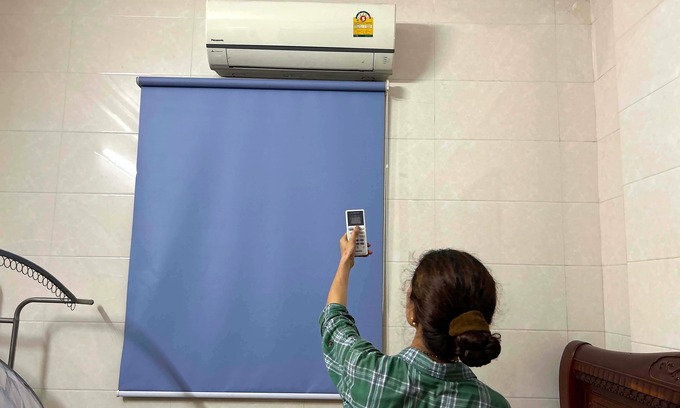
A family in Nghe An Province keeps its air conditioner running around the clock during a heatwave despite soaring electricity costs in May 2026. Photo for illustration by Read/Nga Thanh |
An electricity bill of VND5.6 million has also strained the relationship between 52-year-old Tran Hang and her husband in Nghe An Province. The amount accounts for more than 30% of the family’s monthly income of VND18 million.
Hang lives in a six-member household that includes her 80-year-old mother-in-law. During the heatwave in late May, her husband kept the air conditioner in his mother’s room running throughout day.
With four children visiting from the countryside, three other air conditioners were also operating almost around the clock. Hang suggested moving everyone into the living room to save electricity but her husband opposed the idea, worried it would affect his mother’s sleep and that relatives might criticize the family for poor hospitality.
“My husband only wants everyone to be comfortable while I have to worry about balancing the household budget,” Hang says.
With temperatures climbing to 43 degrees Celsius in northern Vietnam in late May, peak electricity demand hit 20,482 MW on May 27, 28.5% higher than a year earlier, according to the Northern Power Corporation. Electricity demand this year rose sharply in several provinces like Ha Tinh (by 41%), Thanh Hoa (36%), Nghe An (36%), and Hai Phong (28 %).
A spokesperson for EVN Hanoi, the capital city’s power utility, said the regular use of air conditioners, particularly at night, has inflated electricity bills. A Read survey of more than 600 social media users found 16% of households experienced tensions as a direct result of high electricity costs, with 13% reporting arguments over power use.
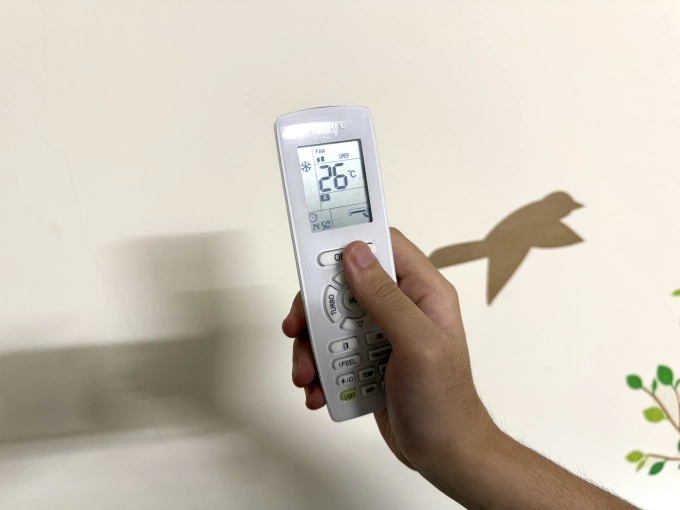 |
Thuy Trang’s family in Hanoi has created a fund to pay electricity bills and keeps the air conditioner set at 26 degrees Celsius to save energy. Photo courtesy of Thuy Trang |
Thu Thao, a psychologist in HCMC, says extreme weather and rising electricity bills can increase the likelihood of family conflict. But electricity bills are not the root cause of such conflicts and are rather only a trigger that exacerbates existing pressures, she explains.
“When there is a lack of understanding, the burden carried by the person managing the household finances can turn into a source of conflict.”
Financial analyst Lam Tuan in Hanoi thinks disputes over electricity bills are more likely in households without a clear budgeting plan. “Families without contingency funds and those living paycheck to paycheck often face greater psychological pressure, making arguments more likely.”
He cautions against extreme responses such as excessive cost cutting and rushing to install solar power systems. Investing hundreds of millions of dong in solar panels without considering when the money can be recouped is a common mistake when addressing a short-term problem, he points out.
He advises families to plan their finances over the course of a year.
“Every family should establish a reserve fund for seasonal expenses from the beginning of the year to reduce pressure when the bills rise.”
Thuy Trang, 25, and her husband in Hanoi adopted such an approach to avoid conflict. While on maternity leave, she frequently used the air conditioner. In May, the couple consumed more than 500 kWh of electricity and the bill reached VND2 million, double the usual amount.
Their monthly income of VND20 million has to cover VND6 million in rent, VND3 million in utility bills, and expenses for their newborn. Disagreements began between them when her husband tried to limit the use of cooling appliances around the house. To prevent that, they agreed to set aside VND1 million a month to cover the high summer electricity costs.
“There is no choice but to adapt,” Trang says.
Comments are closed.