

The new electricity tariff is set to take effect in July with a hike of up to 30% in the highest estimate, according to the Energy Market Authority (EMA), as reported by The Straits Times.
The tariff, revised every quarter, currently stands at 29.72 Singapore cents per kilowatt-hour (US$23 cents).
An EMA spokesperson said Wednesday: “With the Middle East conflict straining global fuel supply chains, natural gas prices have increased sharply since the end of February.
“Consequently, the regulated electricity tariff is expected to rise significantly in the coming quarter.”
Amanda Kang, principal analyst for Southeast Asia gas research at S&P Global Energy, expects the tariff to increase by 20% to 25%.
She said this could add about SGD30 to the monthly electricity bill of a four-room HDB flat, which now stands at around SGD88.
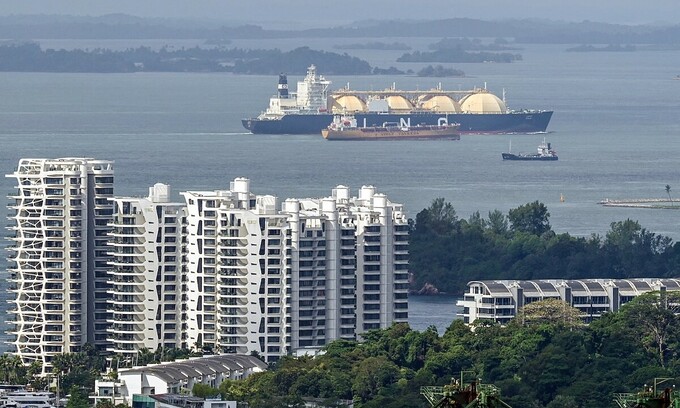
A vessel transports liquefied natural gas (LNG) past the coast of Singapore on July 3, 2024. Photo by AFP |
Energy costs, calculated based on average fuel prices during the first six weeks of the preceding quarter, account for the largest share of the electricity tariff.
As a result, the upcoming tariff revision will largely reflect fuel costs from April through mid-June.
Energy prices have risen since the U.S. and Israel attacked Iran on Feb. 28, triggering strikes on Gulf energy infrastructure and the effective closure of the Strait of Hormuz, through which about one-fifth of the world’s oil and gas supplies normally pass.
Although the U.S. and Iran on Thursday signed an interim agreement that would end the Iran war, full traffic through the strait is expected to restore within 30 days, Reuters reported.
Singapore relies heavily on imported energy, with imported natural gas accounting for 95% of its electricity generation.
In 2025, 43% of Singapore’s gas imports came in the form of piped natural gas from Malaysia and Indonesia, while 57% was liquefied natural gas from other countries, including Middle Eastern nations.
David Chew, a senior consultant at Rystad Energy, said Singapore is relatively less vulnerable to sharp energy-price increases because much of its natural gas is secured under long-term contracts. He expects a “mid-range single-digit increase” in the electricity tariff.
Sharad Somani, KPMG’s partner and head of infrastructure for Asia-Pacific, expects the electricity tariff to rise by 20% to 30%.
He said global fuel prices have increased by more than 50% since the end of February amid supply constraints and geopolitical uncertainty.
Comments are closed.