
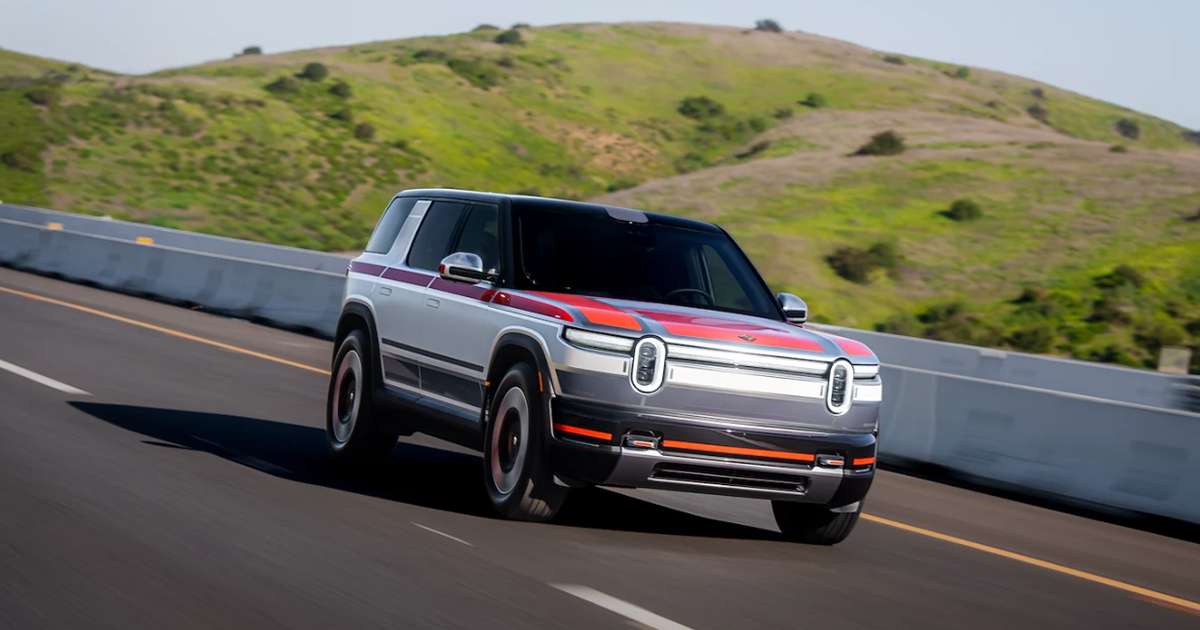

Rivian is making its most serious play yet for the mass market with the R2 crossover. The idea is simple on paper but hard in execution: take everything people love about its premium R1 lineup and deliver it at a price that doesn’t feel exclusive.
With a projected starting price of around $45,000, the R2 is positioned to be the brand’s breakout product. Early versions, including the performance variant expected to launch first, will sit closer to $58,000. Still, that’s a significant shift from Rivian’s earlier offerings, which leaned heavily into the luxury segment.
What makes this move interesting isn’t just the price it’s how Rivian got there.
Cutting Costs Without Cutting Corners
Rivian didn’t simply shrink the vehicle or swap in cheaper materials. Instead, it rethought how the vehicle is engineered from the ground up.
One of the biggest changes lies in its electrical architecture. By adopting a more consolidated zonal system, Rivian reduced wiring harness length by 2.3 miles. That’s not just a quirky stat—it translates directly into lower material costs, fewer failure points, and faster assembly. Connector counts were also cut by 60%, while high-voltage cabling dropped by 70% thanks to integrating multiple power modules into a single unit.
This kind of simplification shows up across the vehicle. The new Maximus Drive system uses 41% fewer parts than earlier drive units. By integrating components like the inverter directly into the drive unit and sharing cooling systems, Rivian has reduced both complexity and manufacturing time.
Even sensor choices reflect this thinking. Switching from ultrasonic sensors to corner radars helped cut costs by half without compromising functionality.
Smarter Engineering, Leaner Build
The mechanical side follows the same philosophy: simplify wherever possible.
The front suspension moves away from a more complex double wishbone setup to a MacPherson design, delivering roughly 70% cost savings. Large die-cast structures reduce underbody parts by 90%, streamlining production and improving structural efficiency. Even smaller details like redesigning rear doors to eliminate 65% of their components add up in a big way.
This isn’t about stripping features. It’s about engineering discipline, removing what’s unnecessary while preserving performance and durability.
Scale Changes the Game
There’s another factor working in Rivian’s favor now: scale.
In its early days, Rivian operated as a niche manufacturer with limited bargaining power. Today, it’s in a stronger position to negotiate with suppliers. That shift is already paying off. For example, the R2’s windshield reportedly costs about half as much as the one used in the R1 models, largely due to better sourcing terms.
Combine that with higher production volumes, and Rivian expects to reduce overall costs by more than 50%.
A Defining Moment Ahead
The R2 represents more than just a new model; it’s a turning point. For Rivian, this is the vehicle that could bridge the gap between aspiration and accessibility.
If executed well, it puts the company on a path similar to what the Tesla Model Y did for Tesla, taking a premium brand into the mainstream.
Now comes the real test: delivering at scale without losing the edge that made Rivian stand out in the first place.

Comments are closed.