
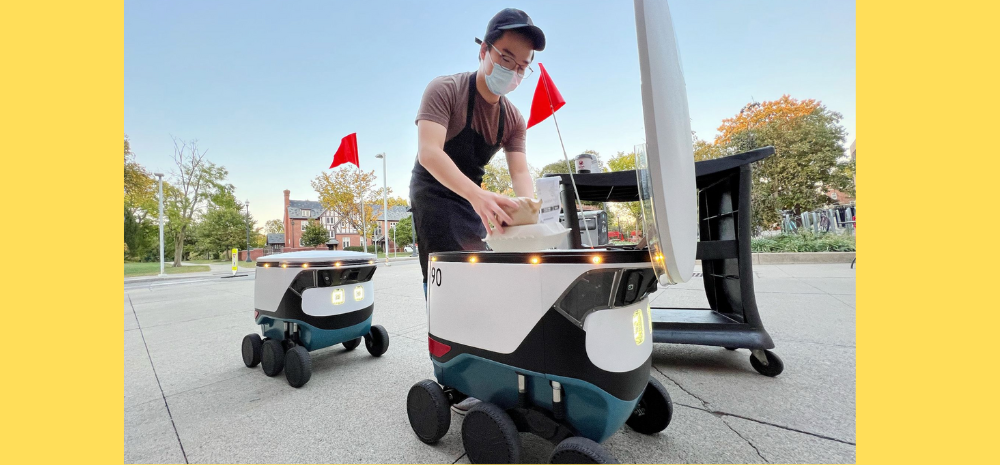

The rapid rise of artificial intelligence and robotics is once again raising questions about the future of jobs. Richard Liu, founder and chairman of Chinese e-commerce giant JD.com, has warned that robots will eventually replace hundreds of thousands of delivery workers as automation becomes more advanced and economically viable. His comments have reignited the global debate over how AI will reshape employment across logistics, transportation, and other labour-intensive industries.
According to Liu, the transition may not happen overnight, but it is inevitable as companies continue investing heavily in autonomous delivery technologies.
JD.com’s Vision for Automated Deliveries
JD.com has been among the most aggressive adopters of automation in China’s e-commerce sector. The company has already experimented with delivery drones, autonomous delivery vehicles, robotic warehouses, and AI-powered logistics systems aimed at reducing costs and improving efficiency.
Liu believes these technologies will eventually become capable of handling a significant portion of last-mile deliveries, one of the most labour-intensive segments of the logistics chain. As the technology matures, robots could gradually replace a large share of the company’s delivery workforce.
Why Companies Are Investing in Delivery Robots
The logistics industry faces growing pressure to deliver goods faster while keeping costs under control. Labour shortages, rising wages, and increasing demand for same-day delivery services are pushing companies to explore automation.
Autonomous delivery systems offer several potential advantages:
- Lower operating costs
- Round-the-clock operations
- Reduced dependence on human labour
- Faster delivery times
- Improved route optimisation
For large e-commerce companies handling millions of daily orders, even small efficiency gains can translate into substantial savings.
Growing Concerns Over Job Displacement
While automation promises efficiency, it also raises concerns about employment. JD.com currently employs hundreds of thousands of delivery personnel across China, and similar concerns exist worldwide as AI continues to expand into traditionally human-dominated jobs.
Critics argue that rapid automation could displace workers faster than new opportunities are created. Delivery workers, warehouse staff, customer service representatives, and administrative employees are increasingly viewed as vulnerable to technological disruption.
Experts, however, point out that technological revolutions have historically created new categories of jobs even as older roles disappeared. The challenge lies in helping workers acquire new skills and transition into emerging occupations.
AI’s Expanding Impact on the Workforce
The warning from JD.com’s founder comes amid growing concerns about AI’s impact on white-collar and blue-collar jobs alike. Recent advances in generative AI, robotics, and machine learning have expanded automation beyond factories into sectors such as finance, healthcare, customer support, software development, and logistics.
Industry leaders increasingly believe that future workplaces will involve closer collaboration between humans and AI systems rather than complete replacement. However, certain repetitive and predictable tasks may become fully automated over time.
A Glimpse Into the Future of Logistics
Autonomous delivery technology is still evolving, and widespread deployment faces regulatory, technical, and infrastructure challenges. Delivery robots must navigate complex urban environments, interact safely with pedestrians, and operate reliably under varying weather conditions.
Nevertheless, investment in automation continues to accelerate. Companies across China, the United States, Europe, and other markets are actively testing autonomous delivery solutions, suggesting that robotics will play an increasingly important role in the logistics sector.
Summary
JD.com founder Richard Liu has warned that robots will eventually replace up to 700,000 delivery workers as automation becomes more advanced and cost-effective. The company has already invested heavily in drones, autonomous vehicles, and AI-powered logistics systems. While automation promises greater efficiency and lower costs, it also raises concerns about job displacement and the future of work in the logistics industry.

Comments are closed.