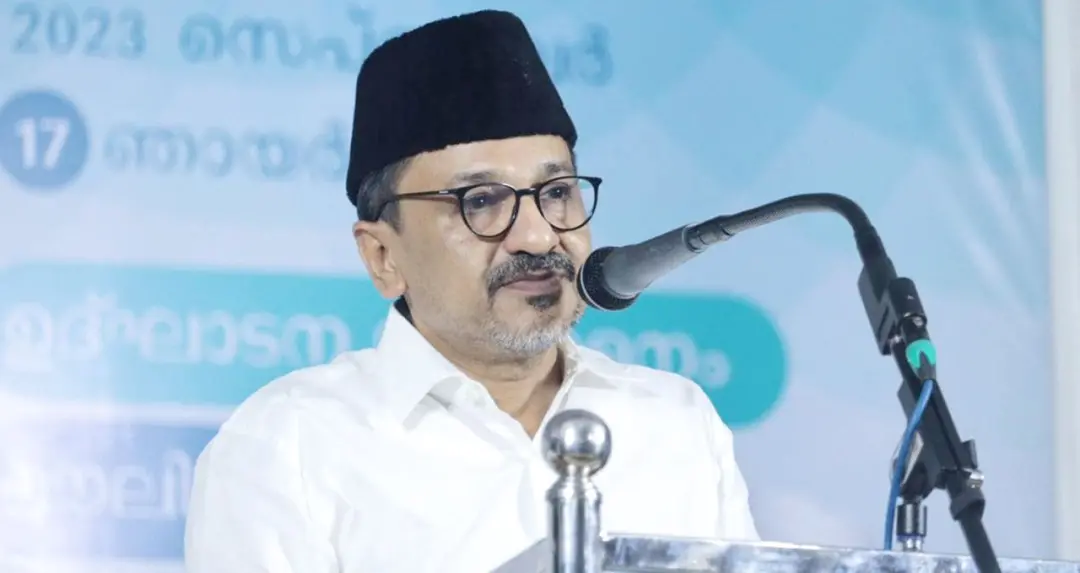
IUML president Syed Sadiqli Shihab Thangal downplayed the controversy over the restructuring of the Kerala Waqf Board. He said that all Muslim organizations have got representation. Dissatisfied parties may go to court or be considered for membership in other organizations.
Thiruvananthapuram: State President of Indian Union Muslim League (IUML) Syed Sadiqli Shihab Thangal has reacted to the controversy over the reorganization of the State Waqf Board in Kerala. Without giving much importance to this matter, he said that all Muslim organizations have been given representation in the board. Representatives of organizations not included in this may be considered for membership in other relevant organizations. Thangal also said that if any organization or individual has a grievance with the constitution of the board, it is free to approach the court. His statement has come at a time when there is talk of dissatisfaction regarding representation in the restructuring of the Waqf Board.
Thangal downplays the controversy over the reorganization of Waqf Board
Indian Union Muslim League's Kerala State President Syed Sadiqli Shihab Thangal on Sunday expressed his views on the controversy arising out of the reorganization of the State Waqf Board. While talking to the media, he said that the parties complaining about this issue have legal options.
According to Thangal, an effort has been made to give representation to all Muslim organizations in the State Waqf Board. Organizations that do not find a place in the existing board may be considered for inclusion in other institutions. The main message of his statement was that the grievances of dissatisfied parties regarding the composition of the Board could be resolved through available procedures. Instead of escalating the dispute, he talked about considering other institutional options.
However, the available information does not provide a complete list of organizations included in the board, criteria for membership and details of those organizations that were not represented. Therefore, it is not clear which specific organizations or positions are at issue.
Option for aggrieved parties to go to court
Sadikali Thangal said that people or organizations who have objections to the reconstitution of the Waqf Board can raise their complaints in the court. Through this comment he emphasized the possibility of legal resolution of the dispute.
In case of disagreement regarding the formation of a public or statutory entity, the parties concerned may avail themselves of available legal remedies in accordance with applicable laws and regulations. However, whether a complaint will be heard in court or not and what its outcome will be depends on the facts of the case and the applicable legal provisions.
Thangal did not say in his statement that any party should be stopped from going to court. On the contrary, he clarified that dissidents are free to take the legal route.
This stance can be seen towards resolving the dispute through institutional process rather than political rhetoric. Nevertheless, the situation on the actual grievances related to the restructuring of the board and questions of representation will become clear only when the objections of the parties concerned and the rules of board formation come to light.
Opportunities in other organizations for those who did not get a place
Thangal said that all Muslim organizations have been given representation in the State Waqf Board. He also indicated that representatives of those organizations which have not been able to join this board can be considered for membership in other organizations.
The objective of this proposal may be to provide opportunities to various organizations to participate in institutional activities. However, he did not clarify in which institutions membership can be given, what would be the eligibility for it or what would be the time limit of this process.
Therefore, the issue of representation in other institutions should at present be seen only as a possible option and not as a final decision or formal announcement.
The question of representation in a board or organization is not limited to the number of members only. In this, the selection process, eligibility, role of concerned organizations and following the applicable rules are also important. If a party feels that he has been treated unfairly, it may be important for him to understand the transparency of the process and the basis of the decision.
Why is the role of Waqf Board important?
The Waqf Board is part of the statutory system relating to the administration and management of Waqf properties belonging to the Muslim community. Waqf properties may include properties dedicated to religious, educational, social and charitable purposes. In their management, adherence to rules, protection of assets and their use for prescribed purposes are important.
The rules relating to the composition and membership of the State Waqf Board are prescribed under the relevant laws. Therefore, in the questions arising regarding the reconstitution of the board, along with representation, following the legal process is also important.
In case of disagreement regarding the participation of various organizations in the Waqf Board, it is important to understand on what legal basis the membership was decided and whether the relevant provisions were followed. The available news does not include detailed legal documents or membership list related to the formation of the board. Therefore, it would not be appropriate to draw definite conclusions on the legal side of the dispute.
IUML's response and further position
The statement of Sadiqali Thangal, as state president of the Indian Union Muslim League, brings forth the view of a prominent party leader on the controversy. He downplayed the objections raised regarding representation in the board and said that all Muslim organizations have been included and opportunities for the remaining parties can be explored in other organizations.
However, it is not clear from his statement on what grounds the dissident organizations have lodged their objection or whether any formal legal challenge has been made to the reconstitution of the board.
The further situation will depend on whether the organizations concerned accept Thangal's suggestion or stick to their demand for representation. If a party goes to court, the case can be evaluated based on the applicable laws and the facts presented.
At present, instead of escalating the dispute, Thangal has talked about legal options and possible representation in other institutions. The scope of the dispute can be assessed more clearly only after detailed information about the position of all parties involved in the formation of the board and the membership process is revealed.