
In this year of 2026, Tata Motors has managed to add a lot of success to its car business in India. And Tata Motors wants to continue this momentum next year as well. So, its launch blitz is expected to restart once again in January 2027. It will be starting with the launch of the Safari.ev, which will become the biggest Tata electric product in the lineup. The company has already been testing the electric version of the Safari on Indian roads.
The SUV has been spotted multiple times wearing camouflage. It has to be mentioned that previously, reports suggested that the Safari.ev could arrive during the festive season of 2026. However, the latest prediction suggests that it could make its debut in January next year. As of now, Tata Motors has not officially confirmed the exact launch date of this electric SUV. But most likely, it will become the first new big launch from the brand next year.
One of the biggest highlights of the upcoming Safari.ev will be its seating capacity. Unlike the Harrier.ev, which is offered as a five-seater SUV, the Safari.ev will reportedly be offered in both six-seater and seven-seater configurations. This will make it a more practical option for buyers who want a large electric family SUV. It is also expected to become the flagship electric SUV in Tata Motors’ portfolio.
Talking about the design, the Safari.ev is expected to retain the overall silhouette of the existing ICE-powered Safari. However, there will be several EV-specific changes. At the front, the SUV could get a closed-off grille, redesigned bumper and slightly revised LED lighting elements.
Moving to the side, the SUV could receive aerodynamically optimised alloy wheels. At the rear, minor changes to the bumper and LED tail lamps are expected. Apart from this, the SUV will also get Safari.ev badging.
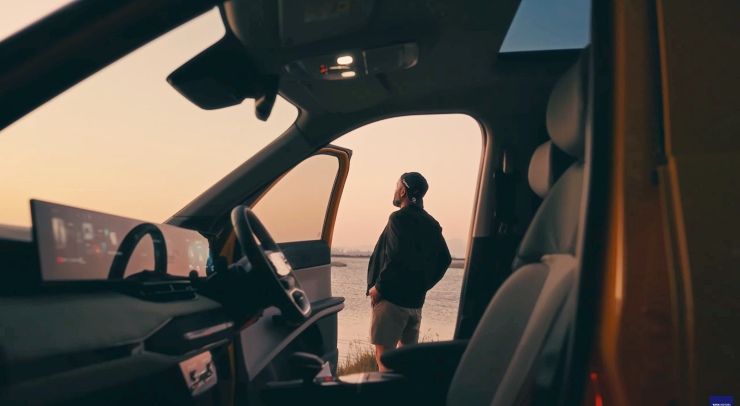
Moving inside, the upcoming Tata Safari.ev is expected to offer a number of premium features. Recently, a Safari test mule was spotted with a triple-screen dashboard layout. However, it is not yet confirmed whether this test vehicle was the Safari.ev or an updated version of the ICE-powered Safari. The electric SUV could borrow this setup from the recently introduced Sierra.ev.
For reference, this system gets a 10.25-inch digital instrument cluster, a 12.3-inch touchscreen infotainment system and another 12.3-inch display for the front passenger. Apart from this, the Safari.ev could get a panoramic sunroof, ventilated front seats, dual-zone automatic climate control, a premium audio system with Dolby Atmos and a powered tailgate.
Other expected features include Level 2 ADAS, a 540-degree surround-view camera, connected car technology, wireless smartphone charging, multiple drive modes and Summon Mode. These are the same features which are currently being offered on the Harrier.ev.

Now, coming to one of the biggest highlights of the Safari.ev, which is its battery pack. The upcoming electric SUV could get a massive 80 kWh battery pack. For those who are not aware, the current Harrier.ev is offered with 65 kWh and 75 kWh battery options. The larger 75 kWh battery is claimed to deliver a maximum MIDC range of 627 km in the rear-wheel-drive version.
Meanwhile, the all-wheel-drive version offers a claimed range of 622 km. Reports suggest that the Safari.ev could retain these two battery options. However, Tata Motors is also reportedly developing a larger 80 kWh battery pack, which could be offered on the higher variants.
If introduced, this will become the biggest battery pack offered in a Tata electric vehicle. It will also be slightly larger than the 79 kWh battery offered in the Mahindra XEV 9S. The larger battery could help the Safari.ev deliver a longer driving range. However, the exact range figures and battery specifications have not been confirmed as of yet.
Another important detail will be that the Safari.ev could be offered with both rear-wheel-drive and all-wheel-drive configurations. The SUV is expected to share its Acti.ev+ platform with the Harrier.ev. This means that the two electric SUVs will most likely also share their electric motors and other mechanical components like they currently do in their ICE versions.
Currently, the Harrier.ev’s single-motor rear-wheel-drive version produces 238 bhp and 315 Nm of torque. Meanwhile, the dual-motor AWD version develops a combined 313 bhp and 504 Nm of torque. The Safari.ev could offer similar power and torque figures. However, the final specifications have not been announced yet.

As for competition, the upcoming Safari.ev will directly compete with the Mahindra XEV 9S and MG Hector Tomahawk EV. Both of these electric SUVs are already available in India. The Mahindra XEV 9S starts at Rs 20.65 lakh (ex-showroom), and it gets battery options of 59 kWh and 79 kWh. Meanwhile, the MG Hector Tomahawk EV starts at Rs 19.49 lakh (ex-showroom), and it gets a single 69.2 kWh battery pack.
Tata Motors is expected to price the Safari.ev competitively against these models. This means it could start at around Rs 20 lakh and go up to Rs 30 to Rs 32 lakh. However, the exact pricing has not been revealed. As for the launch, Tata Motors could launch it in January 2027. However, no official dates have been announced as of yet.