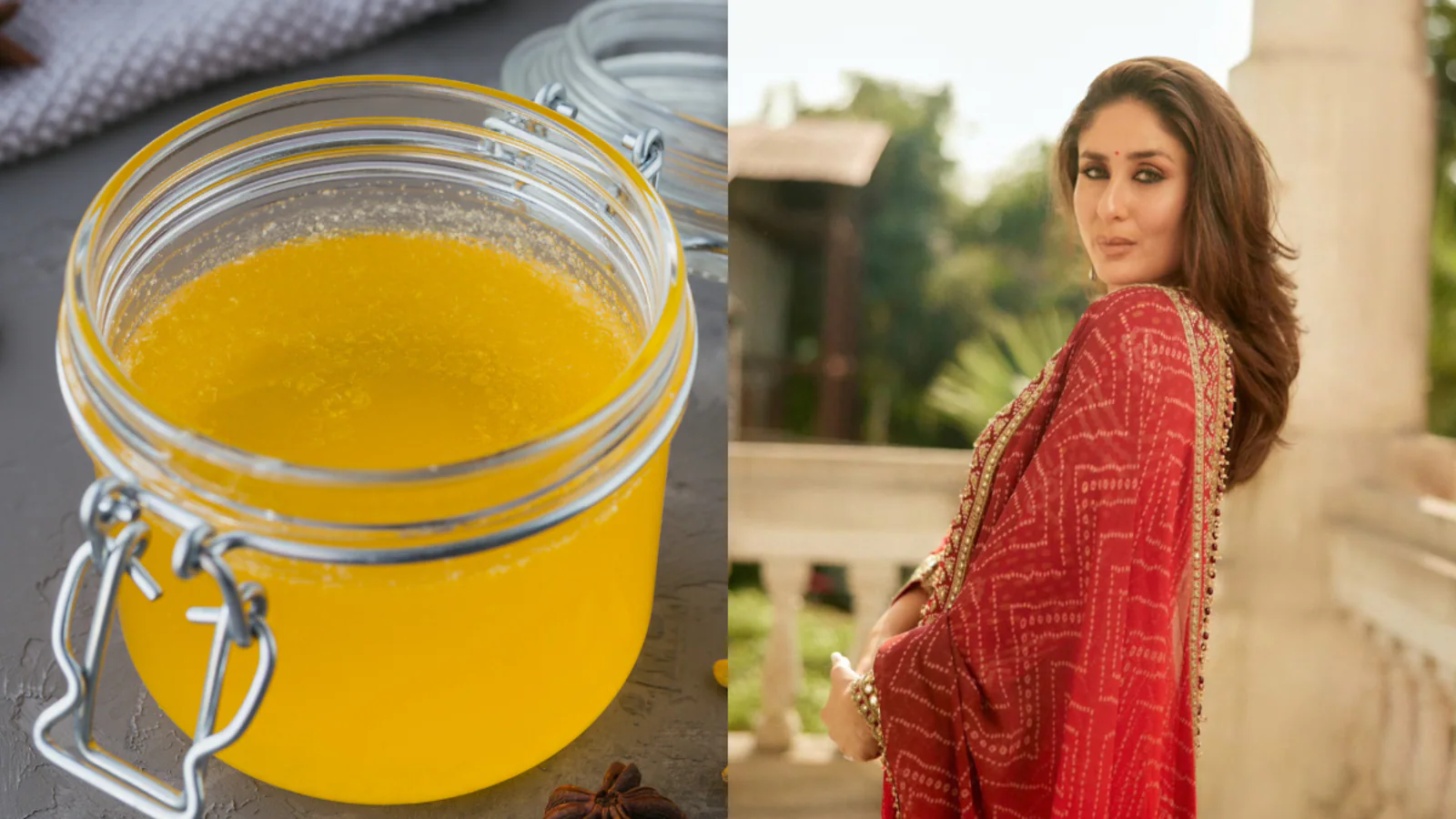
Ghee is a staple in Kareena Kapoor Khan's household, and she isn't shy about admitting it. On The Great Indian Kapil Sharma Show, the actor revealed that her sons, Taimur and Jeh, have ghee regularly too. Husband Saif Ali Khan even joked that it was the secret behind their youthful appearance.
But it wasn't just their food habits that caught everyone's attention.
Saif revealed that Kareena also rubs ghee on the soles of her feet at night. She agreed, adding that it helps her sleep well.
This isn't the first time the couple's love for ghee has made headlines. On Dining With The Kapoors, the family's fondness for the ingredient came up again. Creative producer Tarun Mansukhani spoke about how the Kapoors' love for food made it difficult to keep ghee off their plates, even when they were following strict diets for film roles.
The tradition goes back to the late Krishna Kapoor, who insisted on adding a dollop of ghee to every dish. Kareena also includes it in everyday meals such as dal-rice, rotis and khichdi, a food habit her nutritionist, Rujuta Diwekar, has discussed.
So, is ghee good for you? And how much should you actually eat?
Also Read: Video: This Taiwan Cafe Serves Food In “Toilet Bowls” And Drinks In “Urinals”
What Are The Benefits Of Ghee?
Ghee is clarified butter made by heating butter to remove its water and milk solids. It is commonly made from cow's or buffalo's milk and is used in Indian cooking, from everyday dal and rotis to halwa and other sweets.
Ghee contains vitamin A, which supports normal vision, immunity and other bodily functions. The amount varies, so ghee should not be your only source of this vitamin. It helps the body absorb vitamins like vitamin A, D, E and K from food. Ghee has a relatively high smoke point compared with butter, making it useful for cooking and finishing dishes.
It is also sometimes promoted as a weight-loss food, but there is no strong evidence that eating it directly helps you lose weight. Nutritionist Amita Gadre points out that ghee is calorie-dense, providing around nine calories per gram. It also contains a significant amount of saturated fat.
Also Read: His Family Planted 9,000 Dragon Fruit Saplings. Today, The Farm Earns Rs 2 Crore A Year
This does not mean you need to eliminate it from your diet. It means you should pay attention to how much you use, especially if your meals already contain other sources of saturated fat.
The Right Amount Of Ghee Is Subjective
There is no fixed amount that suits everyone. Your overall diet, activity levels and health all influence how much fat you need. A simple approach is to use ghee in moderation. Add a little to your dal, khichdi or roti if you enjoy the taste, but remember to account for it alongside the other fats in your diet.
So, if you enjoy ghee, you do not need to give it up. It can be part of a balanced diet, provided you are mindful of portions and your overall saturated fat intake.