Sarvam AI Fires Up Its Inference Engine
Sarvam’s Token Factory is finally live. The new offering will let enterprises access Indian and global AI models through a single API while running workloads on GPUs in India. With the unicorn making a bold play for the local AI inference market, can it outpace global giants?
Unified Models Access: Token Factory hosts Sarvam’s own 105B model alongside overseas open-weight models from Google, DeepSeek, GLM and Kimi. Developers can switch between models without setting up their own compute. Leaning on three-tier caching architecture, Sarvam is claiming latency and throughput speeds that rival global inference leaders.
The Sovereign Pitch: Beyond raw speed and cost, Token Factory’s central pitch rests on sovereign infrastructure. Because every model runs directly on Sarvam’s India-based GPU clusters, the AI unicorn aims to woo enterprises that have to satisfy strict data residency mandates. For the BFSI customers, the company is also offering dedicated GPU capacity and on-premises inference deployments.
A Crowded Arena: However, Sarvam is not alone in offering local inference. Krutrim has been hosting DeepSeek models on Indian servers since last year, while OpenAI recently introduced India-based API inference for GPT-6 Luna workloads. Anthropic also offers in-country inference for select Claude models through Amazon Bedrock. As such, the jury is still out on whether Sarvam’s local inference playbook is coming too little and too late.
Questions Linger: Critics have also flagged that Token Factory hosts overseas models despite Sarvam positioning itself as a champion of sovereign Indian AI. While Sarvam says hosting global models locally supports data residency, questions remain over whether reliance on foreign open-weight models dilutes its push for homegrown AI capability.
Can Sarvam Win? Sarvam’s bet is that Indian enterprises will pay for local inference, multi-model flexibility and data residency. But wooing clients will require continuous investment in GPUs, software and enterprise relationships. Sarvam must also navigate a market where cloud giants and global inference providers are moving quickly. For now, here is all about Sarvam’s new Token Factory launch…
From The Editor’s Desk
🤖 Claude Makes ChatGPT Sweat In India
- Anthropic’s AI chatbot recorded a more than 15X YoY increase in downloads in India during the July-September quarter. However, ChatGPT saw downloads fall 21% over the same timeframe, though it retained its position as India’s most-downloaded AI app.
- However, ChatGPT cornered the biggest chunk of consumer spending. OpenAI’s India revenue from in-app purchases increased 70% YoY in Q3 2026 despite slower download growth. Claude also rose to third place in India’s app-spending rankings.
- The country has emerged as a major battleground for global AI giants. Both OpenAI and Anthropic have opened offices in India and are ramping up local investments. Overall, the AI ecosystem is expected to add $1.7 Tn to India’s GDP by 2035.
🔔 Perplexity Gears Up For IPO
- Preponing its IPO timeline, the AI giant is now looking to file its draft IPO papers by Q1 2027 for a listing in the US. Founder and CEO Aravind Srinivas earlier had said that the company would not go public before 2028.
- Srinivas attributed the decision to fast-track the listing to Perplexity growing faster than expected. As per him, the company has already touched an annual recurring revenue of $1 Bn, surpassing its $750 Mn ARR projections ahead of the IPO.
- This comes as rivals OpenAI and Anthropic are in the process of listing in the US. While the Sam Altman-led company has already filed for an IPO confidentially and is eyeing an IPO next year, Anthropic is set to list on the Nasdaq this week.
🪒 Aman Gupta’s Latest Venture
- The boAt cofounder has teamed up with actor Ranveer Singh to launch a men’s grooming brand, called H.I.M. The brand, which has debuted with eight products across face, body and hair, has priced its products between ₹299 and ₹899.
- The launch appears to be a part of Gupta’s broader plans to build a portfolio of consumer ventures through his venture studio OFF/BEAT. The new venture raised ₹100 Cr in a seed round led by Bessemer Venture Partners in April this year.
- The cofounders are looking to tap into India’s growing men’s grooming market, which is growing on the back of rising disposable incomes and growing demand for personal care products. The space is projected to become a $4.5 Bn opportunity by 2034.
💰 UC’s ₹2,500 Cr QIP Goes Live
- Urban Company has opened its ₹2,500 Cr qualified institutional placement (QIP) for subscription. It has earmarked ₹600 Cr to strengthen its 10-minute house help service, InstaHelp, over the next three years.
- Of the remaining ₹1,900 Cr, the consumer services giant has set aside ₹540 Cr for marketing and ₹200 Cr for technology development and cloud infrastructure. The remaining funds will go towards rent and R&D on its Native products.
- This comes as InstaHelp recorded an adjusted EBITDA loss of ₹305.96 Cr in H1 FY27 despite delivering over 1 Cr orders during the period. This means that UC is funding a business that is still finding its commercial footing amid rising competitive intensity.
📈 FirstCry’s FY27 Guidance
- The listed omnichannel kidswear giant expects revenue growth to pick up in Q3 FY27 on the back of festive demand. The company also expects gross margins to improve as discounting in the diaper category eases.
- Overall, the management retained its mid-teen revenue growth guidance for the ongoing FY27, saying that it expects revenue from its India multichannel business to grow in the mid to high teens.
- The outlook follows FirstCry narrowing its net loss by 75% YoY to ₹12.6 Cr in Q2 FY27. The company also saw operating revenue jump 14.1% YoY to ₹2,395.8 Cr on the back of investments in its delivery network and expansion of quick commerce service.
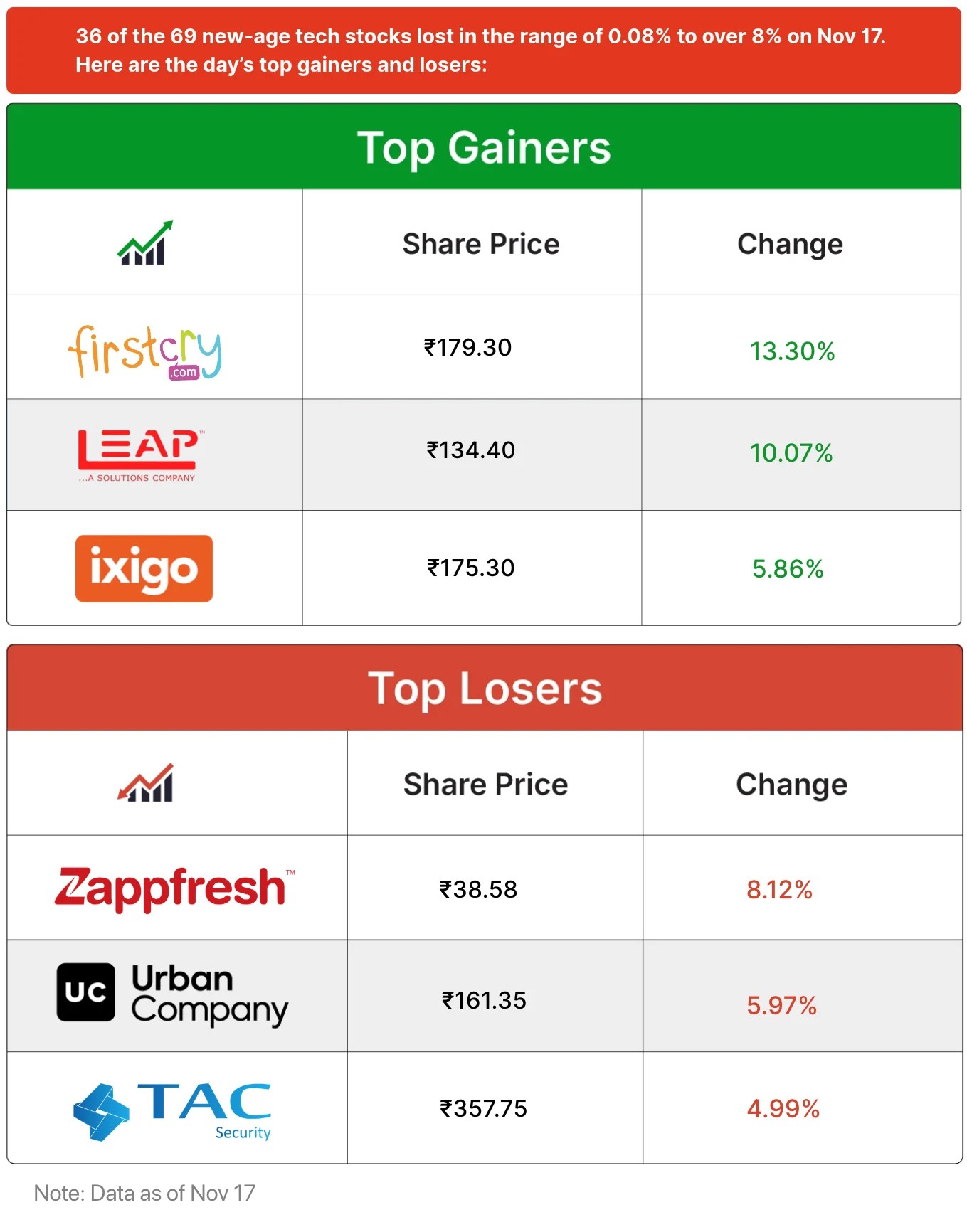
Inc42 Markets
Inc42 Startup Spotlight
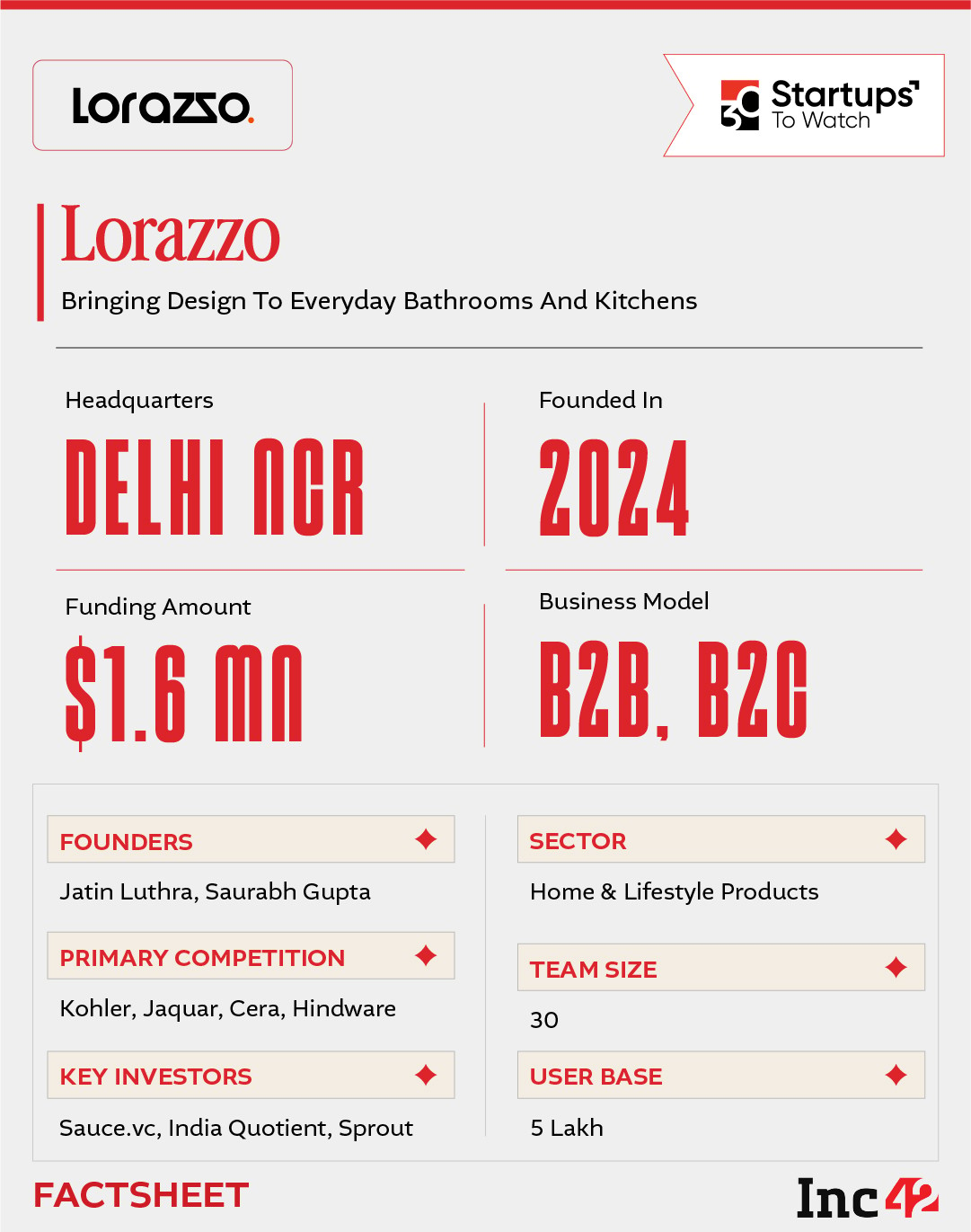
Can Lorazzo Turn Kitchen Sinks Into Design Statements?
Indian homes are becoming more design-conscious. But kitchens and bathrooms still often depend on contractors and retailers, who offer conventional, utility-first fittings. Lorazzo wants to change this with tech-enabled products for the spaces people use every day.
Design-First Portfolio: Founded in 2024, Lorazzo sells faucets, kitchen sinks, designer basins, sanitaryware and personal-hygiene products. Its range includes cabinets with storage and defoggers, portable bidets, stainless steel sinks and smart commodes. The startup is positioning its products around modern aesthetics, durability and features suited to Indian homes, including hard-water conditions and daily wear.
Growing Traction: Lorazzo sells its products directly through its own website and online marketplaces. It has also built a network of more than 100 dealers across Delhi NCR and claims to have tripled its business over the last three months. In addition, the brand is also exploring partnerships with developers to reach homebuyers at the construction and renovation stage.
Road Ahead: Backed by Sauce.vc, Lorazzo’s future roadmap includes expanding its product portfolio and distribution network. It is also targeting a revenue run rate of ₹25 Cr in FY27. With the Indian bathroom and kitchen fittings market projected to become a ₹48,300 Cr opportunity by FY29, can Lorazzo make design-first bathroom fittings the default choice for India’s new-age homes?
Infographic Of The Day
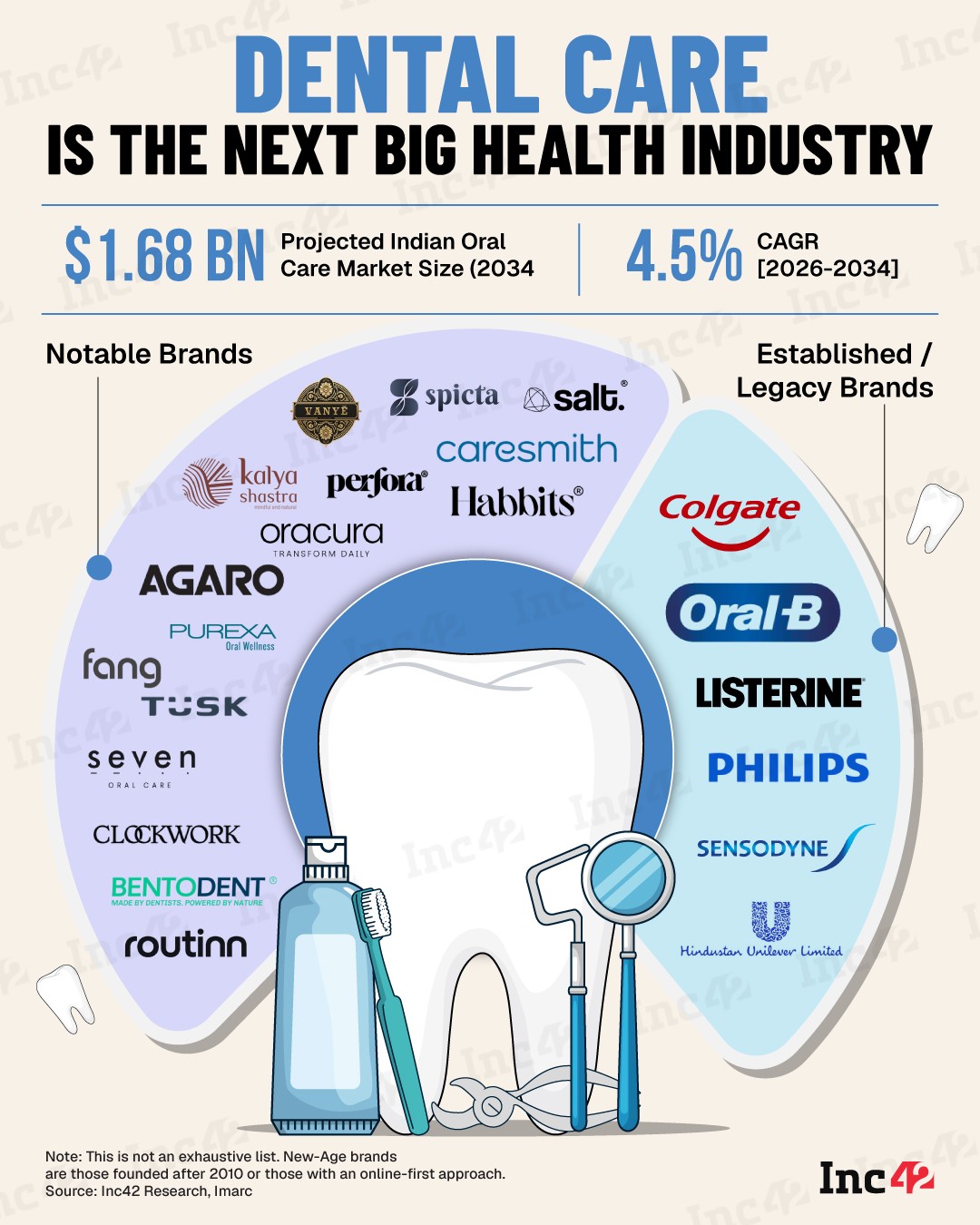
From electric toothbrushes to teeth-whitening kits, tech and new-age products are changing how people care for their teeth. With India’s oral care market projected to hit $1.68 Bn by 2034, here are the Indian brands betting big on the pursuit of a better smile…