
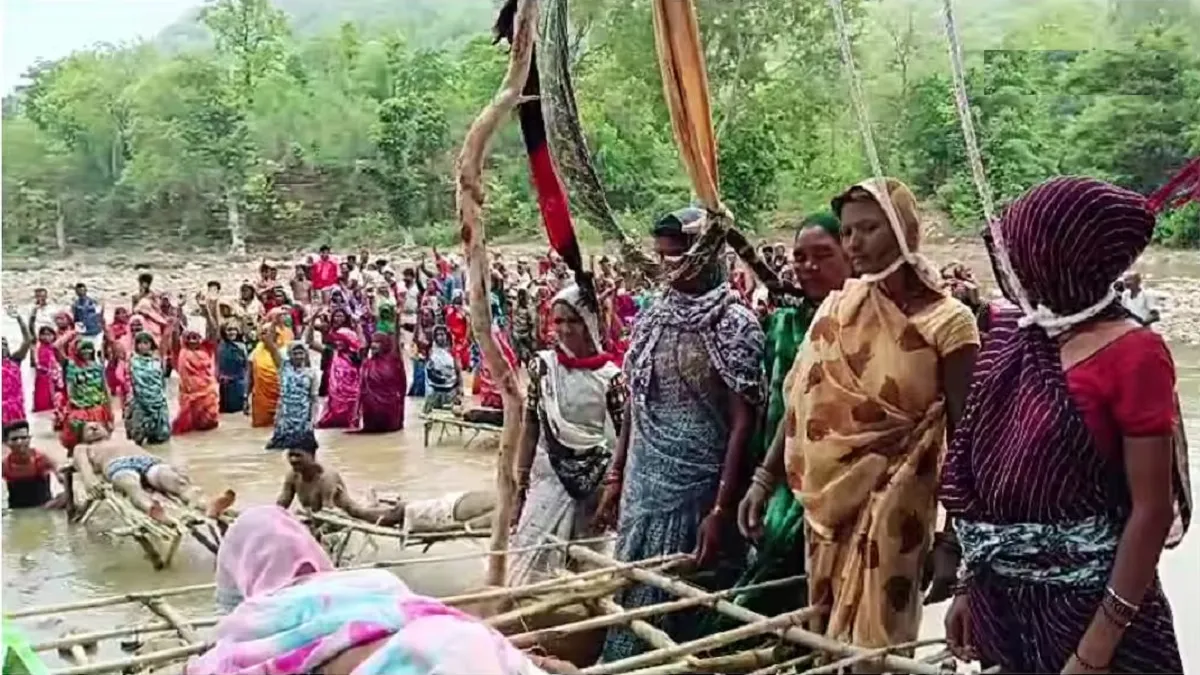

A new movement has started in Chhatarpur against Madhya Pradesh’s ambitious Rs 44,605 crore Ken-Betwa river linking project. The affected tribal women have started a symbolic ‘hanging Satyagraha’, giving a new shape to the movement.
The protesting women put a noose around their neck and demanded from the government that if they cannot get proper rehabilitation and justice, then euthanasia should be allowed. Today is the 10th day of this movement going on on the banks of Barana river near Kupi village.
Earlier, the project affected families had also done Water Satyagraha and Chita Satyagraha. Amit Bhatnagar, who is leading the movement, is on an indefinite hunger strike for the last five days. They allege that the administration has not yet fulfilled the assurances made in April.
Protesters say thousands of families have lost their land, forests, water sources, livelihoods and cultural identity due to the project. They allege that many families were illegally evicted, false cases were filed and even electricity connections were disconnected. Besides, irregularities were also committed in preparing the list of project affected people. He claims that the names of 114 people of Mainari village have still not been included in the list.
Chhatarpur Collector Partha Jaiswal said that officials are in continuous talks with the protesters. According to him, action has been taken on most of the demands raised in April. He said that the state cabinet has recently approved an increase in the relief and rehabilitation package, but now the protesters are demanding more compensation.
The Ken-Betwa Link Project is the country’s first major river interlinking project, with an estimated cost of Rs 44,605 crore. The project aims to irrigate 10.62 lakh hectares of land, provide drinking water to 62 lakh people and generate 130 MW power.
However, the affected villagers say that starting the dam construction without completing the rehabilitation process is a violation of their rights. They have demanded the government to provide transparent rehabilitation, make the list of affected families public and stop intimidating the villagers.

Comments are closed.