
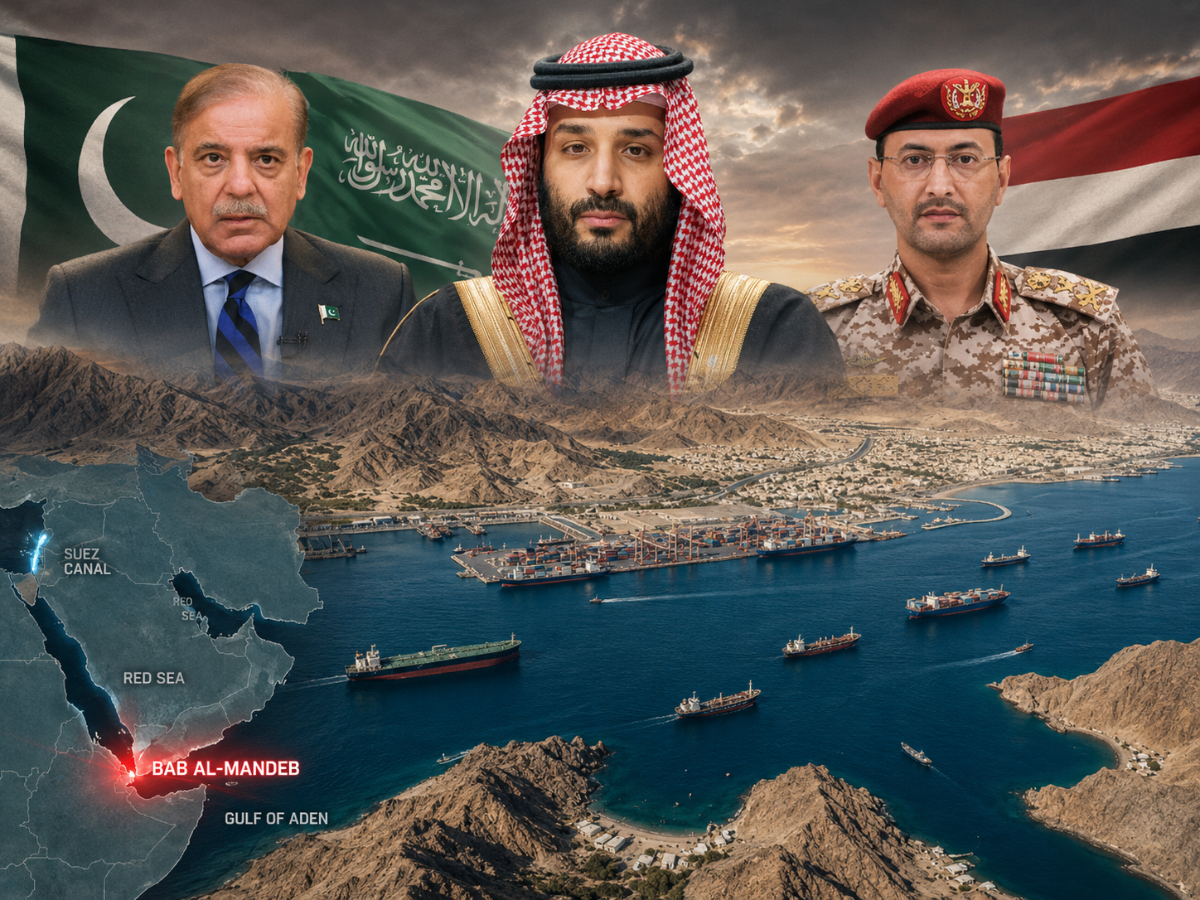
Saudi Red Sea Blockade Explained: Why Pakistan Issued A ‘Right to Self-Defence’ Warning To Houthis

Pakistan, which has a mutual defense pact with Saudi Arabia, has strongly condemned recent threats and attacks by Yemen’s Houthi rebels targeting Saudi vessels and commercial shipping in the Bab-el-Mandeb waterway. In an official statement, the Pakistani Foreign Ministry described the Houthi-imposed sanctions and blockade against Saudi commercial shipping as “unacceptable” and a clear violation of international law principles. As of now, the Houthis have not issued an official response to Pakistan’s latest condemnation.
Why Pakistan Warned Houthis Over Saudi Maritime Blockade
The Houthis announced a maritime blockade against Saudi Arabia following an exchange of military fire between the two sides for the first time in years. Tensions escalated when a Houthi-controlled flight originating from Iran was prevented from landing at Sanaa Airport, prompting retaliation from the Houthis, who claimed to have launched missile attacks against several Saudi ports. In response, the Pakistani Foreign Office issued a statement on Wednesday firmly rejecting the Houthi threats against commercial shipping in the Red Sea:
“Threats against commercial shipping and trading with the Kingdom of Saudi Arabia are unacceptable and violate established principles of international law. Pakistan is particularly concerned by reports of threats directed against vessels engaged in lawful commercial trade with the Kingdom.” the statement reads.
Islamabad further warned that any hostile action directed at Pakistani-flagged vessels or Pakistani maritime interests would be viewed as a grave threat to its own national security and sovereign interests.
Concerns Over Dragging Saudi Arabia into Regional Conflict
In its statement, Pakistan expressed deep concern over ongoing attempts to drag Saudi Arabia into wider Middle Eastern conflicts. Islamabad reiterated its “unwavering support for the security, sovereignty, territorial integrity, and prosperity of the brotherly Kingdom of Saudi Arabia. On July 13, Pakistan also condemned earlier missile attacks on Saudi ports. Islamabad backed Riyadh during an emergency UN Security Council briefing on the Yemen crisis. Earlier in March, Islamabad had similarly condemned strikes carried out by Iran targeting Riyadh following the death of Supreme Leader Ayatollah Syed Ali Khamenei during US and Israeli airstrikes on February 28.
Can Suez Save Asian Oil Consumers After Houthis Shut Bab al-Mandeb?
Analysts warn that access to the Suez Canal alone cannot fully protect Asian consumers if Houthi blockades shut down or disrupt transit through the Bab-el-Mandeb Strait. Because the Suez Canal is accessed via the Red Sea through Bab-el-Mandeb, insecurity in the strait forces commercial oil tankers to bypass the area entirely and detour around Africa’s Cape of Good Hope. Rerouting around the African continent adds several weeks to maritime voyages, significantly increasing fuel consumption, insurance premiums, and transit delays for global energy supplies. Analysts estimate that rerouting shipments to Asian destinations such as South Korea via the Cape of Good Hope increases journey times from around 24 days to nearly 54 days. While exact timelines vary based on the final port of destination, maritime trade routes to Asia generally take several weeks longer compared to direct transit across the Arabian Sea.
Also Read: Why No Conviction Despite 150 Paper Leaks In 12 Years, Rahul Gandhi Questions Centre
Shamshad Ali is a New Delhi–based journalist with over six years of experience spanning breaking news writing, on-the-ground reporting, and editing. When he isn’t chasing headlines, Shamshad is usually exploring new destinations, discovering hidden culinary gems, and striking up conversations with strangers. Many of whom turn out to be great sources, and even better friends. He can be reached at shamshadali.dar@gmail.com.
The post Saudi Red Sea Blockade Explained: Why Pakistan Issued A ‘Right to Self-Defence’ Warning To Houthis appeared first on NewsX.

Comments are closed.