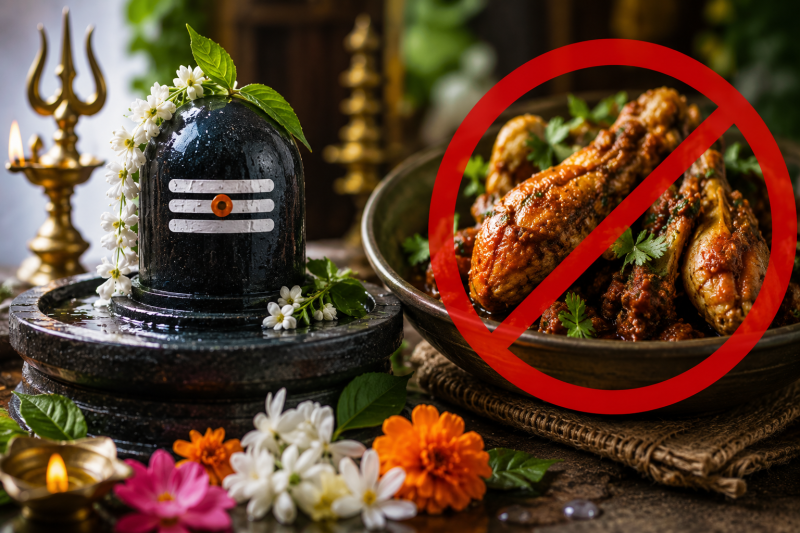
Tezzbuzz Desk – The month of Sawan is considered the most sacred for the worship of Lord Shiva. During this time, a large number of people abstain from meat, alcohol, and non-vegetarian food. This is generally considered a religious tradition, but experts say there may be some scientific and health-related reasons behind it.
According to dietitian Payal Dutt, Sawan is the rainy season, and the humidity in the atmosphere increases significantly during this time. Therefore, if meat, fish, and chicken are not kept at the correct temperature or are not cooked properly, bacteria can grow rapidly in them. This can increase the risk of food poisoning and stomach infections.
Ayurveda also believes that during the rainy season, the body’s digestive capacity weakens compared to normal days. Heavy and slow-digesting foods can take longer to digest, leading to gas, indigestion, and stomach problems. Therefore, it is recommended to eat light, fresh, and easily digestible foods during this season.
Experts say that in earlier times, facilities like refrigerators were not available. Therefore, non-vegetarian food was prone to spoilage during the rainy season. Therefore, avoiding non-vegetarian food during this time was considered a safe practice from a health perspective.
The rainy season is also the breeding season for many animals, birds, and aquatic creatures. Therefore, a tradition has traditionally developed to avoid hunting or over-exploiting them during this period, which is seen as a sign of maintaining the balance of nature.
However, experts also clarify that there is no scientific or medical rule that prohibits everyone from eating non-vegetarian food during the month of Sawan. If someone eats meat, they should ensure that the food is fresh, thoroughly cooked, and prepared with complete hygiene. The most important thing from a health perspective is the quality and safety of the food, whether vegetarian or non-vegetarian.