


Sajjan Jindal’s JSW Motors has secured a Rs 8,000 crore credit line from the State Bank of India to fund its new-energy vehicle ambitions. The financing carries a tenure of more than 10 years and is one of the largest single-lender commitments to an EV-focused manufacturing business in the country.
The money will partly fund JSW Motors’ greenfield manufacturing facility at Chhatrapati Sambhajinagar in Maharashtra. The plant is planned with an annual installed capacity of 3.5 lakh vehicles.
A battery assembly unit is also being developed in Pune, and the company’s R&D headcount is expected to grow from around 150 engineers to about 500 by 2027.
The loan is important because it shows that large lenders are now willing to fund new-energy vehicle manufacturing as a long-term industrial project.
What makes JSW Motors different from some recent EV entrants is the scale of what it is trying to build. The company is not only looking at importing kits or just selling rebadged products. Its plan covers vehicle manufacturing, battery assembly, localisation, R&D and a supplier ecosystem.
JSW Motors’ broader automotive investment plan is estimated at $2 billion to $3 billion over five years. The company is working on a product portfolio that includes electric vehicles, plug-in hybrids and range-extended electric vehicles. That makes the business wider than a pure EV start-up.

This matters because India’s EV market is still evolving. Battery costs remain high, charging infrastructure is uneven, and buyers are not all ready to move directly from petrol or diesel cars to pure EVs. A portfolio that includes more than one new-energy powertrain gives JSW more flexibility.
JSW Motors is separate from the existing JSW MG Motor India joint venture, where JSW has a stake in MG’s India operations alongside SAIC Motor. The new JSW Motors venture is a separate entity with its own product and manufacturing roadmap.
MG already sells EVs in India, including models such as the Comet EV, Windsor EV and ZS EV. JSW Motors, on the other hand, is being built as a separate new-energy passenger vehicle business under the JSW Group’s own plan.
The company has not yet confirmed specific launch dates or prices. But the plant, battery unit and R&D expansion show that the groundwork is now moving beyond planning.
The 10-plus-year tenor of the SBI loan is notable. Long-tenure project finance of this kind is more commonly associated with infrastructure and core industrial projects.
Extending it to an EV and new-energy vehicle company, even one backed by a large conglomerate, shows growing lender confidence in the sector. For SBI, this is a long-term bet on manufacturing capacity, not a short-term working capital loan.
The Chhatrapati Sambhajinagar facility is being developed at the Bidkin node in Maharashtra’s industrial corridor. The site is meant to support not just vehicle assembly but also supplier localisation. That is important because EV manufacturers need tight control over battery packs, electronics, body structures and software integration.
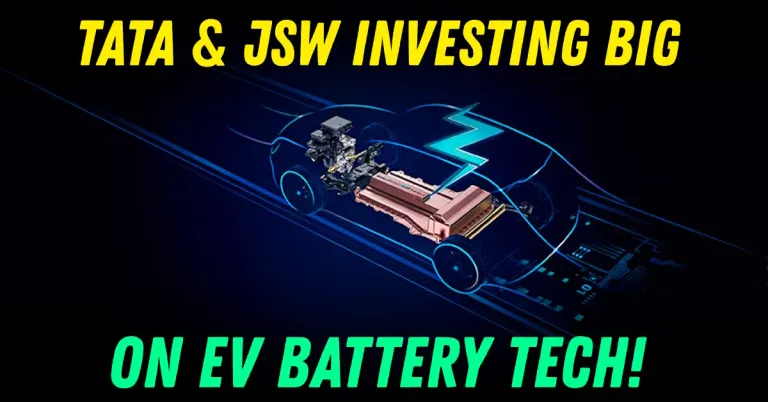
JSW’s in-house battery assembly facility in Pune is a practical step. India still depends heavily on imported cells and battery technologies, but local pack assembly gives manufacturers more control over integration, cooling, safety and vehicle calibration.
The R&D expansion is equally important. JSW Motors is building teams around ADAS, connected-car systems, body-in-white localisation, chassis systems, powertrains and high-voltage battery integration. These are areas where new carmakers need deep engineering capability if they want to compete with established brands.
Growing from 150 engineers to around 500 by 2027 suggests JSW is not treating the vehicle project as a simple branding exercise.

JSW Motors has not yet shown its final products, so the real test is still ahead. Building a factory is one challenge. Building cars that buyers trust is another.
But the Rs 8,000 crore SBI funding gives the company a stronger base. It can fund the plant, supplier development, battery assembly and early product engineering in parallel.
The broader significance goes beyond JSW alone. It shows that institutional capital is beginning to take homegrown new-energy vehicle manufacturing seriously.
Until now, much of India’s EV story has been about two-wheelers, imported kits, joint ventures or modified ICE platforms. JSW is trying to build a larger passenger vehicle business from the ground up.
If the execution matches the scale of the funding, JSW Motors could become one of the more important new entrants in India’s next phase of car manufacturing.
Comments are closed.