
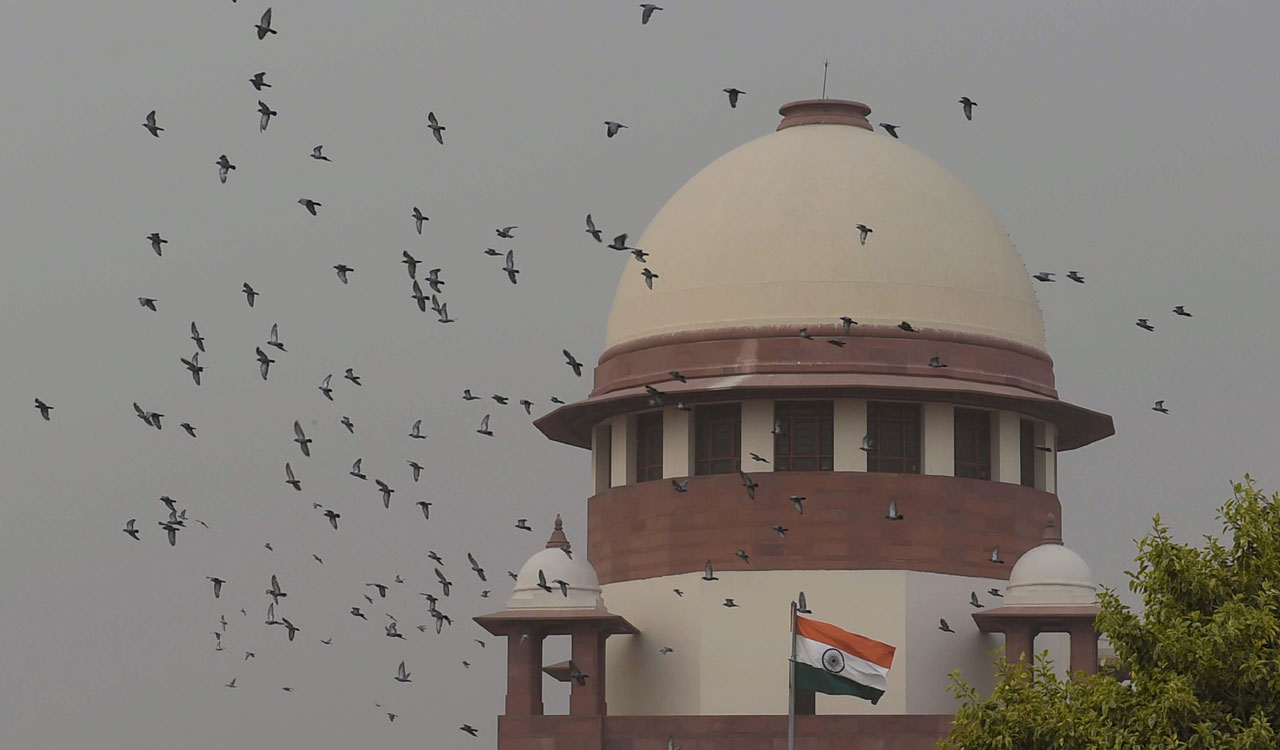

The Supreme Court agreed to examine a plea seeking a standard operating procedure for accessing courts beyond regular working hours in urgent life and liberty matters, including illegal detentions, while expressing concern over possible misuse of round-the-clock judicial access
Published Date – 14 July 2026, 07:57 PM
New Delhi: The Supreme Court on Tuesday agreed to examine a plea seeking framing of a standard operating procedure (SOP) to allow citizens to approach the courts even beyond the regular working hours in cases affecting life and liberty, including illegal detentions.
A bench comprising Chief Justice Surya Kant and Justices Joymalya Bagchi and V Mohana issued notice to the high courts on the petition filed by advocate Maheravish Rein.
During the hearing, the top court also expressed concerns about whether the round-the-clock availability of courts could be misused for hearing even non-urgent cases. Solicitor General Tushar Mehta said the preparation of an SOP should be undertaken by the top court on its administrative rather than judicial side.
The petitioner contended that the courts cannot afford to close especially in the background of credible reports of late-night arrests, early morning demolition drives and deportation or executive actions undertaken during weekends or holidays.
“The absence of a structured and institutionalised mechanism ensuring continuous judicial accessibility may result in irreversible consequences before affected persons are able to approach constitutional courts.
“The protection of liberty cannot remain dependent upon the temporal boundaries of court schedules. In a constitutional democracy governed by the rule of law, the Constitution cannot fall silent at night, nor can the protection of liberty await the morning bell of the courts,” the plea said.
The petition further stated that present institutional framework of courts largely restricts access to judicial remedies to designated court hours, working days and limited vacation benches.

Comments are closed.