
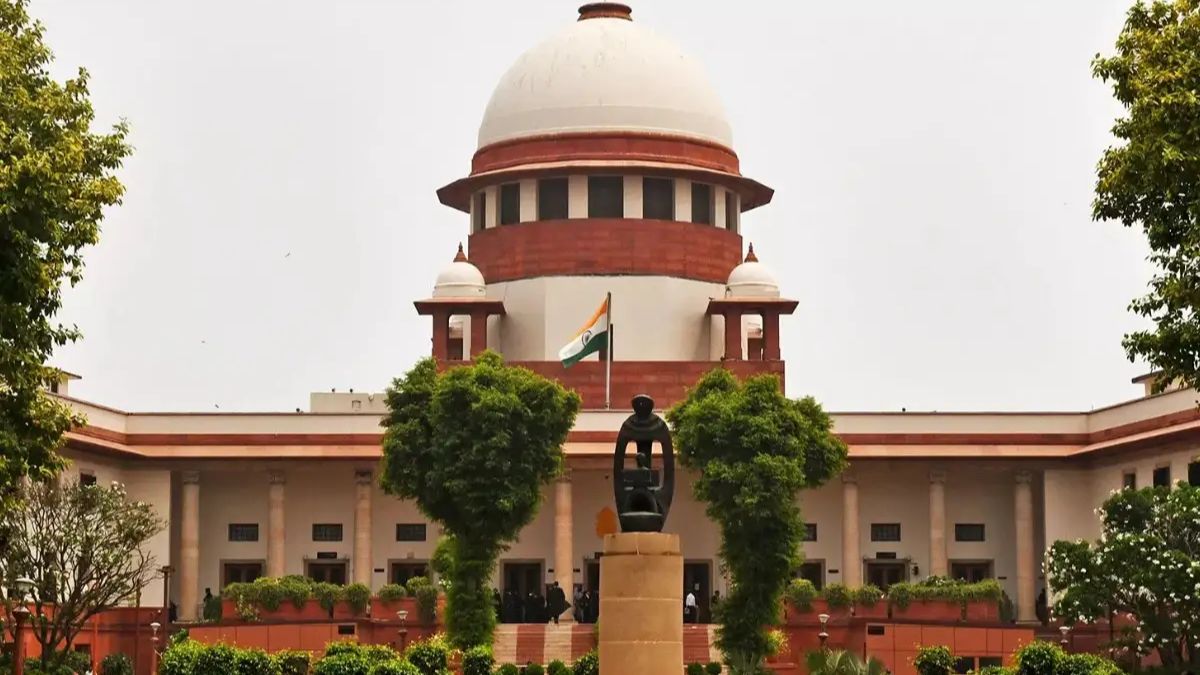
SC orders all states to implement single 112 helpline within 3 months: Trauma care now fundamental right under article 21

In a landmark ruling that expands the fundamental right to life, the Supreme Court has declared that the right to trauma care of citizens is an integral part of the right to life guaranteed under Article 21 of the Constitution, directing all states and Union territories to operationalise a single emergency helpline number ‘112’ within three months.
The apex court bench of Justices J.K. Maheshwari and A.S. Chandurkar passed the order on Tuesday on a plea filed by Savelife Foundation, which raised the need for trauma care to be recognized as a matter of right in the Indian public law system.
Three-month deadline for states
The court issued interim directions requiring all states and Union territories to complete full technical and operational integration of all emergency and ambulance helplines into Helpline 112 within three months. States must also undertake concurrent mass-media publicity of this helpline and report compliance to the court.
Additionally, the bench directed states and UTs to establish functional physical and digital Good Samaritan grievance redressal systems with designated nodal authorities at state and district level within the same three-month period.
Court’s landmark observation
“To address these barriers, what is required is a systemic intervention, creation of a uniform framework for trauma care, building public awareness, standardization of first aid skills and proper Good Samaritan laws; since right to trauma care of citizens is an integral part of right to life enshrined under Article 21 of the Constitution of India,” the bench said.
The court emphasized that trauma care is vital to the right to life, ordering systemic interventions and a uniform trauma care framework across the country.
Additional directives issued
Besides the helpline integration, the bench passed several other interim directions. The Centre, states and UTs must undertake sustained, structured, multi-lingual mass-media campaigns covering helpline 112, the Good Samaritan protection under Section 134A of the Motor Vehicles Act, and the grievance redressal system.
The court also directed compliance reporting on the cashless treatment scheme (PM RAHAT) within a month. All states and UTs that have not yet adopted the cashless treatment of road accident victims scheme 2025 – PM RAHAT, shall take necessary steps to fully operationalise the said schemes within three months.
Specific requirements for states
The Supreme Court specified that all states/UTs shall ensure full Automotive Industry Standard-125 (AIS-125) compliance across all registered ambulances, both public and private. States must also conduct periodic structured audits covering response times, quality of care, equipment, and outcomes with compliance reporting to a designated union-level authority within three months.
States and UTs must furnish periodic compliance reports by organising monthly meetings and uploading the minutes on the concerned portals.
Emergency response support system background
The Emergency Response Support System (ERSS) is a Pan-India single number (112) based emergency response system for citizens in emergencies. Each State/UT is required to designate dedicated Emergency Response Centres (ERC) to handle emergency requests.
Citizens can call 112 from their phone, press the power button on their smartphone three times quickly to activate a panic call, or use the 112 India Mobile App available on Google Playstore and Apple store.
Impact on road accident victims
The ruling comes as India grapples with high road accident fatalities. The court’s direction on Good Samaritan protection under Section 134A of the Motor Vehicles Act aims to encourage bystanders to help accident victims without fear of harassment.
The Supreme Court has consistently affirmed the right to health as a fundamental right, and this ruling strengthens that position by specifically addressing trauma care.
Compliance monitoring
The court has mandated that states organise monthly meetings and upload minutes on concerned portals for transparency. This ensures periodic compliance reporting and creates accountability for states failing to implement the directions within the three-month deadline.
The landmark judgment effectively makes trauma care a constitutional right, meaning citizens can now approach courts if denied timely trauma care following accidents or medical emergencies.

Comments are closed.