
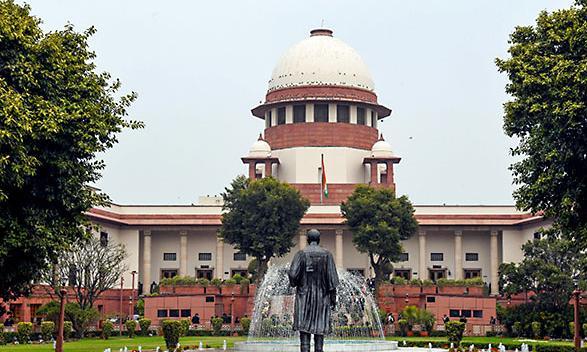

The Supreme Court on Monday (May 25) said that the proposed expert committee tasked with defining the Aravalli hills and ranges must consult with domain specialists and other stakeholders to ensure broad public participation.
The top court stressed that the panel must remain compact to function effectively.
A Bench comprising Chief Justice Surya Kant, Justice Joymalya Bagchi, and Justice Vipul M Pancholi noted that an oversized panel would hinder the mapping process.
“We cannot have a composition of 30 people as it will become unmanageable. The committee must consult experts, and it should have 5-7 members. We will note it in the order,” the Bench said.
Panel composition
During the commencement of the hearing, Additional Solicitor General Aishwarya Bhati submitted that the Central Empowered Committee and the amicus curiae had already provided a common set of recommended names to the Centre for final panel selection. The state machinery is expected to finalise the appointments based on these joint recommendations.
Also read: Will not allow anyone to touch Aravallis, says Supreme Court
Senior advocate K Parameshwar, assisting the court as amicus curiae, reiterated that the expert committee must actively factor in stakeholder feedback so that the public is heard at large. The Bench concurred, noting that scientific mapping must be balanced with ground-level insights from affected communities.
Regulatory concerns
The ongoing legal proceedings are tied to a suo motu case initiated to safeguard the mountain system, which spans Delhi, Haryana, Rajasthan, and Gujarat.
On December 29 last year, the top court put its initial November 20 directions in abeyance following an intense outcry over a proposed uniform definition. The court simultaneously issued a strict judicial freeze stalling all fresh mining leases and commercial extraction activities across the entire range.
Also read: Aravalli Hills case: Activists welcome SC order, call it ‘interim win’
The court also highlighted a critical need to resolve structural ambiguities within the initial definition recommended by the Ministry of Environment, Forest, and Climate Change.
The initial framework proposed identifying an Aravalli hill by a minimum elevation threshold of 100 metres above local relief, defining a range as a collection of hills within a 500-metre gap of one another.
Environmentalists warned that these strict metrics would exclude over 90 per cent of the Aravalli hills ecosystem, leaving lower ridges and valleys entirely unprotected from aggressive urbanisation and resource exploitation.

Comments are closed.