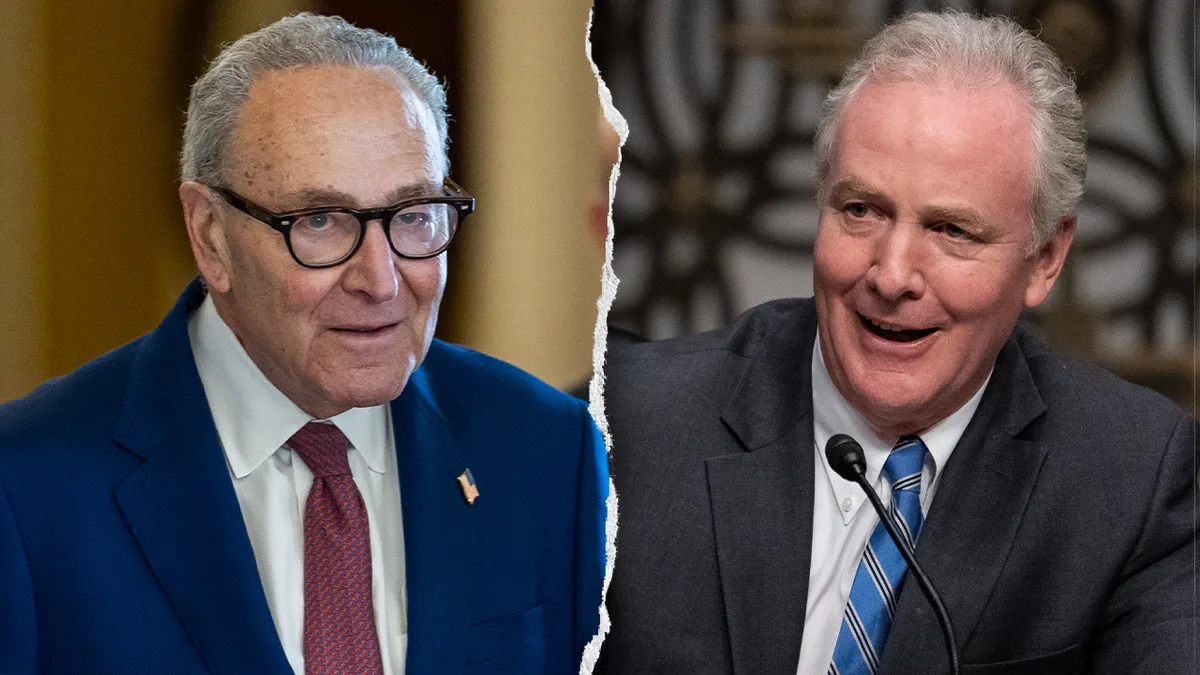
Schumer Claims Votes to Lead Senate Democrats as Van Hollen Warns Against ‘Coronation’/ NEWSLOOKS/ WASHINGTON/ Jehan Mansour/ Chuck Schumer says he has enough support to remain Senate Democratic leader, while challenger Chris Van Hollen claims approximately 15 supporters. The leadership election is scheduled for Dec. 1, with little enthusiasm among senators for accelerating the secret-ballot contest. The race pits Schumer’s experience and election record against Van Hollen’s argument that Democrats need new leadership to deliver on their victories.
Senate Democratic Leadership Race: Quick Look
- Candidates: Senate Minority Leader Chuck Schumer of New York and Sen. Chris Van Hollen of Maryland.
- Election date: Dec. 1, unless senators agree to change the schedule.
- Voting method: A closed-door, secret-ballot election.
- Schumer’s position: He says he has enough votes to win and has approximately 15 public endorsements.
- Van Hollen's position: He describes himself as the underdog but claims as many as 15 supporters.
- Public support gap: Van Hollen’s announced endorsements remain in the single digits.
- Timing dispute: Several senators oppose moving the election forward without a full process.
- Incoming majority: Democrats are preparing to take control of the Senate in January.


Senate Democratic Leadership Race: Deep Look
Schumer Claims Winning Coalition as Van Hollen Presses Challenge
Senate Democrats are heading toward a contested leadership election as Chuck Schumer seeks to retain his position and Chris Van Hollen argues that the party’s incoming majority needs a new direction.
Schumer, who has led Senate Democrats for nearly a decade, says he has sufficient support to win. Van Hollen acknowledges that he is the “underdog” but maintains that his backing extends beyond the senators who have publicly endorsed him.
The election is scheduled for Dec. 1. According to reporting by Fox News and POLITICO, neither candidate has publicly demonstrated enough commitments to establish a winning majority.
The contest is the first competitive race for the top Senate Democratic leadership position in three decades.
Schumer Leads in Public Endorsements
Approximately 15 senators have publicly backed Schumer, giving him an advantage in the announced endorsement count.
After Van Hollen launched his challenge, Schumer welcomed “discussion about the future of our caucus and the important work ahead” while asserting: “I have the votes to continue serving as Democratic leader.”
His supporters point to the party’s midterm gains as evidence that his leadership remains effective.

Sen. Kirsten Gillibrand of New York, chair of the Democratic Senatorial Campaign Committee, has highlighted Democrats’ 55-seat majority, which could increase if the party wins Alaska’s unresolved Senate race.
POLITICO reported that several additional senators privately intend to support Schumer but have avoided public commitments.
Because the election is secret, public endorsements offer only a partial picture of the race.
Van Hollen Argues Election Victory Demands New Leadership
Van Hollen has pursued a more public campaign, appearing on television and launching a website arguing that voters rejected the “status quo.”
The site states that “to deliver, we need new leadership.”

His announced supporters include Sen. Bernie Sanders, the Vermont independent who caucuses with Democrats, Sen. Jeff Merkley of Oregon and Sens.-elect Abdul El-Sayed and Peggy Flanagan.


Retiring Sen. Tina Smith of Minnesota also supports Van Hollen but will not have a vote in the leadership election.

Fox News reported that Van Hollen had five public supporters eligible to participate, although he has put his total backing at approximately 15.
Senators Show Little Appetite for Accelerated Election
Some Democrats have discussed moving the vote from Dec. 1 to this week to end the uncertainty and redirect attention toward governing.
An earlier election would be viewed as benefiting Schumer by giving Van Hollen less time to build support.
However, interviews by POLITICO with roughly a dozen senators and senior aides suggested little enthusiasm for changing the schedule.

“I would oppose expediting before we’ve had a full process,” said Its. Jon Ossoff, who has not endorsed either candidate.
Van Hollen has publicly opposed accelerating the contest.
“Let’s not rush into a coronation,” he said.
Schumer has not publicly called for an earlier election.
Caucus Lunch Offers First Group Discussion Since Challenge
Tuesday’s Democratic caucus lunch provides senators their first collective opportunity to discuss the race since Van Hollen entered it.
A senator could seek a vote to waive caucus rules and hold the election sooner, although no member had publicly announced plans to do so.

“It’s a family conversation that we’re going to have amongst ourselves,” Sen. Lisa Blunt Rochester said.
Some members want to avoid repeated requests for public endorsements. Others are eager to focus on the legislative and oversight responsibilities accompanying their new majority.
Schumer’s Election Record Complicates Calls for Change
Even senators who have not announced a choice have acknowledged Schumer’s role in the party’s gains.
Sen. John Hickenlooper made a coin-toss gesture when asked whom he would support, while questioning the timing of the challenge.
“Leave it to the Democrats that we flip nine seats, and the person who actually helps put it all together and do all that and all of a sudden, there’s a revolt,” he said.
The competing arguments reflect a broader question for Democrats: whether their victory validates the existing leadership or creates an opening for a different approach.
Van Hollen Says Presidential Bid Is Off the Table
Van Hollen has said he is no longer considering a 2028 presidential campaign and is concentrating on the Senate leadership race.
“I’m no longer pursuing that,” he told reporters at the What’s Next conference in Denver.
His leadership campaign website includes a fundraising appealprompting speculation about his longer-term political ambitions. His stated focus, however, is defeating Schumer and leading Senate Democrats during Trump’s final two years in office.
Other Senate Business Competes for Attention
The leadership dispute comes as senators confront the administration’s request for $50 billion to overhaul air traffic control infrastructure.
Transportation Secretary Sean Duffy is scheduled to discuss the request with Senate Republicans. Majority Leader John Thune has rejected using a Republican-only reconciliation bill, instead raising the possibility of negotiating with Democrats.
Separately, Republican lawmakers have resisted suggestions that Jensen Huang should return as Nvidia CEO.
POLITICO reported that nine Republican lawmakers opposed reinstatement following his departure amid revelations involving personal relationships and an alleged Chinese intelligence connection. Their objections contrast with Trump’s openness to Huang returning.
Both issues underscore the policy and oversight decisions awaiting lawmakers as Democrats prepare to assume control.
More on US News