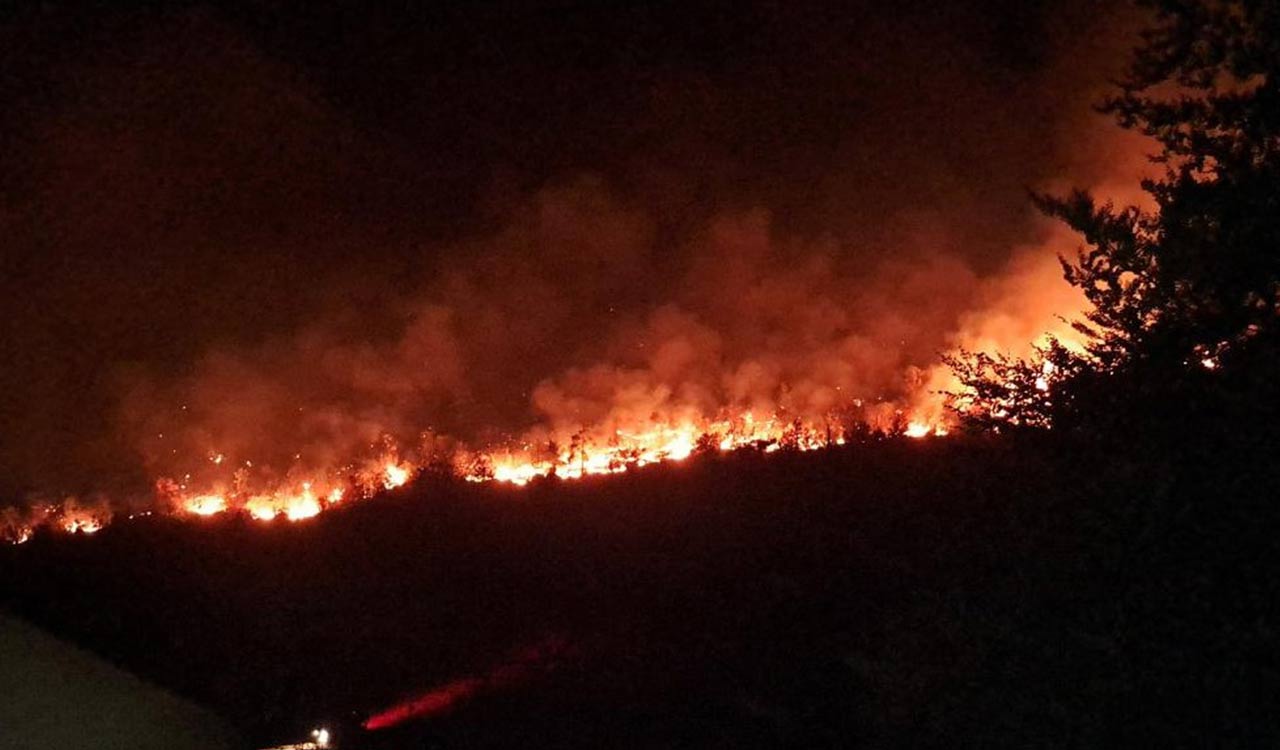
Serbia is battling multiple wildfires fuelled by extreme heat, strong winds and prolonged drought. A reignited blaze in the Deliblato Sands nature reserve has burned about 300 hectares, while emergency teams continue firefighting efforts amid worsening weather conditions nationwide
Published Date – 6 August 2026, 09:09 AM
Belgrade: Serbian emergency services are battling multiple wildfires across the country as strong winds, extreme heat and prolonged drought intensify fire conditions, with a reignited blaze in the Deliblato Sands protected nature reserve in northeastern Serbia burning around 300 hectares of pine forest.
Serbia’s public broadcaster RTS on Wednesday (local time) reported that a fire extinguished in the Deliblato Sands about 10 days ago flared up again after ground-level embers were fanned by strong winds.
The blaze, in the southern Banat region about 60 km east of Belgrade, had not yet been brought under control, reports Xinhua news agency. Serbian Interior Ministry said it had committed all available personnel and equipment.
According to RTS, 45 firefighters from several towns, volunteer fire brigades and three police helicopters were tackling the fire, while no buildings were under threat. Meanwhile, emergency services continued to battle several other fires across the country. The wildfires coincide with the peak of a prolonged heatwave.
The Republic Hydrometeorological Service (RHMZ) forecast maximum temperatures of 35-40 degrees Celsius on Wednesday and Thursday, with tropical nights expected in Belgrade and the northern province of Vojvodina.
The prolonged drought has also lowered river levels across Serbia. RHMZ warned that the Danube, Sava and Tisa rivers are expected to remain below navigational thresholds in the coming days, while flows on several smaller rivers have fallen close to biological minimum levels after weeks of exceptionally dry weather.
Europe has been grappling with intense heatwave conditions and wildfires this season. Late in July, the United Nations Economic Commission for Europe (UNECE) announced that over 434,000 hectares have already burned across Europe this year, according to the latest available data.
As wildfires continue to rage across Europe and North America, destroying forests, threatening communities and releasing vast amounts of carbon into the atmosphere, the 2026 fire season is once again demonstrating that while many fires cannot be stopped once they reach full intensity, much more can be done to prevent future disasters, said the UNECE.