


Seema Aggarwal, Writer, Dehradun
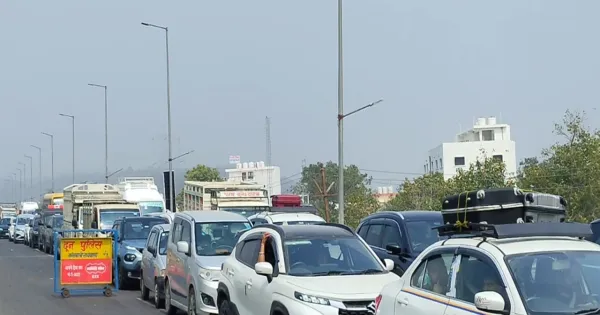
There was a time, when on mentioning the name of Uttarakhand, images of deodar forests, Himalayan peaks and clean air would come to mind. People troubled by the pollution in the plains used to feel relieved by coming here, but now this picture is slowly changing. The increasing traffic jam in major cities and tourist places of the state is not only increasing the troubles of the people but is also putting pressure on the clean air of Uttarakhand.
Dehradun is the biggest example of this. The city has expanded rapidly in the last decade and a half. Due to unprecedented increase in population and number of private vehicles, long traffic jams have now become a common sight. Traffic jams are not just a waste of time. When vehicles move slowly or stand at one place for a long time, they spread more pollution than in the normal situation.
Carbon monoxide, nitrogen oxide, sulfur dioxide and fine particles like PM 2.5 and PM 10 emitted from petrol and diesel vehicles affect the air quality. These particles reach the lungs and increase the risk of asthma, allergies, bronchitis and heart diseases. According to experts, the “idling effect” that increases during traffic jams also contributes significantly to pollution. Black carbon emitted from diesel vehicles is considered dangerous for both health and climate.
According to the Central Pollution Control Board and various reports, Dehradun has at times recorded the air quality index (AQI) between 200 and 300 or above, falling in the “poor” to “very poor” category. This situation becomes more serious during winter and tourist season. This challenge is not limited to Dehradun only. Rishikesh, Haridwar, Haldwani, Nainital and Mussoorie are also facing increasing traffic pressure.
In summer, the jams that last for hours during the Mussoorie route and Chardham Yatra put additional burden on the environment. The number of vehicles in the state is continuously increasing, while the roads and geographical conditions of the hilly areas further complicate this problem. Limited air flow in valleys can trap pollutants for long periods of time.
Environmentalists believe that urban growth has occurred faster than the carrying capacity of cities. The expansion of roads has not kept pace with the increasing number of vehicles, while green areas have also been continuously shrinking. Although forest fires, construction work, diesel generators and outdoor pollution are also causes, traffic jams are increasingly becoming a major source.
The solution requires strengthening public transport, improving parking and traffic management, promoting shuttle services at tourist destinations, expanding green areas, encouraging electric vehicles and bicycle-friendly infrastructure. Besides, the air quality monitoring network should also be expanded. Most importantly, Uttarakhand will have to strike a balance between development and environment. Clean air is not only an environmental resource but also the economic and social capital of the state. If effective steps are not taken in time, the very identity of Uttarakhand may be in trouble, due to which people are drawn here. (These are the personal views of the author)

Comments are closed.