
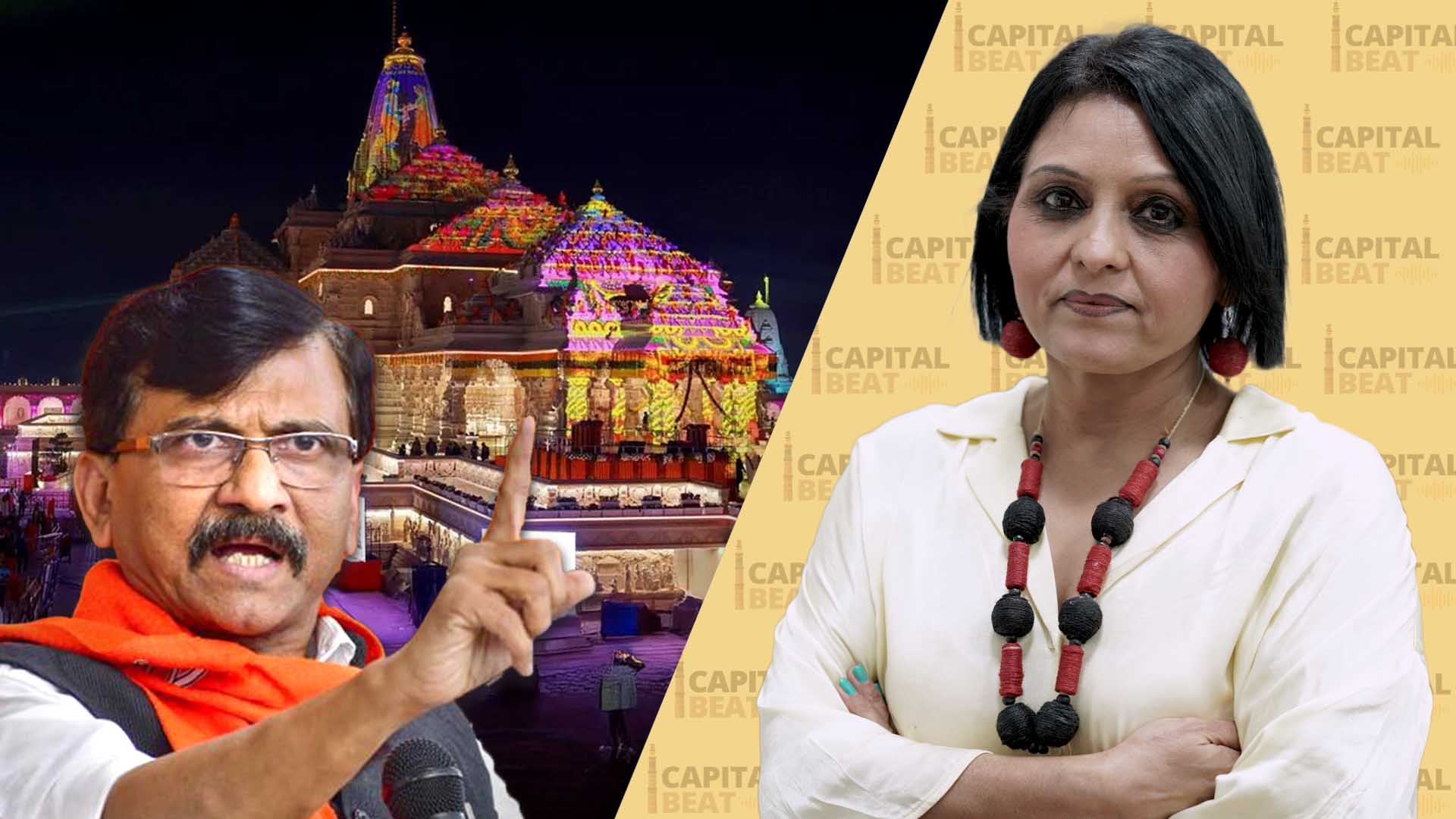

The Shiv Sena (UBT) has launched a blistering assault on the BJP, using its mouthpiece Saamana to equate the ruling party’s handling of Ram Mandir donations to the “loot” of Mahmud of Ghazni. This aggressive editorial, which also fiercely condemned the BJP for orchestrating defections within the Uddhav Thackeray-led Shiv Sena faction, marks a significant escalation in the ongoing hostilities between the former allies.
The latest episode of The Federal‘s daily YouTube show, Capital Beatlooked into whether this tactical shift can effectively undermine the BJP’s temple narrative and whether it provides a viable path for Uddhav to rebuild his base. On the panel were Shiv Sena (UBT) spokesperson Kishor Tiwari and senior journalist Yogesh Pawar.
Defending the Saamana editorial’s harsh rhetoric, Tiwari argued that his party’s historical role in the Ram Temple movement grants it the moral authority to demand financial transparency. “Numerical strength has nothing to do with the functioning of the BJP and RSS,” Tiwari stated, dismissing the idea that the party’s current electoral struggles diminish its right to hold the BJP accountable.
The controversy comes at a difficult political moment for Uddhav Thackeray, whose party has witnessed a major split, with several MPs moving towards the Eknath Shinde-led faction.
Right to point fingers
The Saamana editorial compared the alleged issue to the “loot” carried out by Mahmud of Ghazni and directly targeted Union Home Minister Amit Shah and the BJP’s politics around the Ram Temple. Tiwari said the Shiv Sena has a historical connection with the Ram Temple movement and therefore has the legitimacy to raise questions.
Shiv Sena workers had participated in the Ram Temple movement and faced arrests during the Babri Masjid demolition period, he recalled.
Tiwari further questioned the financial transparency around the temple movement, claiming that earlier collections and donations also required greater accountability.“Ram Mandir and the split in the party are two different issues. Both are serious and we have the authority to speak on them,” he said.
Split politics
The Saamana editorial also attacked the BJP over allegations of engineering defections, particularly after several Shiv Sena (UBT) MPs shifted towards the Shinde faction. It accused the BJP of using central agencies and political pressure to weaken opposition parties.
However, Tiwari admitted that the split had exposed internal issues within the Shiv Sena (UBT). He said some MPs had raised concerns about communication gaps and the functioning style of the leadership. “Today, there are internal issues in the party, and introspection is needed,” he said.
Tiwari further acknowledged that the party needs organisational restructuring and a change in its working style. “The leadership should become approachable. They should work on the organisation,” he said.
Leadership crisis
The panel discussion focused on whether Uddhav’s leadership style contributed to the party’s current crisis. Tiwari said there was a difference between the working styles of Bal Thackeray and Uddhav Thackeray, arguing that the current leadership needs to become more accessible to party workers.
He criticised senior leaders around Uddhav, saying the party needs to rethink its internal functioning. The party should focus on organisational structure, leadership decentralisation and remove unnecessary interference,” he said.
Emotional significance
Yogesh Pawar said Shiv Sena’s association with Hindutva politics predates the BJP’s rise and argued that the party does not need lessons on the issue. “Saamana has been around for a very long time,” he said, adding that the Shiv Sena has historically positioned itself as a strong Hindutva force.
According to Pawar, the Ram Temple issue carries emotional significance because millions of devotees contributed towards the movement. He argued that allegations surrounding temple donations strike at the core of the BJP’s political narrative.
“The Ram Temple became bigger than unemployment, infrastructure, education and healthcare issues,” Pawar said, explaining the symbolic importance of the temple movement.
BJP response
The discussion examined Amit Shah’s recent remarks that there is now only one Shiv Sena — the Eknath Shinde faction. Pawar said the BJP’s response showed that the Saamana editorial had touched a sensitive point. “If they don’t matter, then why is an editorial hurting them so much?” he asked.
He argued that the BJP’s temple narrative could face challenges if questions over transparency continue to dominate political conversations.
However, the future political impact remains uncertain, especially because the Shinde faction has consolidated support among several lawmakers.
Uddhav’s future
The biggest question discussed was whether Uddhav can revive his political fortunes after losing organisational strength. Tiwari said the party still has public support and can return if it reconnects with voters. “Uddhav Thackeray will remain. There is a space for opposition,” he said.
Pawar said the Shiv Sena (UBT) has reached a difficult phase but argued that rebuilding is possible. “The party has hit rock bottom. From here, things can only go up,” he said. He suggested that Uddhav return to the grassroots, focus on local issues and rebuild the party through its traditional network of workers.
The panel concluded that while the Ram Temple controversy and the split within Shiv Sena are separate issues, both will continue to shape Maharashtra politics ahead of future elections.

Comments are closed.