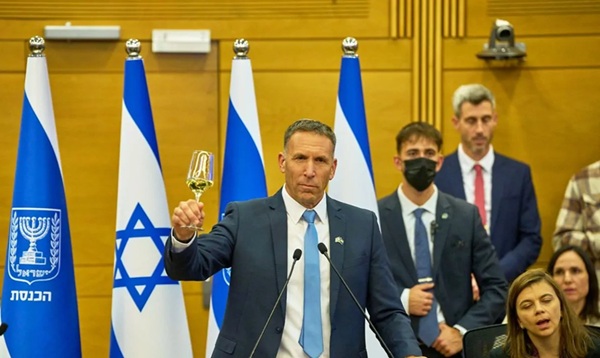
Jerusalem. There has been a big change in the politics of Israel. Matan Kahana, a member of Gadi Eizenkot's Yashar party, has become the new speaker of parliament, replacing Amir Ohana of Prime Minister Benjamin Netanyahu's Likud party. This change is being seen as a political setback for Netanyahu. The Speaker of Parliament has an important role in the decision of bringing bills to the House for voting.
According to sources, in the elections held on Tuesday, November 17, Matan Kahana got 66 votes, while his rival candidate got the support of 52 MPs. Gadi Eizenkot emerged as Netanyahu's main rival during the general election in October. However, no party could get a clear majority in that election.
Speaker plays important role in pushing bills forward
The Israeli parliament is called the Knesset and has a total of 120 members. The post of Speaker of the House is considered very important, because he plays an important role in the process of bringing bills to Parliament for voting.
Matan Kahana becoming the speaker may provide an opportunity to Eijenkot led parties to push forward their priority bills. These also include a proposal to conduct an independent investigation into the Hamas attack on October 7, 2023. Prime Minister Netanyahu has opposed such an investigation.
Apart from this, the proposal to limit the tenure of the Prime Minister is also among the priorities of the opposition group. Eijenkot's allies are demanding a rollback of laws from Netanyahu's previous government that critics say weakened the powers of the judiciary.
Likud party expressed displeasure over speaker election
Netanyahu's Likud party expressed displeasure after the results of the election for the post of speaker came out. The party alleged that Matan Kahana got votes from MPs who support terrorism.
During the election campaign, Netanyahu had described Israel's Arab-led parties as a major threat to the country. These parties had termed his statements as racist and discriminatory.
The influence of Ijenkot faction also increased in the committees of Parliament.
Along with the election of the Speaker, members of the parties led by Ijenkot have also been made chairmen of several important committees of Parliament. These committees play an important role in considering and pushing new laws. In such a situation, the influence of this group has increased in the functioning of the Knesset.
However, despite the election of the Speaker in the Parliament, a new government has not been formed in Israel. Netanyahu lost his majority in the general elections held on October 27. On the other hand, Eijenkots and his allies have also not been successful in garnering the necessary support to form a government.
The Israeli Parliament was sworn in on November 10, but due to the political equations created after the elections, the way for the formation of the new government has not been cleared yet.