CEO Tarang Gupta said the range reflected the approximate average of price increases the company had made on selected brands in both markets over the past 12 to 15 months, according to state-owned news agency Named.
“The group needs to take into account commodity prices, including sugar, tin and energy, which are all on an upward trend. Surely pricing will come into play. The point is that we also have to protect our volumes and consumers,” he said during a question-and-answer session at F&N’s fiscal 2026 results briefing in Kuala Lumpur today.
|
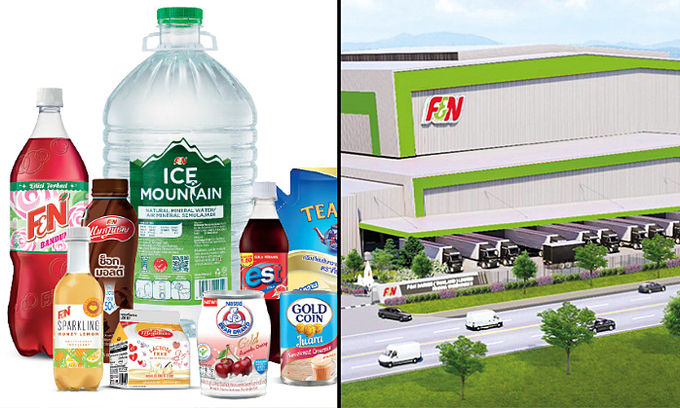
A composite image showing products and a factory of Fraser & Neave. Photo courtesy of the company |
Fraser & Neave Holding Bhd is listed on Bursa Malaysia, the stock exchange of Malaysia. It is 55% owned by Singapore-listed Fraser and Neave.
F&N’s net profit fell 14% year over year to RM437.09 million in the fiscal year ended Sept. 30, 2026, while revenue declined 5.3% to RM4.92 billion. The drops were mainly due to challenges in its Indochina segment and higher startup costs for its strategic investments.
Gupta said exchange rate movements also affected the food and beverage conglomerate’s costs and financial performance.
“(When the) Malaysian ringgit weakens, our costs, import costs go up, but if the ringgit weakens, our value conversion (of earnings) from Thailand and Cambodia increases when converted to the local currency,” he said.
Chief financial officer Tiong Yean Yau added that improving cost efficiency would remain the group’s priority before resorting to price adjustments.
“Cost efficiency is always the priority that we are looking at before we actually move to the price of this. That’s always our direction,” said Tiong, as reported by The Edge Malaysia.
Gupta said F&N would assess how sensitive demand for each product is to price changes before deciding where to raise prices. The company has no plans for an across-the-board increase.
“Products that are (sold) to business-to-business customers, such as canned milk, are more price-sensitive as customers require the right taste and brand, while also being mindful of their own business margins.
“So, we have to respect that. Pricing will have to be tested, probably adjusted slightly if commodity prices continue to rise. But we also have to protect absolute profitability and sustain growth,” he added.