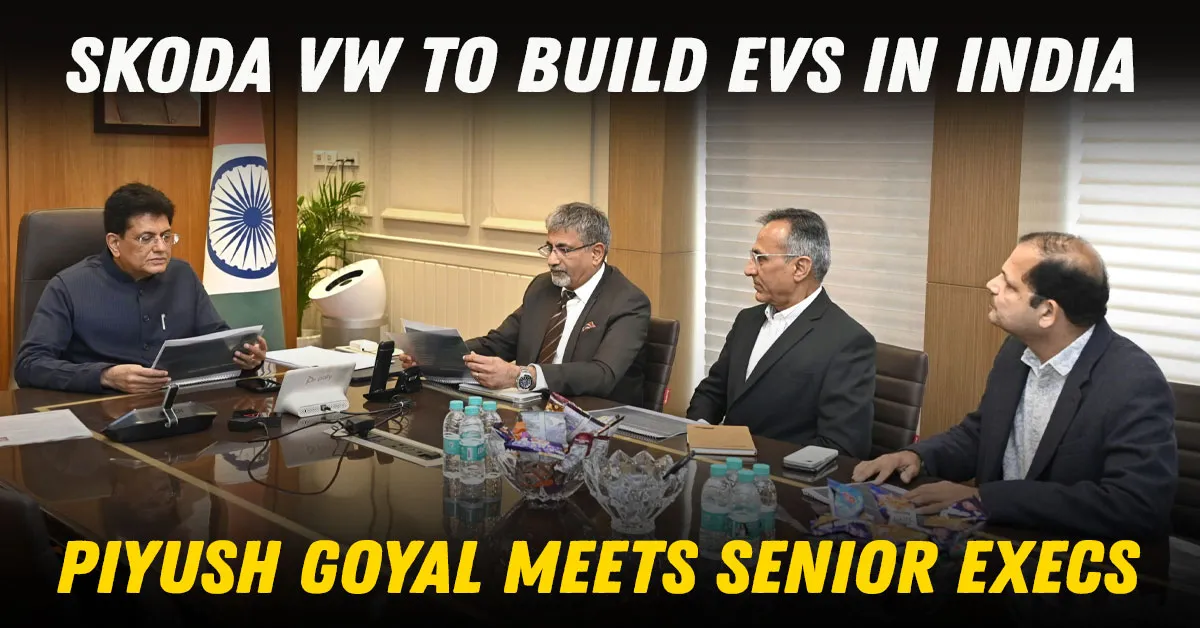
Skoda and Volkswagen’s electric-car plans are back in focus after Union Commerce and Industry Minister Piyush Goyal met senior executives from Skoda Auto Volkswagen India. The discussion covered electric vehicle manufacturing, greater localisation and the possibility of expanding car exports from the country.
The meeting took place on November 9, 2026, with a delegation led by Piyush Arora, Managing Director and CEO of Skoda Auto Volkswagen India Private Limited (SAVWIPL). According to the minister’s office, the discussions also covered innovation and strengthening the country’s place in global automotive supply chains.
There is one important distinction: this was a discussion about future opportunities, not an announcement of a new electric car. Neither a specific model nor an investment amount, production plant or launch date was confirmed. Still, the meeting matters because the Volkswagen Group already has a substantial manufacturing and export business here.
SAVWIPL operates manufacturing facilities at Chakan, near Pune, and at Chhatrapati Sambhajinagar. The company says the two plants have a combined annual capacity of about 3.15 lakh vehicles. In 2025, it crossed two million vehicles produced locally over its operations in the country.
Its locally built products include the Skoda Kylaq, Kushaq and Slavia, along with the Volkswagen Taigun and Virtus. These cars show how the group has increasingly adapted its products and components for local requirements rather than relying only on imports. The same approach would be important if it wants to offer electric cars at competitive prices.
Exports are another reason the latest meeting is significant. SAVWIPL said in June 2026 that it had shipped more than 7.25 lakh vehicles to over 40 countries over the years. It also exported more than 40,000 vehicles through Mumbai Port during FY2025-26. In other words, the group is not starting from scratch when it talks about using its factories to serve overseas markets.
Building electric cars locally is only part of the equation. To make them affordable, manufacturers also need a reliable supply of battery packs, motors, power electronics and other EV-specific components. The more of these parts that can be sourced or manufactured locally at sufficient scale, the less exposed a carmaker becomes to imported component costs and exchange-rate changes.
However, local assembly and deep localisation are not the same thing. An electric car assembled from imported kits can still carry a substantial cost burden. For buyers, the real benefit comes when the manufacturer can turn local manufacturing into competitive prices, adequate spare-parts availability and dependable long-term support.
That is especially important for Skoda and Volkswagen. Their existing petrol cars compete on driving dynamics, build quality and safety, but the electric market has its own set of expectations. Range, charging speed, battery warranty, service coverage and real-world running costs will matter as much as the badge on the bonnet.
The Volkswagen Group has already used local factories to build cars for other markets. Extending that strategy to electric vehicles is a logical possibility, especially if the same platform and components can serve domestic buyers and export destinations. Larger production volumes could make the investment in local suppliers and EV-specific manufacturing easier to justify.
But that should not be mistaken for a confirmed programme. The latest meeting did not identify an EV that will be built here or say whether any future product would be developed locally, assembled from kits or manufactured with substantial domestic content. There was also no schedule for the first such vehicle to reach showrooms.
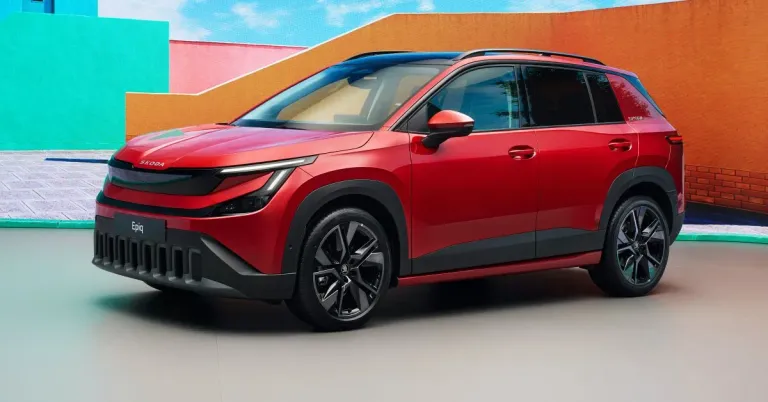
This difference matters because a government meeting can signal interest and help resolve policy or investment questions, but it does not by itself approve a new car for production. A formal announcement from the manufacturer, with details of the product, factory and timing, would be a much stronger indicator.
For now, shoppers considering an electric SUV or sedan have no newly confirmed Skoda or Volkswagen model to add to their shortlist because of this meeting. It would be premature to assume that a locally made EV is just around the corner, let alone attach a likely price or range to it.
The next useful developments would be confirmation of the investment, the proposed EV platform, the level of localisation and a realistic launch schedule. Details of the battery and warranty package would matter just as much once a product is announced. Without those answers, talk of manufacturing expansion remains an intention rather than a purchase option.