
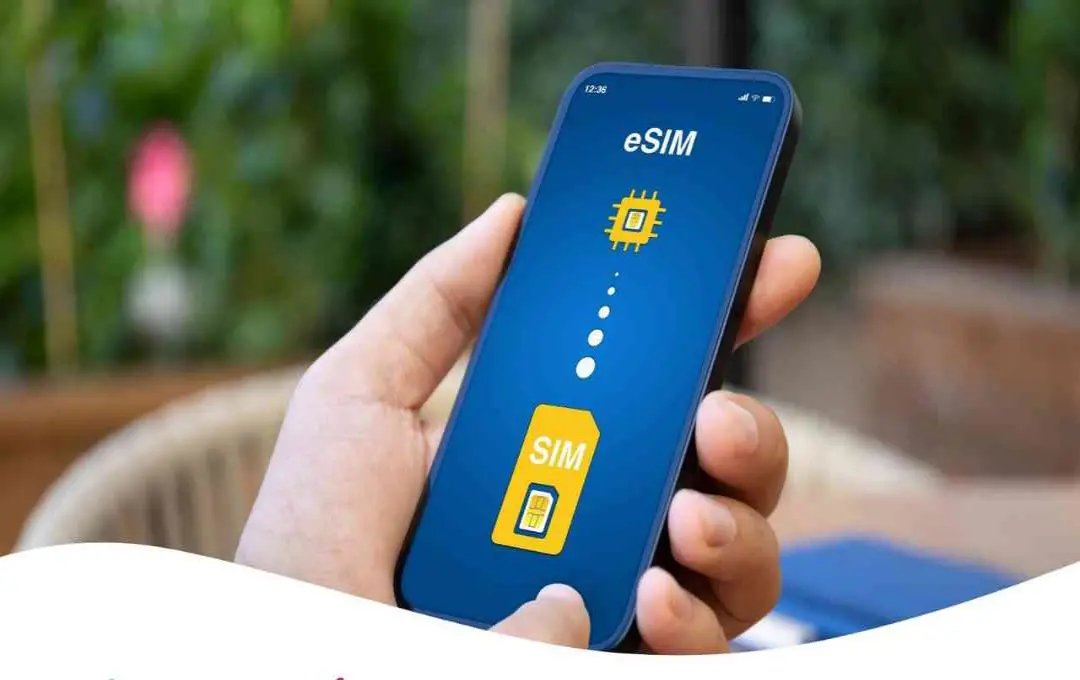

According to the latest data, global adoption of eSIM is slow. In South Korea, only 5% of users are using eSIM, whereas in America it is 38%. Lack of awareness and choice of physical SIM are the major reasons.
Tech Update: Despite worldwide expectations regarding eSIM, its adoption remains relatively slow. In South Korea, only 5% of mobile users are using eSIM, whereas in America this figure is 38%. According to experts, the main reason for this is lack of awareness and dependence on physical SIM. Despite GSMA’s projections, achieving 50% eSIM share by 2028 looks challenging.
Use of eSIM slower than expected, users in many countries are still giving priority to physical SIM
Recent data makes it clear that eSIM technology is not being adopted as fast as was expected. In many countries, users still consider physical SIMs a safer and easier option, due to which the expansion of eSIM is going slower than expected.
Data from South Korea and other countries show that people are avoiding change due to lack of awareness and habits. Despite the technical advantages, the interest of users towards eSIM remains limited.
Only 5% of users are using eSIM in South Korea
According to a report, only about 5% of mobile users in South Korea are using eSIM. There are about 5.7 crore mobile users in the country, out of which only about 30 lakh people have shifted to eSIM.
Although there has been a slight increase compared to last year, experts believe that the main reason for this was the recent network related controversies, after which some people were forced to adopt eSIM.
Situation a little better in America and Britain, but the reasons are different
About 38% of users in America are using eSIM, but the reason for this is not technical choice but the strategy of smartphone companies. Many new phones out there only come with eSIM support, limiting the options users have.
The situation is also mixed in the UK, where a large number of people are either unaware of eSIM or do not know whether their phone supports it or not.
expectations vs reality
GSMA’s 2024 report estimated that by 2028 around 50% of new mobile connections would be eSIM based and by 2030 this figure could reach 88%. But current trends suggest that achieving this goal may be challenging.
Experts say that unless both awareness and convenience improve, widespread use of eSIM will remain slow.

Comments are closed.