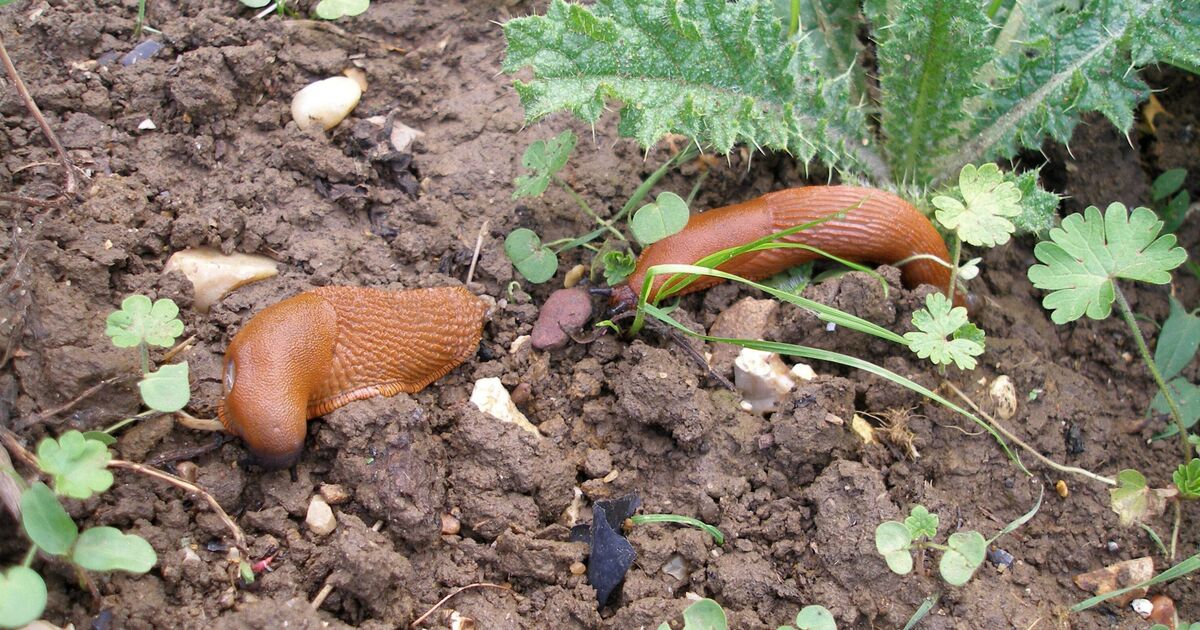
You don’t need to be a gardening expert to know that innocent looking slugs and snails can destroy your plants. However, while many homeowners may be scratching their heads about how to remove them, one horticulturist and broadcaster has offered some tips, and one of them really is simple.
Peter Dowdall, known by many as The Irish Gardener, listed various ways to deal with the issue, before offering the most simple solution.
He said: “Where possible, water plants in the morning rather than late in the day. This gives plants the moisture they need while allowing the surface of the soil and foliage to dry as the day progresses.
“It also avoids creating especially favourable conditions around vulnerable plants just as slugs and snails are becoming active in the evening.”
Peter Dowdall shared his tips (Image: SWNS.com)
Peter acknowledged that slugs and snails can be “one of the most frustrating parts of gardening” — especially when young plants, vegetables or fresh new growth seem to disappear almost overnight.
He said that by August, gardens are full of mature growth, shaded areas and there are plenty of places for slugs and snails to shelter, while vegetables and softer-leaved plants can still be very vulnerable to damage.
The temptation is to think about ways to get rid of them, but Peter insisted that it was all about natural balance.
He explained: “Slugs and snails are not simply pests. They are part of the wider food web of the garden. They feed on living and decaying plant material, while in turn they provide food for other creatures such as birds, hedgehogs and frogs.
“So I do not want a garden with no slugs and snails. I want a garden where they are present, but where they are not destroying the plants I want to grow.
“The best approach is to protect vulnerable plants while still allowing slugs and snails to remain available to the creatures that depend on them.”
He advised people to concentrate their efforts around young plants, vegetables and anything you know that is particularly attractive to slugs and snails.
This is where physical barriers can be useful and products made from sheep’s wool, coarse horticultural grit or other rough, dry materials can be placed around particularly vulnerable plants to make access more difficult.
Peter also said copper tape can also help around individual plants or containers.
However, he urged gardeners to use these barriers selectively, and only on plants that need protection, rather than trying to make the entire garden hostile to them.
He said to check these areas regularly and to remove slugs by hand if numbers get too excessive.
The gardener also encouraged people to be observant, especially when it comes to choosing plants.
He explained that if you find yourself replacing the same plant year after year, it may be worth questioning whether it is the right choice for that part of the garden.
Concluding, he said: “Strong, established plants growing in conditions that suit them are also much better able to tolerate a little damage.
“August is a useful month for observing all of this as you can see which plants have suffered, which have coped and where the damage is worst. That tells you far more than simply counting slugs.
“The aim is not a garden without slugs and snails, it is a garden where plants, pests and predators exist together in a natural balance, and where we intervene only enough to protect the things we value most.”