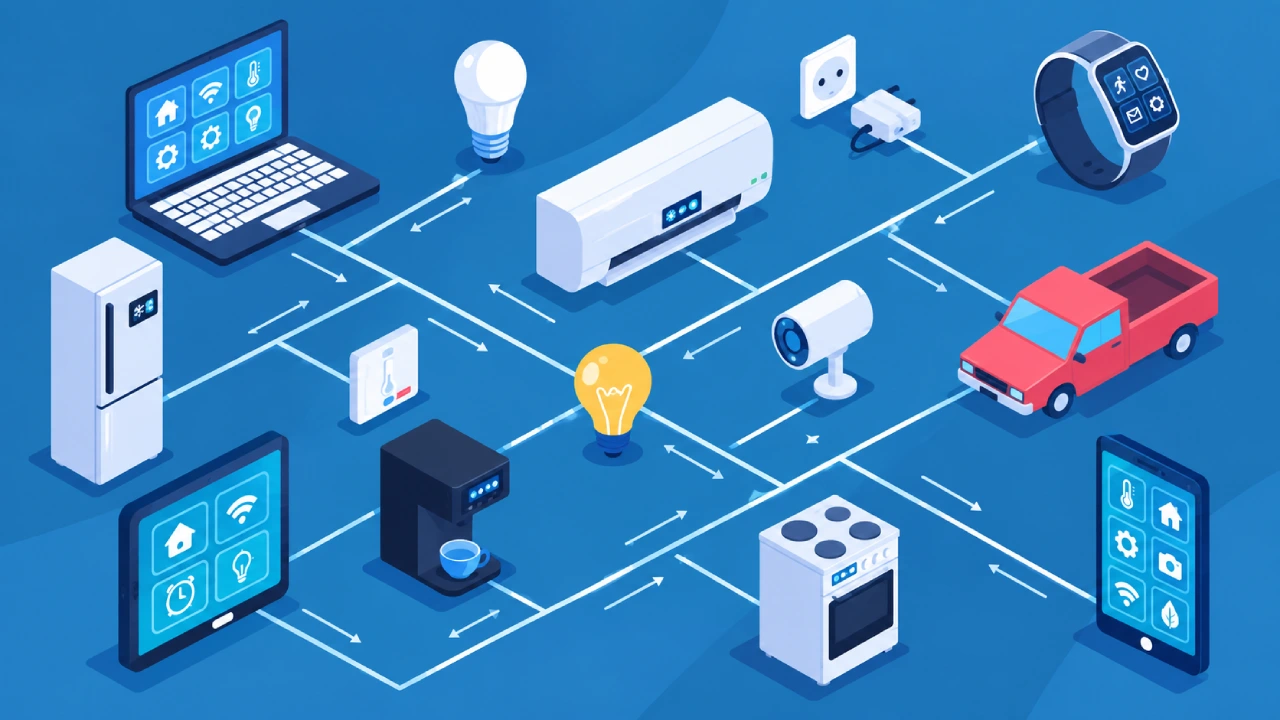
In addition to being able to control a washing machine or a refrigerator through a smartphone, smart appliances have started to get away from their status as just a cool thing to be used. The latest development in the field of smart appliances includes a new generation of devices equipped with artificial intelligence, connected sensors, automation, energy management, and prediction technologies that help appliances to understand their environment and work based on it.
As a result, refrigerators that monitor the condition of the food stored in them and washing machines that operate depending on the load are now the norm. Moreover, high energy costs, concerns for sustainability, and an increasing number of connected homes encourage manufacturers to make efficiency an important element of smart appliances. Therefore, the future of smart appliances does not only include new features; it is more than that.
AI Will Make Appliances More Adaptive
One of the major trends affecting smart appliances is their connection to artificial intelligence. The previous generation of connected devices used to follow the commands provided by the user.
AI-equipped devices will be able to analyze information from sensors, learn from it, and make decisions autonomously. For instance, a smart washer may be able to estimate the size of the laundry load and characteristics of its materials and then choose a program accordingly.
Instead of choosing settings manually, the appliance will analyze the information received and offer a program that would be the most suitable.
In the same way, an intelligent fridge can observe temperature changes, detect often-used items, and give notifications. With the help of artificial intelligence, the latter can become much more efficient than a simple notification.
The key point is the transition from the previous generation of appliances to intelligent ones.
Connectivity makes the appliance capable of communication, but AI makes it able to interpret information and respond to it.
This direction is also reflected in recent AI smart home developments, where connected appliances are being designed to work together rather than operate as isolated devices.
Sensors Will Become the Foundation of Smart Homes
AI depends on the amount of information at its disposal, making sensors the key technological component of smart appliances of the future.
Appliances of the modern world can implement several kinds of sensors in order to detect various factors, including temperature, humidity, weight, motion, presence of water, energy consumption, and operating conditions. Sensors provide an appliance with information about what goes on within itself and around it.
Imagine that you own a smart dishwasher. Sensors will be able to detect how much water should be used and whether the dishes are still dirty. The same thing goes for a dryer, which will automatically stop or change its cycle depending on how dry the clothes are.
Energy Efficiency Will Become a Major Selling Point
Energy usage will be one of the most important issues in smart appliances.
More consumers are becoming concerned about conserving electricity consumption, while the government and producers are equally paying more attention to energy efficiency.
Energy-efficient appliances are able to measure their own energy consumption and manage it accordingly. Smart washers can avoid excess consumption by not heating or using unnecessary water. A smart air conditioner can adjust its operations depending on the conditions and occupation of the room. Smart water heaters are able to optimize their schedule of heat production.
But more possibilities emerge when smart appliances interact with an energy management system of the entire home.
Instead of each appliance acting on its own, all devices would be interconnected and could work together in terms of energy usage. Heavy energy consumption operations would be able to be carried out during proper periods of time, and unnecessary consumption could be minimized.
In the end, a smart home wouldn’t just inform homeowners about their electricity consumption; it would help them manage it as well.
This broader approach is also explored through smart IoT devices for reducing household bills, where connected devices can monitor and automate energy-related tasks.
Predictive Maintenance Could Prevent Breakdowns
Predictive maintenance is another big change coming. In many cases, traditional appliances do not give you any warning that something could fail. Your washing machine would operate normally until something inside breaks down and creates an unexpected bill.
Smart appliances with sensors can monitor the way they work over time. Any changes in vibration, temperature, motor performance, or energy consumption could signal a malfunctioning component.
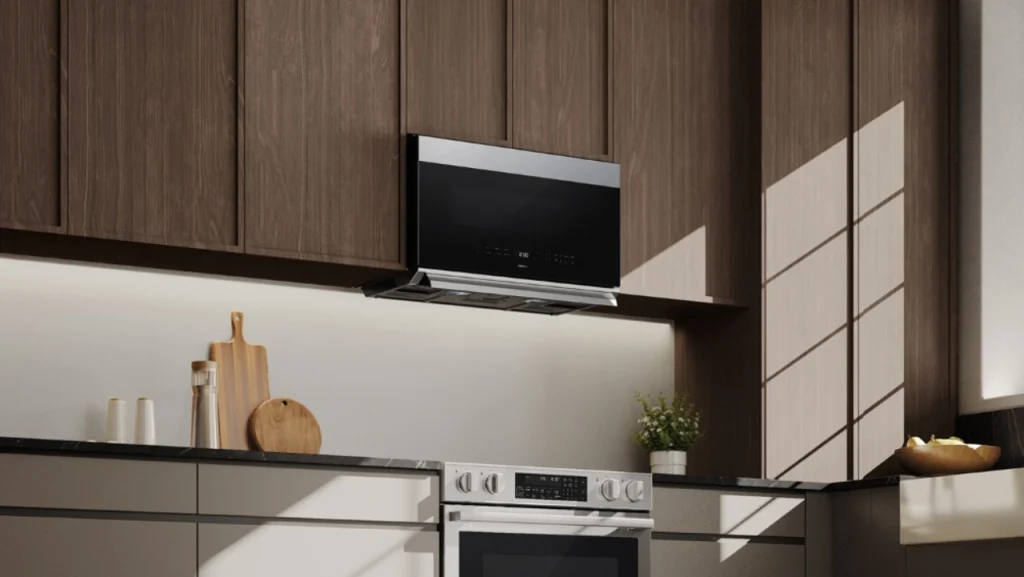
AI systems would be able to identify such patterns and even notify the user about upcoming problems.
For the customer, it would mean fewer accidents. For manufacturers and service companies, it would result in a new business model where preventive maintenance replaces reactive repairs.
Instead of repairing a broken appliance, the system could offer servicing or changing components based on its current state.
Personalisation Will Revolutionise the User Experience
Smart appliances will also become more personalised.
People live in various ways, and some families wash their clothes on a daily basis while others prefer doing laundry at the weekend. In any case, the smart appliance will learn all these habits and adjust its performance accordingly.
Personalisation may include favourite temperatures, used programs, preferred scheduling, and energy-saving settings.
Voice assistants and smartphone applications can further simplify interaction. Users may eventually interact with several appliances through a single home interface rather than managing each device separately.
The goal is not necessarily to give consumers more controls. It is to reduce the number of controls they need to use.
The best smart appliance may ultimately be the one that requires the least intervention.
Smart Refrigerators Could Become Household Information Hubs
The refrigerator is yet another category where smart technology can be beneficial.
Today, smart refrigerators can already contain cameras, sensors, connectivity, and digital displays. In the future, these technologies can be used to enable households to better understand their food storage and consumption.
In particular, AI could analyze patterns of food consumption in households, monitor storage conditions, and send reminders about items that need attention. Used in combination with shopping platforms, smart refrigerators could become more automated.
Yet, there is another issue that needs to be considered here. Food consumption habits, household routines, and patterns of purchases contain a lot of data about the consumer.
Thus, manufacturers will have to guarantee that the level of convenience will not result in a loss of security.
AI-powered kitchen appliances are another part of this development, including systems that use connected sensors and AI to assist with everyday household tasks. AI-powered kitchen appliances show how this trend is expanding beyond refrigerators and washing machines.
Interoperability Will Become Crucial
For many years, the industry of smart homes has faced a huge challenge – the lack of communication between devices from different companies.
Thus, a consumer could own a smart refrigerator from one company, a smart air conditioner from another, and a smart home assistant from another producer. If all these devices operate in their own ecosystems, the concept of a smart home seems unachievable.
The future will depend increasingly on interoperability.
Smart appliances need to communicate with one another and with wider home-management platforms. Common standards can make it easier for consumers to combine devices without being locked into one manufacturer’s ecosystem.
For consumers, this means that compatibility could become as important as appliance specifications.
Recent smart home appliance ecosystem developments also show how manufacturers are increasingly connecting multiple home products within broader ecosystems.
Cybersecurity Will Become Essential
Increased connectivity means increased accountability.
An old-fashioned appliance has little digital footprint. A connected appliance that is tied to a home network system adds one more point at which cyberattacks can get in.
With increasing intelligence and the gathering of more data by appliances, it is going to be essential for manufacturers to consider security issues and keep their software updated and protected.
Security should not be an additional element added to the appliance when the latter is already on the market; security must be built into the appliance right from the start.
For consumers, it is going to be necessary to consider software support when buying new appliances.
This concern is covered in more detail in TechGenyz’s IoT security guide for connected homes, which discusses device vulnerabilities, update policies, privacy, and home-network security.
Edge AI Could Make Appliances Faster
Edge AI will be another emerging trend, which implies performing some calculations at the device level, rather than depending entirely on the cloud servers for processing.
It could bring quite a few benefits. The local processing could lead to the reduction of latency and improved responsiveness of devices, while some household data may not need to be transmitted to the remote server.
For instance, a washing machine could perform the processing of sensor information locally and change its operation accordingly. An air conditioner could analyze the information related to temperature and occupancy of the room, while it will not be necessary to send all data to the remote server.
With the development of hardware becoming more powerful and energy-efficient, edge AI could become an essential component of intelligent appliances.
The technology is also relevant to broader edge AI chip development, where processing is moved closer to the device to improve responsiveness and reduce dependence on cloud processing.
Appliances Will Operate as a Whole
Probably, the most significant change will appear when the intelligent appliances become something else but isolated devices.
Consider a scenario in which the air conditioner works in conjunction with the energy management system, the washing machine coordinates its work according to the electricity consumption schedule, the refrigerator controls the situation inside, and the water heater operates according to household needs.
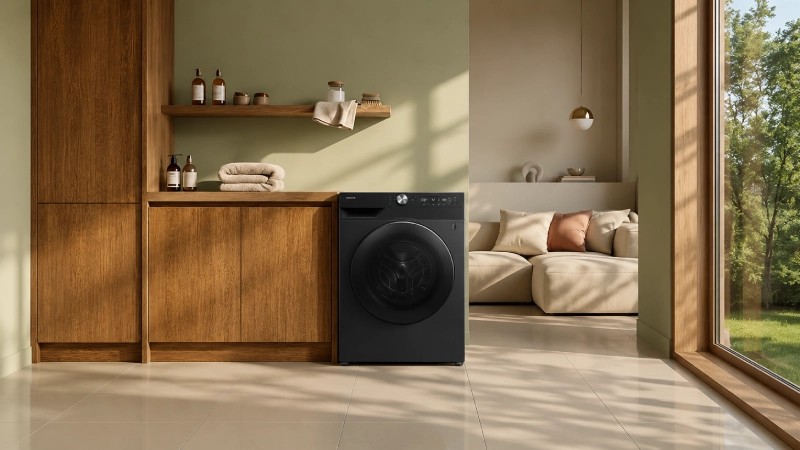
The intelligence would not exist in any single appliance. It would emerge from the interaction between multiple connected devices.
This could create a home that responds dynamically to occupancy, weather, energy prices, and household behaviour.
In that environment, the smart home becomes less about remotely controlling individual appliances and more about automating everyday domestic infrastructure.
Sustainability Will Shape the Next Generation
The environmental impact of appliances will also influence their development.
Smart technology can help reduce resource consumption, but connectivity and computing themselves consume energy. Manufacturers will therefore need to balance additional digital capabilities with efficient hardware and software.
Longer product lifespans could also become important. Predictive maintenance, software updates and modular components could help appliances remain useful for longer rather than being replaced whenever technology changes.
The future of sustainable smart appliances will consequently depend on more than electricity consumption. It will involve durability, repairability, resource efficiency, software support, and responsible manufacturing.
The Future Is Intelligent, But It Must Also Be Practical
Ultimately, the development of smart appliances is about finding ways to make technology useful rather than simply complex.
Artificial intelligence may make appliances adaptable. Sensors will provide them with awareness. Connectivity will make communication possible. Predictive maintenance will minimize the number of unanticipated breakdowns, and intelligent energy management will enable homes to cut down on wasted energy.
However, consumers will assess all of these technologies through very practical lenses: Does this appliance save time? Does it minimize energy use? Is it reliable? Is it safe? Does it integrate with other devices? Is this investment worth its price?
These questions will decide the fate of smart-appliance technologies after the marketing phase.
The future house will not consist of smart appliances that merely have the ability to connect to the Internet. The future house will consist of appliances able to interpret the situation, learn from the habits of the household, and make necessary decisions automatically.
The real promise of smart appliances is therefore not that a refrigerator can send a notification to a phone or that a washing machine can be started remotely. It is that everyday devices can gradually become an intelligent, coordinated part of the home, helping people use less energy, waste fewer resources, and spend less time managing routine tasks.
As AI, sensors, edge computing, and connected-home standards continue to mature, the appliance of the future may no longer feel like a machine waiting for instructions. It may simply understand what needs to happen and do it.
(Source)