
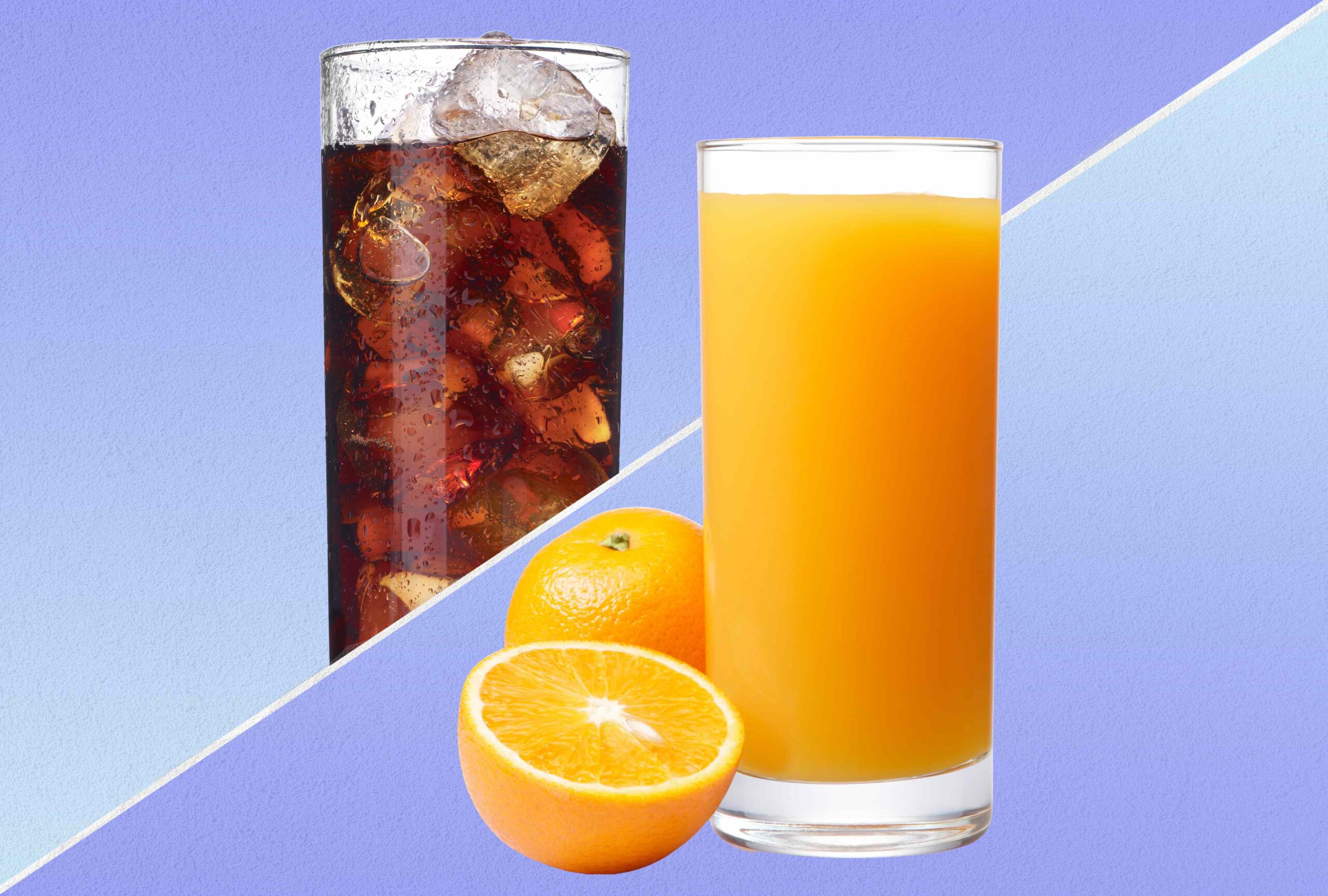

You may think juice is healthier than soda, but both can have a surprisingly similar effect on blood sugar.
Reviewed by Dietitian Alyssa Pike, RDN
Key Points
- Soda and 100% fruit juice can both raise blood sugar, especially when you drink them without food.
- Unlike soda, 100% fruit juice contains vitamins and minerals and no added sugar.
- Dietitians recommend keeping portions small for both—about 4 ounces at once.
Soda and 100% fruit juice have more in common than you might think. They’re sweet, easy to drink quickly and widely available in single-serve bottles, cans and cartons. But a closer look shows they’re not exactly the same—some drinks are made with added sugars and little else, while others come with nutrients from fruit.
But is one worse for blood sugar than the other? It depends. When we asked dietitians, they agreed that both can affect blood sugar, but portion size, how often you drink them and what else you’re eating can make a difference. Here’s what to know about how soda and fruit juice compare, and how to make the best choice for you.
Soda and Blood Sugar
Most regular sodas are essentially carbonated water plus added sugar and flavoring, with little else to offer nutritionally. That means the sugar enters your bloodstream quickly, with no fiber, fat or protein to slow it down.
A standard 12-ounce can of regular cola has about 37 to 40 grams of added sugar, depending on the brand—more than the 25-gram daily limit the American Heart Association recommends for women and just over the 36-gram limit for men.,
And it doesn’t take much to raise your blood sugar. “About 4 ounces of regular soda can provide around 15 grams of carbohydrate, which is enough to noticeably raise blood sugar for some people, especially those with diabetes, prediabetes or insulin resistance,” says Olayide Adejumobi, RDN, LDa registered dietitian. This is especially the case when soda is consumed without a meal that includes protein, fiber and fat, which help delay the absorption of sugar into the bloodstream.
What’s most important is how often you drink soda. Research has consistently linked regular soda consumption to a higher risk of type 2 diabetes., Among people who already have type 2 diabetes, each additional daily serving of a sugar-sweetened beverage has been linked to an 8% higher risk of all-cause mortality.
An occasional soda won’t cause significant harm, but drinking them more frequently could interfere with efforts to balance blood sugar.
Juice and Blood Sugar
Juice is often thought of as a healthier option than soda, but it can still affect blood sugar. What’s different is that the sweetness usually comes from the fruit itself rather than added sugar. Unfortunately, the juicing process strips away fiber that helps slow the rate at which sugar enters your bloodstream.
“Unlike soda, 100% juice can provide vitamins, minerals and beneficial plant compounds like polyphenols, depending on the fruit. Purple grape juice, for example, contains antioxidants, while orange juice provides adequate amounts of vitamin C and potassium,” says Jennifer Rawlings, MS, RDN, CDCESa registered dietitian and Certified Diabetes Care and Education Specialist. “Those nutrients do matter, and they make juice a more nutrient-dense option than soda.”
A 12-ounce glass of 100% orange juice provides more than 100% of the daily value for vitamin C, along with potassium and naturally occurring plant compounds called polyphenols. It also contains about 30 grams of sugar.
Compared with a sugar-sweetened orange drink, 100% orange juice has been shown to produce a lower daily blood glucose response and reduce food intake at the next meal. The polyphenols in 100% fruit juice may also contribute to favorable effects on cardiometabolic markers like blood pressure and cholesterol.
“100% fruit juice provides vitamins, minerals and plant compounds that soda does not, but I still recommend whole fruit most often because it provides fiber and is more filling,” says Adejumobi.
Which Is Worse for Blood Sugar?
Soda and juice can have surprisingly similar effects on blood sugar. Both deliver sugar in liquid form, and both can raise your blood sugar quickly when you drink them on their own.
“Liquid sugar—whether from soda or 100% fruit juice—spikes blood sugar faster than whole food sources, mostly due to the lack of fiber,” says Rawlings. “The key difference is that 100% juice typically contains no added sugar and includes nutrients that soda lacks.”
Research has consistently linked sugar-sweetened beverages like soda to a higher risk of type 2 diabetes, while 100% fruit juice in moderate amounts has not shown the same connection. Soda also tends to come in larger single servings than juice, which means more sugar per beverage.
But juice doesn’t get a free pass. “Portion size matters—drinking a large amount of juice can affect blood sugar as much or more than soda. In healthy young adults, higher sugar fruit juice from mango or papaya has been shown to produce a higher blood sugar spike than apple or orange juice,” says Rawlings.
A small glass of 100% juice is a better choice than a 12-ounce can of soda, but frequency is the more important factor. Drinking either one occasionally isn’t a huge concern for most people, but drinking them every day may make it hard to control blood sugar over time.
Our Expert Take
Soda and 100% fruit juice can both raise blood sugar, especially when you drink them without food, but they’re not nutritionally equal. Soda contains added sugar and doesn’t include the vitamins, minerals and beneficial plant compounds that juice has.
The best choice for stable blood sugar is usually water, unsweetened tea or another low- or no-sugar beverage. If you choose to enjoy a sweet beverage, dietitians recommend keeping portions small—about 4 ounces—and pairing it with a balanced meal that includes protein, fiber and healthy fat.

Comments are closed.